
How many pours per panel
Pours by glue and by site routine.
How many pours per panelTechnical notes · formwork and site use
In short
These guides cover what happens to PK Ply panels after they leave our mills: 12–21 mm thickness by job, a release agent on every pour and sealed cut edges. With that routine our MUF panels give about 12–15 pours and our phenolic panels up to about 25. Our formwork plywood is certified to AS 6669:2016.
Film
The film shows a panel's working life: laid on the deck, oiled, poured, struck, cleaned and stacked for the next pour, and what an unsealed cut does to it.
The short answer
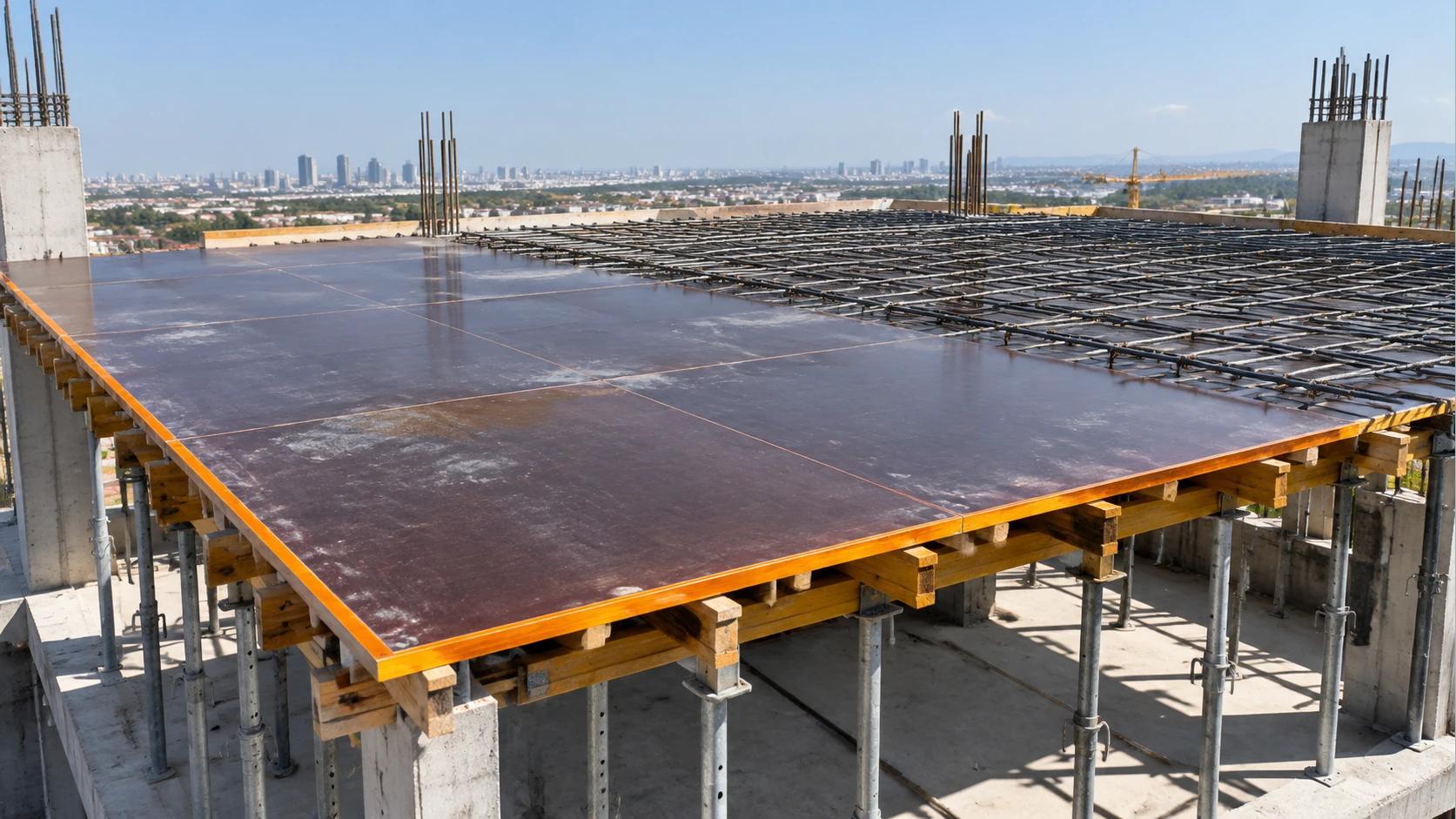
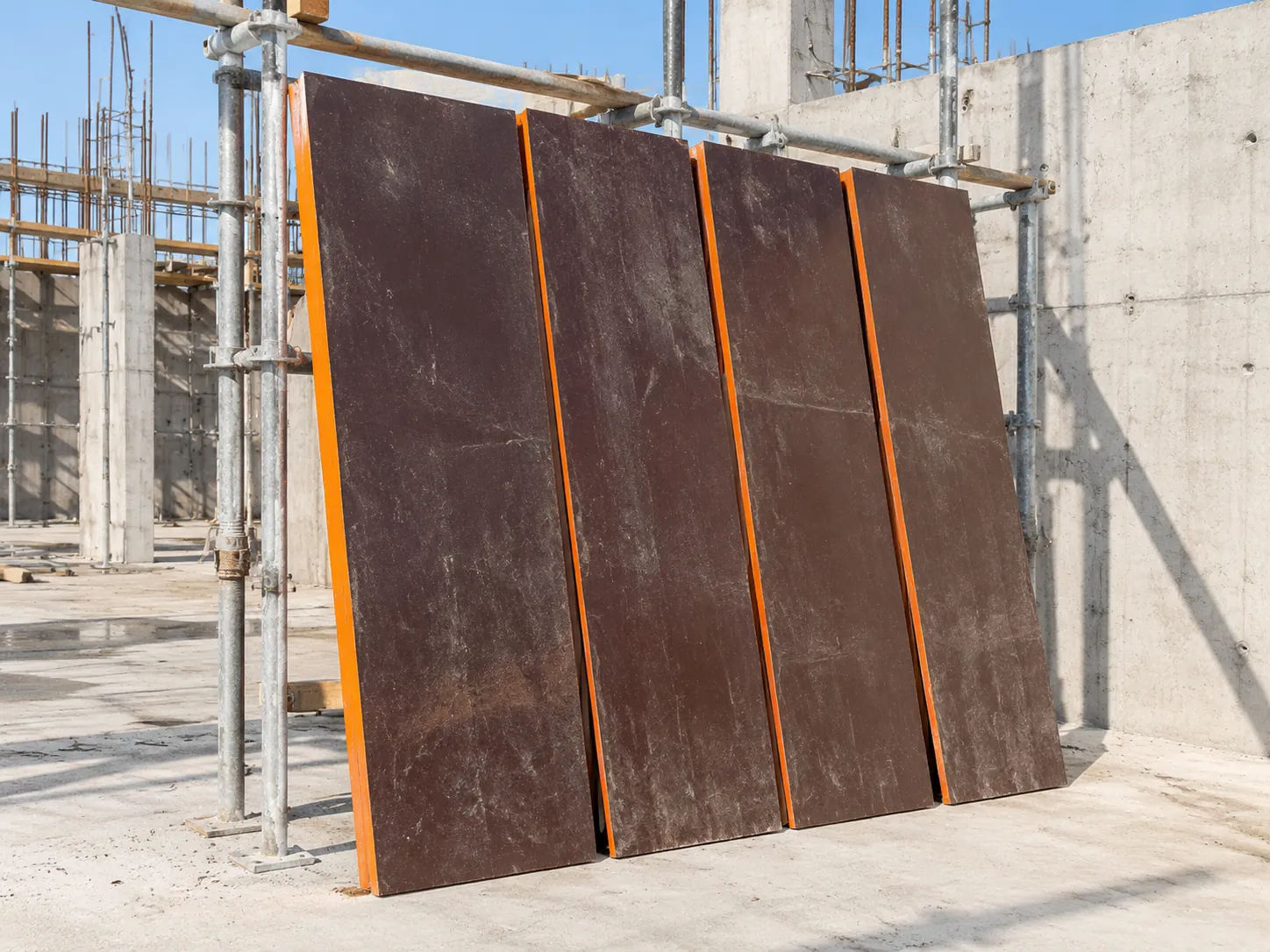
Formwork is the mould that gives fresh concrete its shape and holds it until it can stand alone. On most sites the face of that mould is film-faced plywood with a hardwood core, laid on timber joists, beams or steel frames.
The plywood does three jobs: it carries the wet concrete between supports, it gives the concrete its surface, and it comes off clean for the next pour. Glue, core and film decide how long it keeps doing all three.
Thickness
18 mm is the usual sheet for slabs and walls on timber joists; 21 mm for beam-and-deck slab systems. 12 and 15 mm go into frame facings and lighter or curved work.
| Job | Usual thickness | Panel to order |
|---|---|---|
| Slab deck on timber joists | 18 mm | MUF or phenolic film-faced |
| Slab deck on beam systems | 21 mm, often 1250 × 2500 mm | Phenolic film-faced |
| Walls and columns | 15 or 18 mm | Film-faced, cut to the form |
| Frame facings, curved work | 12 or 15 mm | Cut-to-size, edges painted |
Site routine
About 12–15 pours for our MUF panels and up to about 25 for phenolic, when the site follows the routine below. Budget panels typically give about 4–10 reuses.
Keep packs off the ground, flat and out of rain until use.
Paint each saw cut and drilled hole before the panel sees concrete; water enters through bare end grain.
A thin even coat on the film lets the concrete come away without pulling the film.
Lever from the edges with a soft tool; a steel bar driven into the face tears the film.
Scrape residue off with a plastic scraper, re-oil and stack flat for the next pour.
AS 6669
Yes. Our formwork plywood is certified to AS 6669:2016, Plywood – Formwork, by CMI Certification, a JAS-ANZ-accredited product certification body, with no conditions or limitations listed.
The certificate covers the product "formwork plywood" for the purpose "plywood for formwork". It states no stress grade, thickness or glue, so we claim none from it; the build of each order is written on its technical sheet.
Notes
Notes and calculators for the people who plan and run the pours.
Pours by glue and by site routine.
How many pours per panelWhy the cheaper sheet can cost more.
Cost per pour of formwork plywoodDeck panels on beam systems.
H20 beams under plywood decksWhat fails on site, and why.
Film-faced plywood complaints and causesWhat to check when the container opens.
Checking formwork plywood on arrivalPanels for wall forms.
Wall formwork plywoodFormwork, decks and anti-slip floors.
Construction plywood applicationsSheets for a slab or wall.
Formwork plywood quantity calculatorSpan by thickness and load.
Formwork panel span calculatorPressure on wall formwork.
Concrete pressure on formwork calculatorOur Australian formwork certification.
AS 6669 formwork plywoodBuyer questions
The mould that shapes fresh concrete and holds it until it can stand alone; on most sites its face is film-faced plywood.
Film-faced plywood with a hardwood core and MUF or phenolic glue, usually 12–21 mm thick.
18 mm for slabs and walls on timber joists, 21 mm for beam-and-deck slab systems, and 12 or 15 mm for frame facings and lighter work.
About 12–15 for our MUF panels and up to about 25 for phenolic, with proper handling, release agent on every pour and sealed edges.
Water enters plywood through bare end grain. An unsealed cut swells after a few pours and ends the panel early.
Yes, to AS 6669:2016 by CMI Certification. The certificate states no stress grade, so we claim none.
Quotation
Tell us the job, the support spacing and the pours you need. We reply with the thickness and glue we would press, and a price.