
Panel types
Film-faced, anti-slip and CE structural panels: what each is for and what we do not make.
Panel types notesTechnical notes · two mills in Chi Linh, Hai Phong
In short
This plywood blog is where PK Ply writes down what our two mills in Chi Linh, Hai Phong know about construction plywood. The notes explain how film-faced, anti-slip and CE structural panels are built, how glue and core decide reuse, which files travel with an order and how a 40HC is loaded. Seven topic pages sort them.
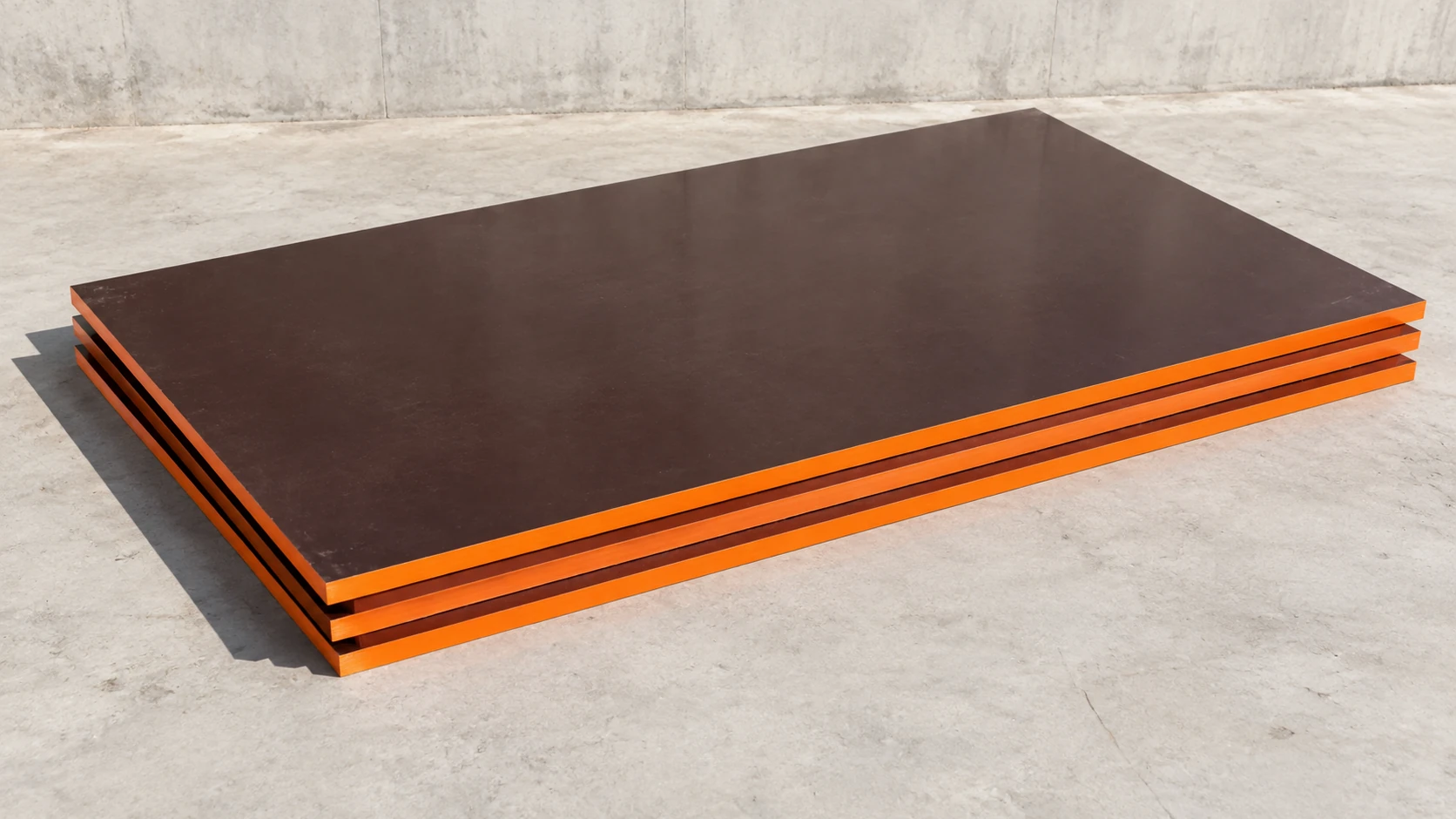
Film
A short film walks through the seven topics of these notes: the panels we make, the core and glue inside them, the sizes on our order sheet, the files that go with an order, and how a container leaves Hai Phong.
The short answer
Formwork is the temporary mould that holds wet concrete in shape until it can carry its own weight. Plywood forms the face of most slab and wall formwork because a sheet is flat, easy to handle and easy to cut on site. Film-faced plywood adds a resin film that strips clean from the concrete.
The film-faced panels we press have smooth phenolic film on both faces, hardwood face veneers under the film, an Acacia or Eucalyptus core laid crosswise, MUF or phenolic glue lines and water-resistant paint on all four edges. The film gives the concrete its finish; the core and glue decide how many pours the sheet survives.
These notes start at our own presses. Every value in them comes from our order sheet, our certificates or a test report, and test results keep their specimen and method next to them.
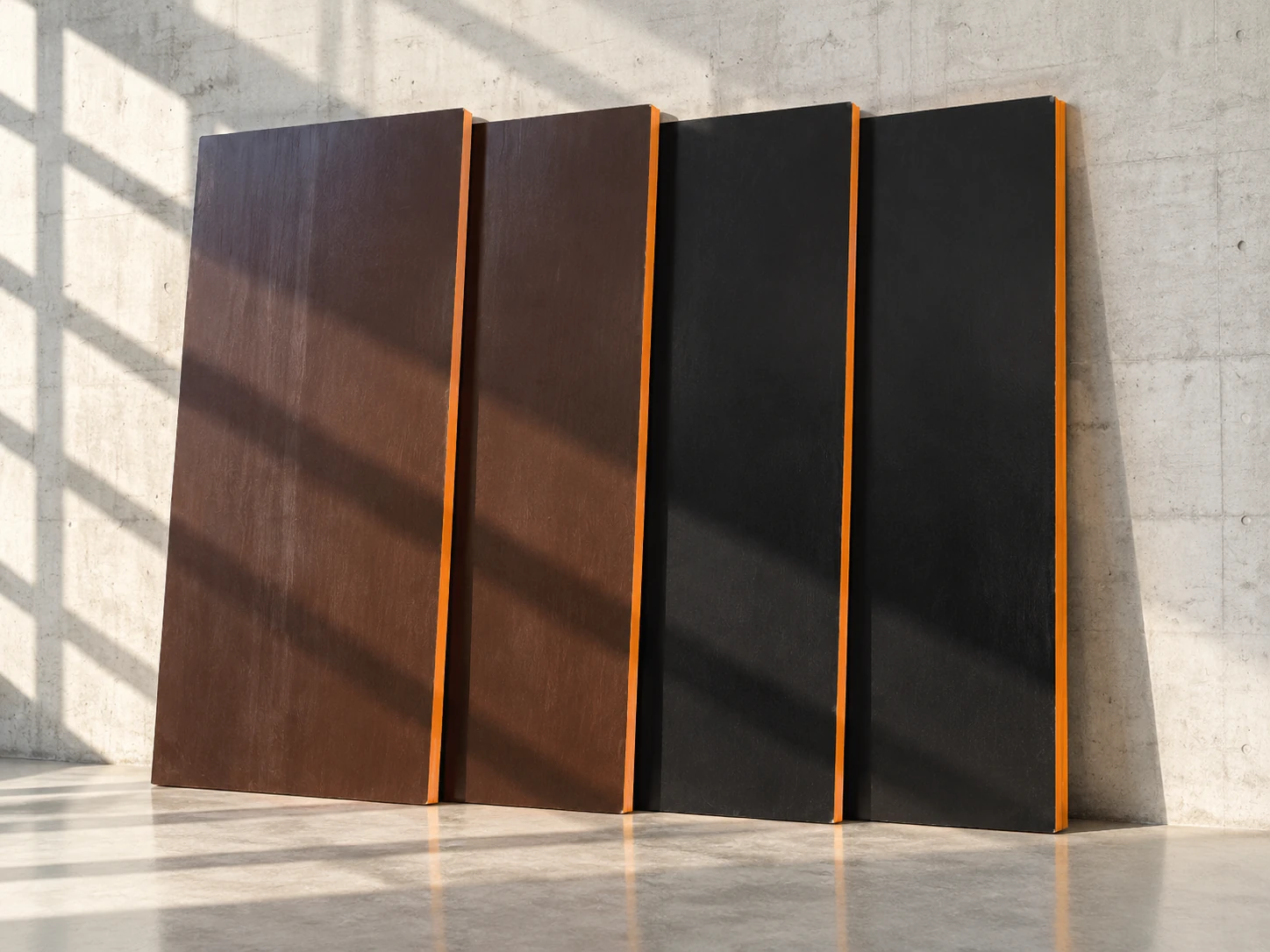
Formwork types
Site teams mostly use four kinds of formwork. Three of them use plywood as the surface that touches the concrete, so the choice of formwork decides the plywood size, thickness and glue.
| Formwork type | How it is built | Where plywood fits |
|---|---|---|
| Traditional timber formwork | Plywood sheets on timber joists and props, built on site | Plywood is the whole facing; sheets are cut to fit and reused while the face holds |
| Beam and deck systems | Engineered timber beams on steel props carry a plywood deck | Full sheets, often 21 mm in 1250 × 2500 mm, laid as the slab deck |
| Frame panel systems | Steel or aluminium frames with a replaceable facing | Plywood facing is cut to the frame and replaced when it wears |
| All-metal or plastic forms | Steel, aluminium or plastic shells, no wood facing | No plywood in the form itself; plywood still covers infill and odd shapes |
We supply the plywood for the first three; we do not make frames, beams or props.
Formwork plywood
Film-faced plywood with a hardwood core is the usual answer. The film keeps water out of the face and releases the concrete; the hardwood core gives the stiffness to span between joists without bowing.
On our lines the everyday formwork thicknesses are 12, 15, 18 and 21 mm, in sheets of 1220 × 2440 mm or 1250 × 2500 mm. Thinner sheets suit curved or light work; 18 and 21 mm carry slab decks between beams.
Anti-slip plywood is a cousin rather than a formwork panel: its patterned film gives grip on decks, platforms and floors. CE-marked structural panels are ordered where the plywood itself carries load and the project asks for a Declaration of Performance.
Grades by job
Grade the panel by the job it does. Formwork panels are graded by glue, film and reuse target; deck panels by grip; structural panels by the CE performance on the Declaration of Performance.
| Job | Build we press | What sets the grade |
|---|---|---|
| Slab and wall formwork, many pours | Phenolic film-faced, hardwood core | Phenolic glue; up to about 25 pours with handling |
| Slab and wall formwork, standard | MUF film-faced, hardwood core | MUF glue; about 12–15 pours with handling |
| Decks, platforms, floors | Anti-slip: rice, hexagon or wire-mesh pattern | Pattern and film weight, fixed per order |
| Load-bearing panels | CE structural plywood, MUF or phenolic glue | EN 13986 performance, 3.6–30 mm inside our FPC scope |
Glue and reuse
Glue sets the ceiling on reuse. With proper handling, a release agent on every pour and sealed edges, our MUF film-faced panels give about 12–15 pours and our phenolic panels up to about 25.
Budget formwork panels sold on price typically give about 4–10 reuses. The difference sits inside the sheet: a gapped core, a thin glue spread or a light film fails long before the face wears out.
Reuse is a target for a build and a site routine, not a fixed property of the sheet. Rough stripping, missing release agent or unsealed cut edges cut any panel short, phenolic included.
Topics
Each topic page gathers the notes on one part of the job. The last five cards are notes already written.
Film-faced, anti-slip and CE structural panels: what each is for and what we do not make.
Panel types notesAcacia or Eucalyptus cores, MUF or phenolic glue lines, and what the boil tests show.
Core and glue notes1220 × 2440 and 1250 × 2500 mm sheets, 9–40 mm, tolerance and film weight.
Sizes and grades notesCE, FSC, EUDR, REACH and US formaldehyde rules matched to the files we hold.
Certificates and rules notesTerms, 40HC loads, sea transit from Hai Phong and the document set per shipment.
Buying and shipping notesOne panel through our mills, from veneer intake to edge sealing and packing.
Production notesThickness for slabs and walls, release agent, sealed cut edges and pour counts.
Formwork and site use notesTypes, sizes, sheet weights and pour counts of shuttering ply.
Shuttering ply guideDensity, bonding Class 3 and E1 chamber results on one specimen.
SGS 21 mm test report noteBuild, sheet weight and 40HC loads of the most ordered thickness.
18 mm film-faced plywood noteThe steps from first enquiry to the container at your port.
Import plywood from Vietnam noteCore, glue, film and size: the drivers behind a construction panel price.
Plywood price drivers noteBuyer questions
Formwork is the temporary mould that holds fresh concrete in shape until it can carry its own weight. It is struck after curing and reused on the next pour; plywood is the usual facing.
Film-faced plywood with a hardwood core, usually 12, 15, 18 or 21 mm thick. We press it with Acacia or Eucalyptus cores and MUF or phenolic glue, film on both faces and painted edges.
Traditional timber formwork, beam and deck systems, frame panel systems and all-metal or plastic forms. The first three use plywood as the face that touches the concrete.
Phenolic glue. With proper handling, a release agent on every pour and sealed edges, our phenolic panels give up to about 25 pours and our MUF panels about 12–15.
Anti-slip plywood, with a rice, hexagon or wire-mesh pattern pressed into the film. The pattern and film weight are fixed on the order.
Some are. Test results are always given with their specimen and method; order values such as thickness, size and glue come from our order sheet and certificates.
The technical and export team at our two mills in Chi Linh, Hai Phong. The notes describe the panels we press and the files we send with them.
Quotation
Send the job, panel, thickness, size, quantity and port. We reply with a technical sheet and an FOB Hai Phong, CFR or CIF price.