
Production process
All eight stages on one page.
Production processTechnical notes · production
In short
A film-faced panel at PK Ply passes eight stages in our two mills in Chi Linh, Hai Phong: veneer intake, drying, core lay-up, glue and press, sizing and sanding, film press, edge sealing, then marking and packing. Phenolic bonds are hot pressed at about 130–145 °C, and thickness is held to ±0.5 mm.
Film
The film follows one panel through the eight stages, from the veneer yard to the strapped pack, with the checks made at each stage.
The short answer
In eight stages, each with its own check. The core is built and pressed first; the film goes on in a second press, and the edges are sealed before packing.
Acacia or Eucalyptus veneers arrive from plantation logs and are sorted by grade and moisture.
Veneers are dried so the glue bonds and the panel stays flat.
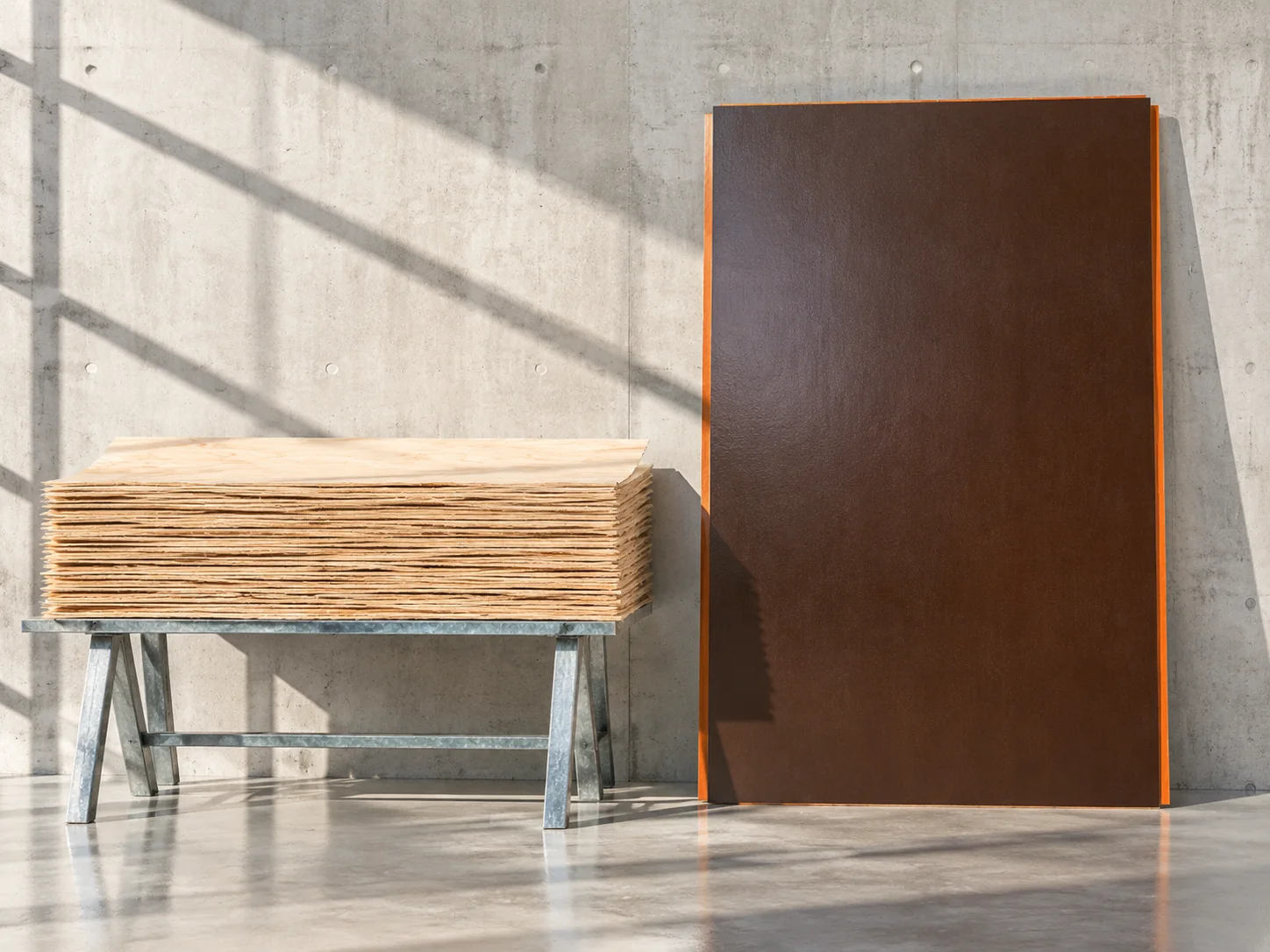
Core veneers are laid crosswise, grain alternating, with smooth face veneers on the outside.
MUF or phenolic glue is spread and the core is hot pressed; phenolic bonds at about 130–145 °C.
The pressed core is trimmed square and sanded to thickness before the film.
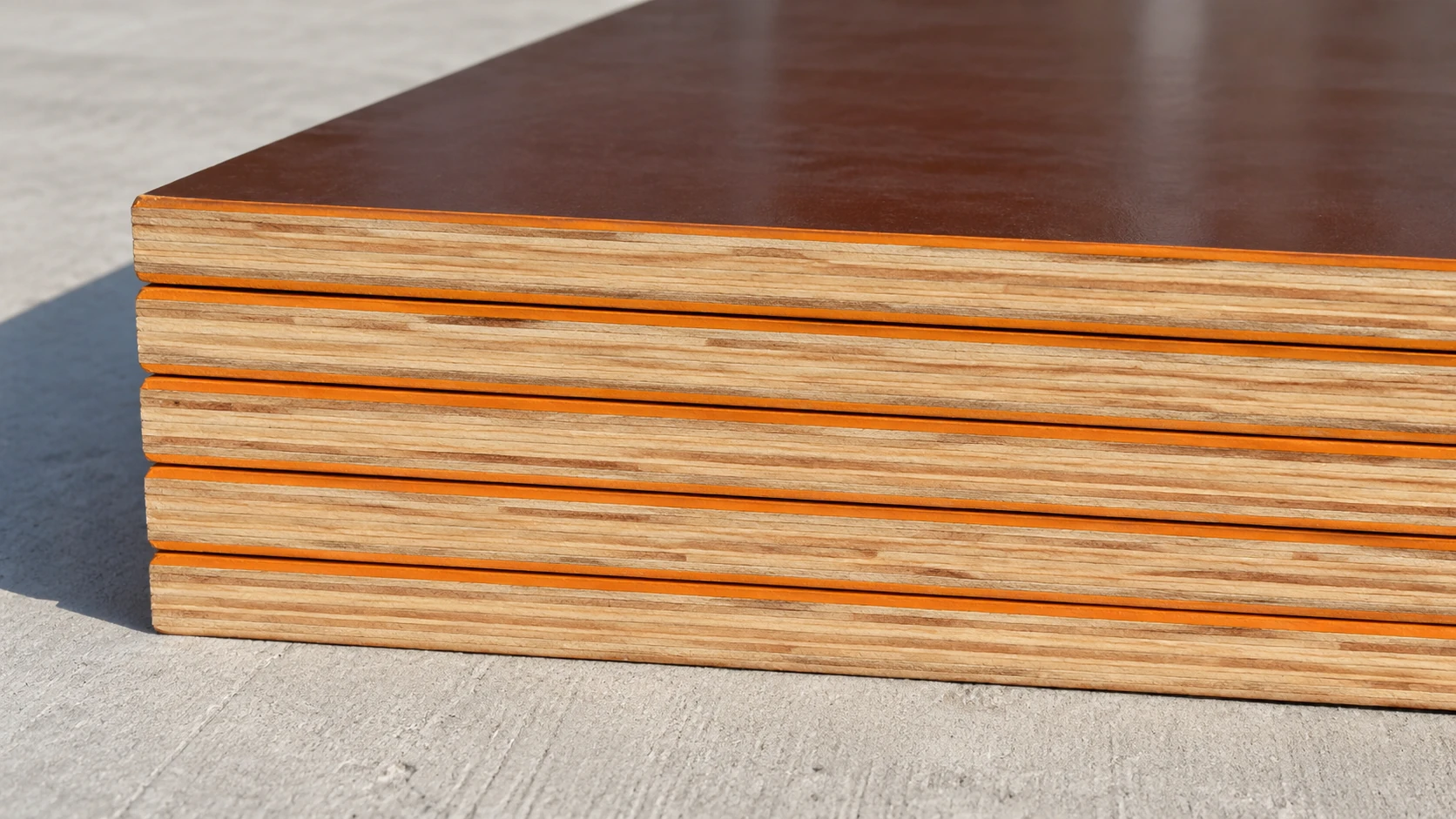
Phenolic film is pressed on both faces in black or dark brown.
All four edges get water-resistant paint so water cannot enter the core.
Panels are checked, marked and packed on pallets for the container.
Core species
Acacia or Eucalyptus hardwood veneers, chosen with the buyer. Both are plantation timber; Eucalyptus gives a denser, heavier sheet, Acacia a lighter one that loads more m³ per container.
Veneers are sorted before lay-up so that gaps, splits and overlaps do not reach the press. A core without gaps is what lets a panel survive repeated stripping.
Edges and tolerance
Edges are sealed because water enters plywood through the end grain, not through the film. Thickness is held to ±0.5 mm and length and width to ±2 mm on film-faced panels.
Sanding the core to thickness before the film is what keeps the tolerance. The tolerance for each order is written on its technical sheet and checked at the QC stations.
On site, every new cut needs the same seal. An unsealed cut edge swells after a few pours and ends the panel early.
Our mills
Both mills are in Chi Linh, Hai Phong, Vietnam. One is a modern plant that started production in 2026. Together they ship up to 150 containers a month.
Quality management runs under ISO 9001; the documentation is sent with the order.
Mill pages and notes
Each production stage has its own page with photos and checks.
All eight stages on one page.
Production processGrading veneers before lay-up.
Veneer sorting at our millsThe glue line, MUF or phenolic.
Glue mixing and spreadingCore press, then film press.
Two-stage pressingWhere each panel is checked.
QC stations at our millsHow packs are built for export.
Pallets and packingThe plant that started in 2026.
Our second plantWhere our veneers come from.
Plantation timber for our plywoodWhy we avoid them in formwork.
Finger-jointed cores riskSanding to thickness before film.
Calibrated formwork plywoodBuyer questions
Veneer intake, drying, core lay-up, glue and press, sizing and sanding, film press, edge sealing, then marking and packing.
About 130–145 °C for WBP phenolic bonds.
Acacia or Eucalyptus hardwood veneers from plantation timber, chosen with the buyer.
Water enters plywood through the end grain. Paint on all four edges keeps it out; site cuts need the same seal.
±0.5 mm on thickness and ±2 mm on length and width, written on each order's technical sheet.
Two mills in Chi Linh, Hai Phong, Vietnam, shipping up to 150 containers a month.
Quotation
Ask for a video call from the press floor or send your specification. We reply with a technical sheet for your build.