
To import plywood from Vietnam to Europe, the EU importer files the EUDR due diligence statement, claims preferential duty with proof of Vietnamese origin and checks CE marking for structural use. PK Ply hands over the geolocation dossier, the EUR.1 and the CE papers with each lot. A container without those papers waits at the port.
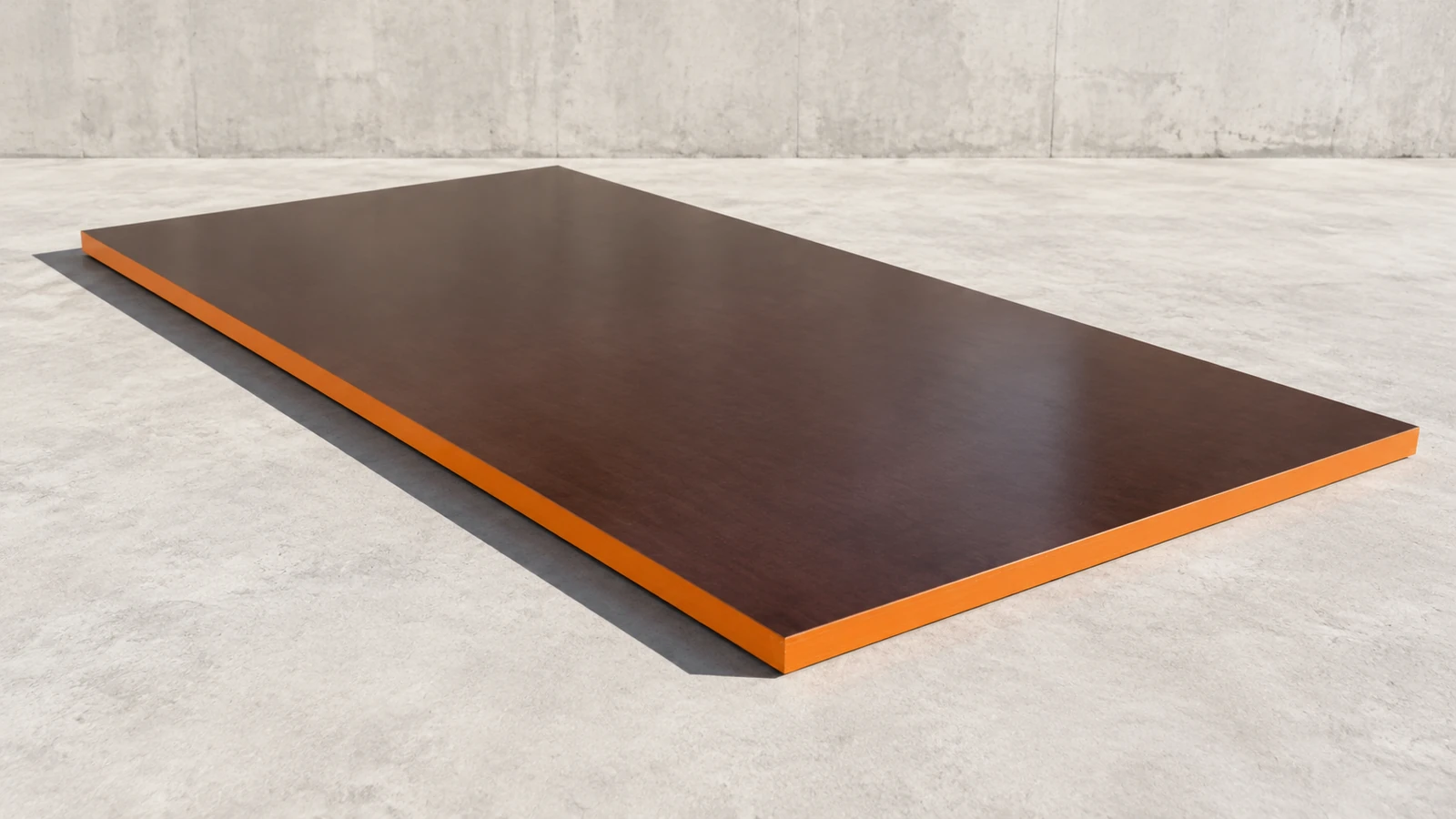
How do you import plywood from Vietnam to Europe?
You import plywood from Vietnam to Europe in four lines of work: fix the build and its CE scope, collect the EUDR information for your due diligence statement, ship with proof of Vietnamese origin for the preferential duty, then clear customs at an EU port with the statement reference in hand. Our mills supply every paper on the supplier side.
The order of the work matters more than the number of steps. The EUDR statement must exist before the customs declaration, so its information has to reach the importer before the container sails. The CE question has to be settled before the order, because the panel offered must sit inside the certificate scope. And the origin certificate has to be right on the draft, because a wrong line costs the preference.
| Step | What happens | Who acts | When |
|---|---|---|---|
| 1. Build and scope | Glue, film, thickness, size; structural use and CE scope checked | Buyer and mill | Before the order |
| 2. Certificate files | CE FPC certificate, FSC certificate, test evidence | Mill sends | Before the order is confirmed |
| 3. Deposit and production | 30% deposit, then 15–45 days of production | Buyer, then mill | Order |
| 4. EUDR information | Species, quantity, country, geolocation of every plot | Mill sends the dossier | Before shipment |
| 5. Due diligence statement | Filed in the EU system; reference kept | EU importer | Before the customs declaration |
| 6. Loading and papers | Packing list, EUR.1, B/L, phytosanitary and fumigation papers; drafts for approval | Mill, then buyer | After loading |
| 7. Sea | Hai Phong to an EU port | Carrier | 25–40 days by region |
| 8. Clearance | Tariff code, origin preference, statement reference, CE papers | Importer and broker | On arrival |
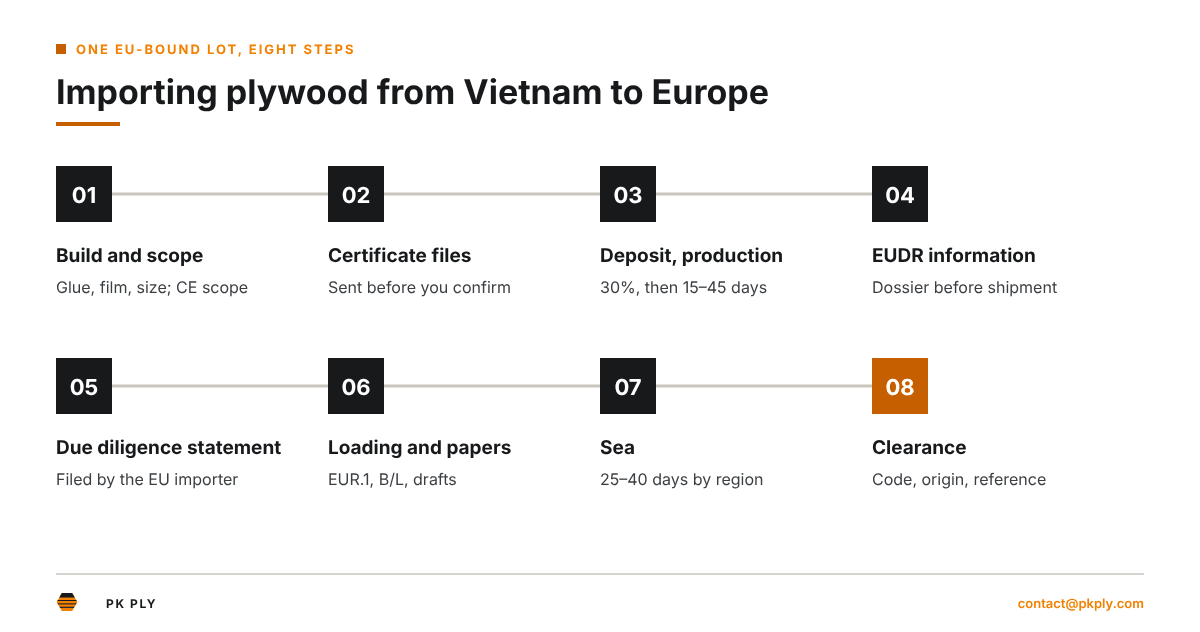
The rest of this note follows one EU-bound lot from our two mills in Chi Linh, Hai Phong to an EU port, rule by rule. The general route for any market, including the UK and the US, is in our guide to importing construction plywood from Vietnam.
Which documents travel with each EU-bound container?
Each EU-bound container from our mills travels with a commercial invoice, packing list, bill of lading, the EUR.1 certificate of origin and phytosanitary and fumigation papers where required, plus insurance under CIF. The order’s certificate documents and the EUDR file set go with the lot, and certificate files reach the buyer before the order is confirmed.
| Document | What it proves | When it reaches you |
|---|---|---|
| CE FPC certificate and declaration of performance | Structural panel inside our CE scope | Before you confirm (certificate); with the lot (DoP) |
| FSC claim on the sales documents | FSC 100% or FSC Mix for that order | On the invoice of an FSC order |
| Test evidence for the agreed build | Bonding and emission results for the configuration | Before you confirm |
| EUDR geolocation dossier | Species, quantity, country, plot coordinates | Before shipment, for your statement |
| Commercial invoice and packing list | Value, quantities, sheets per pack | Drafts after loading |
| EUR.1 certificate of origin | Vietnamese origin for the preference | Draft after loading, original with the papers |
| Bill of lading | Shipment and title | Scanned against the 70% balance |
| Phytosanitary and fumigation papers | Solid-wood packing material treated | With the shipping papers |
| Insurance certificate | Cover under CIF | With the shipping papers |
Draft shipping documents go to the buyer for approval after loading, before they are issued. That is the moment to check the origin line, the tariff description and the consignee, because a correction after issue costs days.
Plywood is processed wood and is outside ISPM 15. The solid-wood pallets, battens and dunnage shipped with it fall under ISPM 15, which is why the phytosanitary and fumigation papers cover the packing, not the panels.
Which tariff heading and origin proof apply to Vietnamese plywood?
Plywood enters the EU under tariff heading 4412, and the subheading depends on the species of the outer plies and the build. Plywood made in Vietnam can claim preferential duty under the EU-Viet Nam trade agreement when the lot carries proof of Vietnamese origin, which for our EU-bound lots is the EUR.1.
The EU-Viet Nam trade agreement entered into force on 1 August 2020. A preference is claimed at import, by the importer, on the strength of the origin proof. If the EUR.1 is missing or carries a wrong line, the lot is cleared at the standard rate.
Two things decide the eight-digit code your broker uses. The first is the species named for the face and back: our panels have Acacia or Eucalyptus cores under hardwood face veneers and film, and the technical sheet names them. The second is the build itself, which is why the description on the invoice should match the technical sheet word for word. Your customs broker confirms the code and the duty rate for your build before the first shipment.
Does the EU anti-dumping duty on Chinese plywood apply to plywood made in Vietnam?
No. The EU anti-dumping duty on hardwood plywood applies to plywood originating in China, and it does not apply to plywood made in Vietnam. A Vietnamese lot is cleared on its own origin, with its own certificate, and the China duty does not enter the calculation.
Regulation (EU) 2025/2333 imposes a definitive anti-dumping duty on imports of hardwood plywood originating in the People’s Republic of China. The rates in its Article 1 are 43.3% for one named exporter and 86.8% for all other companies, applied to the net free-at-Union-frontier price.
That is context, not a reason to buy. What decides a Vietnamese lot at the EU border is its origin proof, its tariff code and its EUDR statement, and those are the same whichever duty applies to other countries. The certificate of origin is what proves the panels were made at our mills in Vietnam.
Do formwork panels need CE marking for structural use in the EU?
Formwork panels placed on the EU market for structural use need CE marking under the harmonised standard EN 13986, with a declaration of performance from the manufacturer. Panels sold only as formwork facing, not declared for a structural use, are a different case, and the importer decides how the panel is placed on the market.
The legal frame is the Construction Products Regulation. In it, factory production control is the documented, permanent and internal control of production in a factory. For structural plywood under EN 13986 that control is checked by a notified body under assessment system 2+.
EN 13986 covers characteristics, evaluation of conformity and marking of wood-based panels for use in construction. The plywood standard sits beside it. EN 636 specifies requirements for plywood for general purposes or structural application in dry, humid or exterior conditions. Formwork is wet work, so an EU formwork order names the humid or exterior class.
What our CE certificate covers, and where it stops
Our CE marking runs under EN 13986:2004+A1:2015, AVCP System 2+, with factory production control certificate 0407-CPR-2146 from Istituto Giordano S.p.A., notified body 0407. The scope is plywood for structural use in dry, humid and external conditions, 3.6–30 mm, with MUF or phenolic glue.
That scope is narrower than the 9–40 mm range we press. A 40 mm panel is outside it, so it is not offered as a CE structural panel. For a structural order the thickness has to sit inside 3.6–30 mm, and the everyday formwork thicknesses of 12, 15, 18 and 21 mm all do.
| Line | What our CE file says |
|---|---|
| Standard | EN 13986:2004+A1:2015 |
| Assessment system | AVCP System 2+ |
| FPC certificate | 0407-CPR-2146, notified body 0407 |
| Use | Structural, in dry, humid and external conditions |
| Thickness | 3.6–30 mm |
| Glue | MUF or phenolic |
| Performance values | On the declaration of performance for the thickness, not on the certificate |
The declaration of performance is the document a designer reads, and it follows the language rule of the member state. The declaration of performance shall be supplied in the language or languages required by the Member State where the product is made available. Tell us the destination country with the order. The CE marking page shows the certificate, and the structural CE plywood page lists the panels inside the scope.
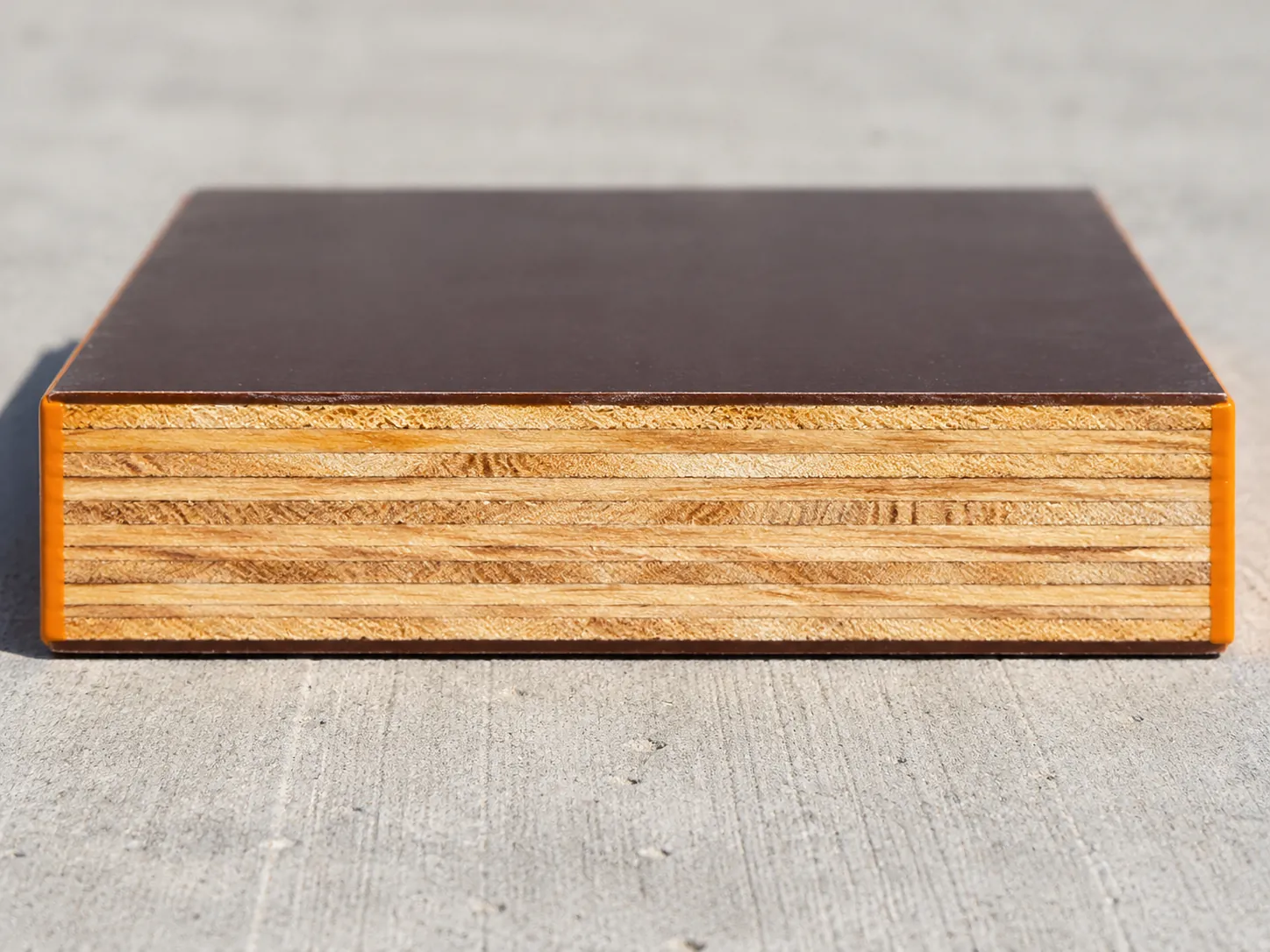
Who files the EUDR due diligence statement when plywood is imported into the EU?
The EU importer of the plywood is the operator under the EUDR and files the due diligence statement. The statement reference must exist before the customs declaration. A downstream operator, such as an EU contractor buying panels that already have a statement, files no new statement, but the first downstream operator keeps the reference for five years.
What that means for a formwork lot from our mills:
- The importer files. We are the producer outside the EU and do not file the EU statement; we supply the information it needs.
- One statement can cover several shipments, so an importer with a regular rhythm of containers can plan its filings.
- The reference comes first. The statement must exist before the customs declaration, so the dossier has to reach the importer before the container arrives.
- Records are kept five years. The importer keeps the due-diligence records; the first downstream operator keeps the reference.
Our part is the dossier. It is described in its own section below and on the EUDR geolocation dossier page.
Is there an EUDR certificate for plywood?
There is no official EUDR certificate for plywood. The regulation asks the operator for due diligence and a statement, not for a certificate from the supplier, so a document sold as an “EUDR certificate” proves only what its issuer checked. What the operator needs from the mill is information it can verify.
That information is set out in the regulation itself: the product description and wood species with common and scientific names, the quantity, the country of production and the geolocation of every production plot, with production dates. Regulation (EU) 2023/1115 defines geolocation as the geographical location of a plot of land described by latitude and longitude coordinates using at least six decimal digits. Plots of more than 4 ha are described by polygons, not single points.
An FSC certificate does not replace the statement either. It supports the importer’s risk assessment, and our FSC chain of custody is described further down, but the statement and its information stay the importer’s to file.
Which EUDR dates apply to plywood importers in 2026 and 2027?
The EUDR applies to plywood importers from 30 December 2026 when they are large or medium operators, or micro and small operators already under the EU Timber Regulation, which includes plywood importers. Other micro and small operators follow from 30 June 2027. The deforestation cut-off date stays 31 December 2020.
Regulation (EU) 2025/2650 repeals Regulation (EU) No 995/2010 with effect from 30 December 2026. From that date the old Timber Regulation stops applying to new placings, with one exception for older timber.
For micro or small undertakings established by 31 December 2024, the amended articles apply from 30 June 2027. Plywood importers that were already under the Timber Regulation are not in that later group.
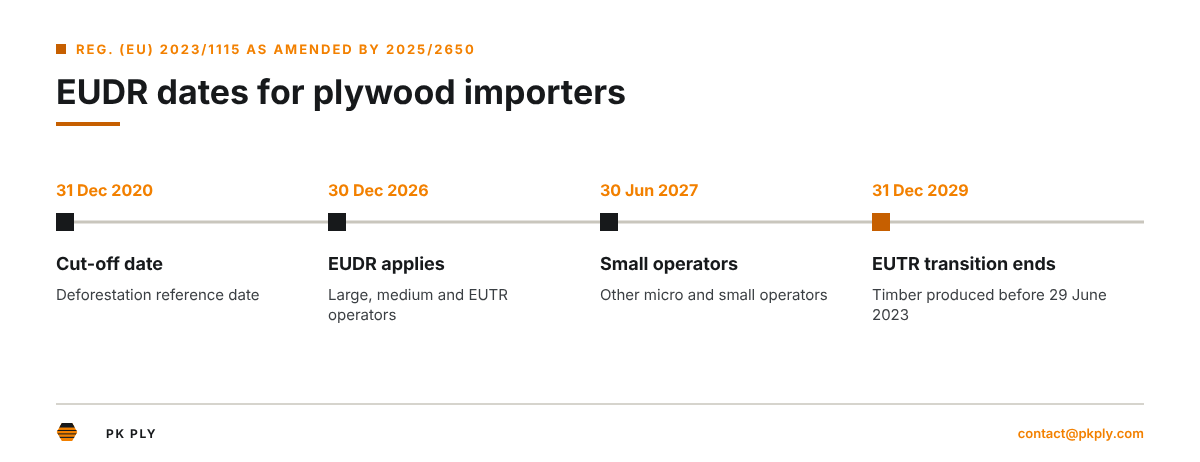
| Date | What happens |
|---|---|
| 31 December 2020 | Deforestation cut-off date for the plots |
| 30 December 2026 | EUDR applies to large and medium operators and to micro and small operators already under the EU Timber Regulation |
| 30 June 2027 | EUDR applies to other micro and small operators |
| 31 December 2029 | End of the EUTR transition for timber produced before 29 June 2023 |
What happens to plywood made before the EUDR dates?
Plywood made from timber produced before 29 June 2023 and placed on the EU market from 30 December 2026 stays under the old EU Timber Regulation until 31 December 2029. Panels pressed now from current veneer fall under the EUDR. For a formwork importer the transition matters for old stock, not for new containers.
In practice every container we press for an EU buyer from now on is pressed from current veneer, so it travels with the EUDR information. Old stock in an EU warehouse is the importer’s own question and sits outside what a new order from us carries.
What our EUDR geolocation dossier contains
Our EUDR geolocation dossier contains what the importer’s statement asks for: the product description, the wood species, the quantity, the country of production and the geolocation of the plots behind the Acacia and Eucalyptus in the lot, as GeoJSON files with production dates. It is built per lot and sent before shipment.
| Dossier line | What it carries |
|---|---|
| Product | Film-faced plywood build, thickness, size, quantity |
| Species | Core and face species, common and scientific names |
| Country of production | Vietnam |
| Geolocation | GeoJSON files, coordinates to at least six decimal digits |
| Large plots | Polygons for plots over 4 ha |
| Production dates | Per plot, as the regulation asks |
Vietnam is classed low risk. Simplified due diligence applies only when every commodity in the product comes from low-risk countries, so the importer checks that the whole build qualifies. Low risk changes the checks, not the information: the dossier still carries the plots. Authorities check at least 1% of operators a year for low-risk products, 3% for standard risk and 9% for high risk.
The dossier is information for the importer’s own due diligence. It is not a certificate and it does not file the statement.
How FSC claims work on an EU order
On an EU order placed as FSC, our FSC chain of custody SGSHK-COC-370674 covers the manufacture and sale of FSC 100% and FSC Mix plywood, and the claim appears on the sales documents for that order. Eligible orders can use certified material for core, face and back; the claim is confirmed per order, not assumed for every container.
FSC labels products as FSC 100%, FSC Recycled or FSC Mix. Our certificate covers two of those, 100% and Mix. A buyer who needs the claim for a tender writes “FSC 100%” or “FSC Mix” on the order, and checks the claim and certificate number on the invoice.
The FSC claim and the EUDR statement answer different questions. The claim tracks certified material through the supply chain; the statement records due diligence on deforestation and legality for the lot. An EU buyer of formwork plywood often wants both, and the FSC plywood page shows the certificate scope.
Formaldehyde: which EU limit applies to formwork plywood?
The EU limit for formaldehyde from wood-based articles is the REACH restriction in Annex XVII entry 77: from 6 August 2026, furniture and wood-based articles may not be placed on the EU market if their emission exceeds 0.062 mg/m³ under the chamber conditions it sets. Articles used only outdoors are excluded.
Regulation (EU) 2023/1464 restricts formaldehyde and formaldehyde releasers by adding entry 77 to Annex XVII of REACH. The chamber conditions are 23 °C, 45% relative humidity and a loading of 1 m²/m³, and other articles have a limit of 0.080 mg/m³. Whether a formwork panel counts as an article used only outdoors is the importer’s call; many buyers ask for emission evidence either way.
Our evidence is an SGS Vietnam chamber result on one submitted 21 mm phenolic film-faced specimen with an Acacia core, dated 23 December 2025: formaldehyde not detected at the 0.04 mg/m³ reporting limit, E1 PASS against ≤0.124 mg/m³ by EN 717-1. Not detected means below the reporting limit, not zero, and the class reported is E1. The E1 chamber test page shows the result.
How many days does a container take from Hai Phong to Northern Europe?
A container from Hai Phong typically takes 30–40 days at sea to Northern Europe and 25–35 days to the Mediterranean, varying by carrier and route. Add production of 15–45 days after the deposit and a few days for loading and papers, and a first EU order runs about two to three months from deposit to port.
| Destination region | Typical days at sea from Hai Phong | Countries buyers often ship to |
|---|---|---|
| Northern Europe | 30–40 | Germany, the Netherlands, Belgium, Poland, northern France |
| Mediterranean | 25–35 | Spain, Italy, Greece, southern France |
Transit days are the carrier’s; the production window is ours. Book freight against the agreed production date, not before it, and allow for the EUDR statement to be filed while the container is at sea.
Do the rules change for Poland, Germany, France, Belgium or the Netherlands?
The rules do not change between member states. Tariff, origin, CE marking and the EUDR are EU rules, so importing plywood from Vietnam to Poland, Germany, France, Belgium or the Netherlands follows the same route. What changes is the national authority that enforces them and the language of the declaration of performance.
What to tell us with the order:
- The destination country, for the declaration of performance language and the consignee on the papers.
- The port, for CFR or CIF pricing and the transit days.
- Whether the panels are declared for structural use, so the CE papers go with the lot.
- Whether you need an FSC claim, written on the order.
- Who files the EUDR statement, if the importer of record is not the buyer.
Our destinations page groups the files each market asks for.
Packaging and the PPWR on an EU lot
The EU packaging regulation, Regulation (EU) 2025/40, applies from 12 August 2026 and covers the packaging that travels with the panels, not the panels themselves. Its limit for lead, cadmium, mercury and hexavalent chromium together in packaging is 100 mg/kg.
We hold a PPWR packaging test by SGS. It covers the packaging materials tested, not the panel, and not every PPWR obligation an importer has. The PPWR packaging report page explains what it covers. Solid-wood packing material is also the part of the load that ISPM 15 treatment applies to.
From FOB Hai Phong to an EU warehouse: the cost lines
The landed cost of an EU lot is the FOB Hai Phong price plus ocean freight, insurance, EU port charges, customs clearance, import duty after the origin preference, import VAT and delivery. Under CFR or CIF, freight and insurance are in our price; duty, clearance, VAT and delivery stay with the importer.
| Cost line | Who quotes it | What moves it |
|---|---|---|
| Panels, packing, loading | We do (FOB Hai Phong) | The build, per m³ |
| Ocean freight | Forwarder, or us under CFR/CIF | Route, season, 40HC fill |
| Insurance | Insurer, or us under CIF | Cargo value |
| EU port and terminal | Forwarder or broker | Port |
| Customs clearance | Broker | Documents, statement reference |
| Import duty | Broker, from the tariff | Code and origin preference |
| Import VAT | Broker | Member state |
| Delivery | Haulier | Distance |
Container fill moves freight per sheet. A 40HC takes about 47 m³ of Acacia-core panels or about 43 m³ of Eucalyptus-core panels, as planning figures; for 1250 × 2500 mm sheets of 18 mm that is about 848 Acacia-core or 750 Eucalyptus-core sheets. Our 21 mm EU-format panel is pressed at 1250 × 2500 mm.
How to start an EU order with our mills
To start an EU order, send the build, the destination country and port, the Incoterm, whether the panels are declared for structural use and whether you need an FSC claim. We return a technical sheet, the certificate files and an offer FOB Hai Phong, CFR or CIF for one 40HC or more, with the EUDR dossier to follow before shipment.
Payment is a 30% deposit to start production and the 70% balance against the scanned bill of lading, by T/T or irrevocable L/C at sight. Our terms of supply set out the full terms. Send your lines through the specification form or to [email protected].
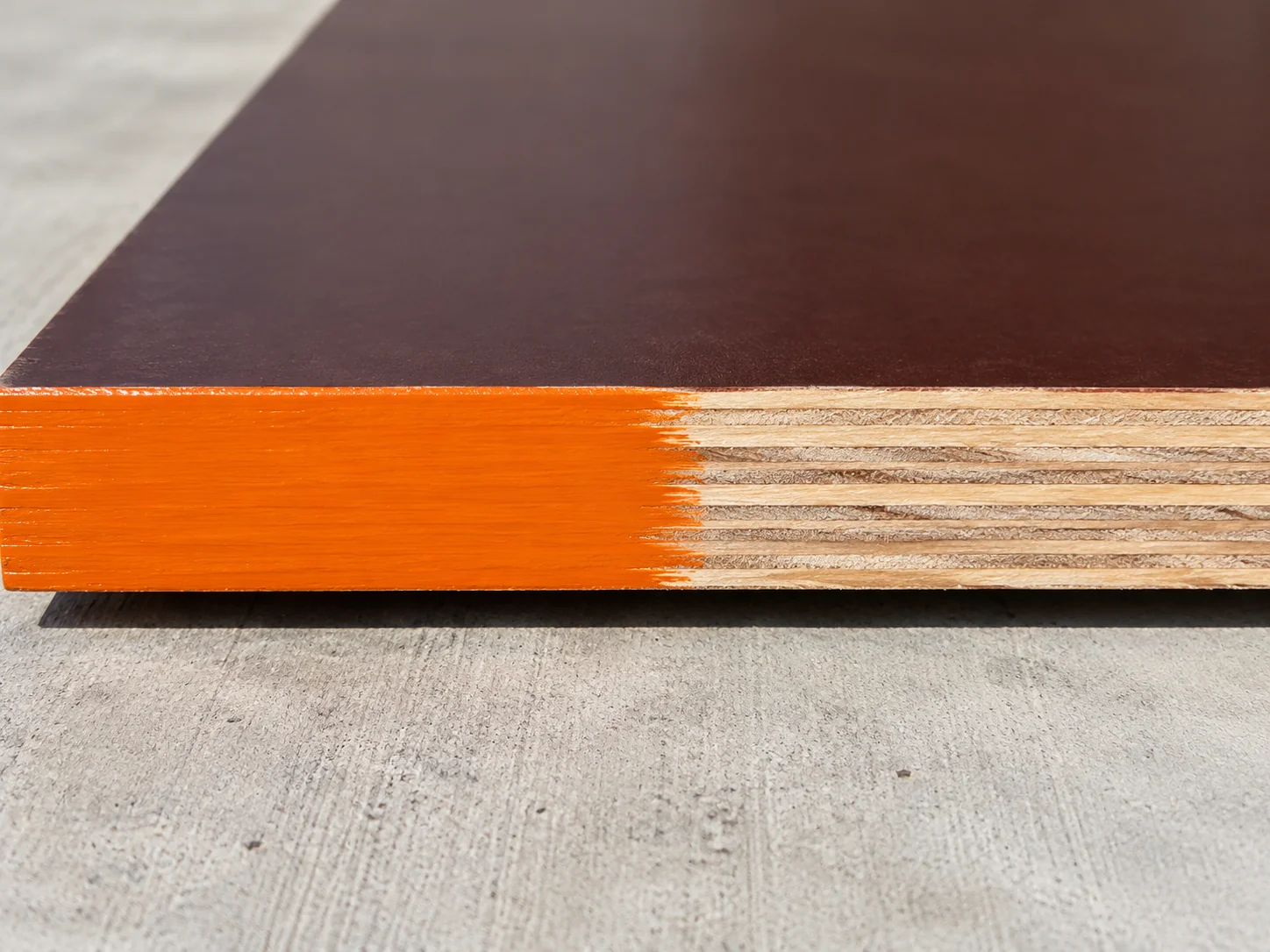
On arrival, record the seal, the doors and the packs before unloading, and seal any edge you cut on site the same day. The papers get the lot through the port; the edges keep the panels working.
Questions buyers ask us
Who files the EUDR due diligence statement for plywood from Vietnam?
The EU importer, as operator, files the due diligence statement. We supply the geolocation dossier with GeoJSON files and the species, quantity and production details it needs.
Is there an EUDR certificate for plywood?
No. There is no official EUDR certificate; the operator files a due diligence statement, and the supplier's part is the information behind it.
When does the EUDR apply to plywood importers?
From 30 December 2026 for large and medium operators and for micro and small operators already under the EU Timber Regulation, which includes plywood importers. Other micro and small operators follow from 30 June 2027.
Does film-faced formwork plywood need CE marking?
Plywood placed on the EU market for structural use is CE marked under EN 13986. Our CE scope covers structural plywood of 3.6–30 mm with MUF or phenolic glue under factory production control certificate 0407-CPR-2146.
Does the EU anti-dumping duty on Chinese plywood apply to plywood from Vietnam?
No. The duty set by Regulation (EU) 2025/2333 applies to hardwood plywood from China; it does not apply to plywood made in Vietnam.
Which origin document do you send for EU lots?
EU-bound lots from our mills carry a certificate of origin, the EUR.1, with the commercial invoice, packing list and bill of lading.
How long is the sea transit from Hai Phong to Northern Europe?
Typically 30–40 days at sea to Northern Europe and 25–35 days to the Mediterranean, varying by carrier and route.
Do you supply FSC plywood for EU orders?
Yes, under FSC chain of custody SGSHK-COC-370674 for FSC 100% and FSC Mix plywood; the claim is confirmed per order on the sales documents.
Is Vietnam low risk under the EUDR?
Yes. Vietnam is classed low risk, so simplified due diligence can apply when every commodity in the product comes from low-risk countries.
Do the rules differ if I import to Poland, Germany or the Netherlands?
Tariff, origin, CE and EUDR rules are EU rules and are the same in every member state. The national authority enforces them and may ask for the declaration of performance in its own language.
What is the minimum order for an EU-bound container?
One 40HC, which can carry one or two products and up to six by agreement, shipped FOB Hai Phong, CFR or CIF.
How long do I keep EUDR records?
Due-diligence records are kept for five years.