
Site hoardings and fences
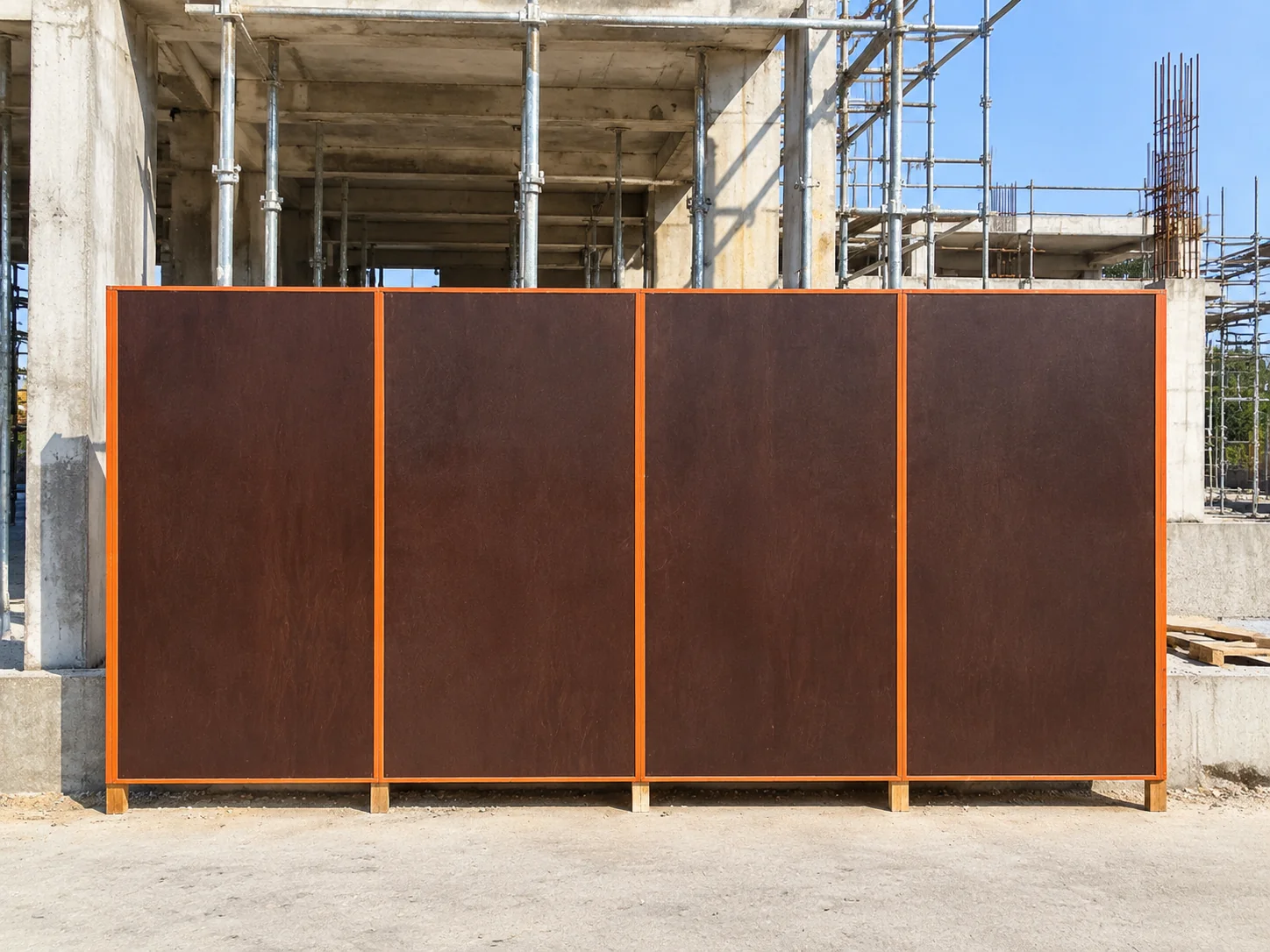
18 mm film-faced panels on timber frames; the film takes paint or graphics and sheds rain.
Structural panels · CE marked to EN 13986
In short
Our structural plywood carries CE marking under EN 13986, AVCP System 2+, through factory production control certificate 0407-CPR-2146 from notified body 0407. The certificate covers plywood for structural use in dry, humid and external conditions, 3.6–30 mm, with MUF or phenolic glue. Our phenolic bond passed EN 314 Class 3 on an SGS-tested 21 mm specimen, the bond class for exterior plywood.
Film
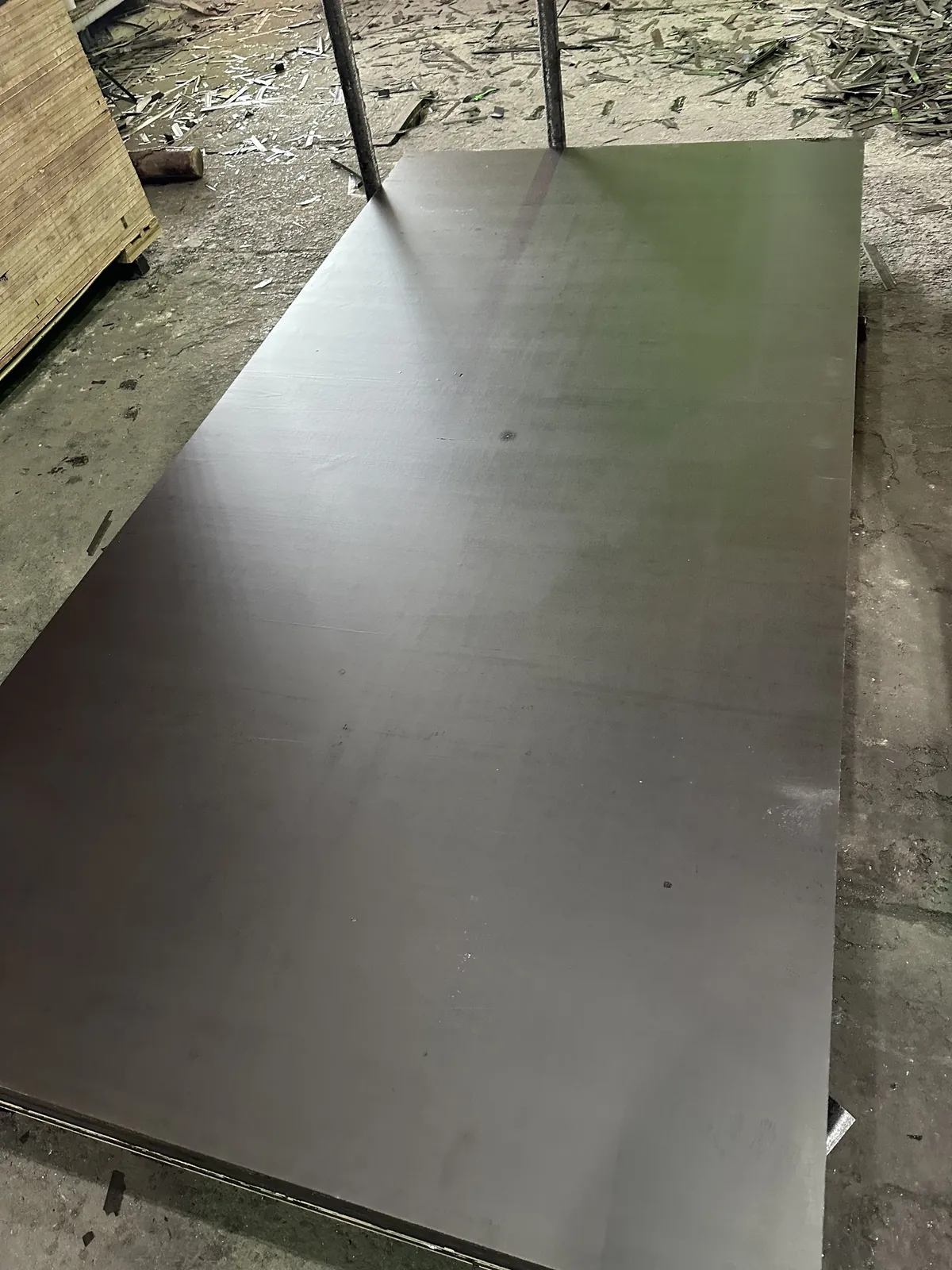
The page film will follow a structural order through our mill: veneer intake and drying, lay-up, pressing, the factory production control checks and the CE documents that go with the shipment, cut from real clips.
Real panels
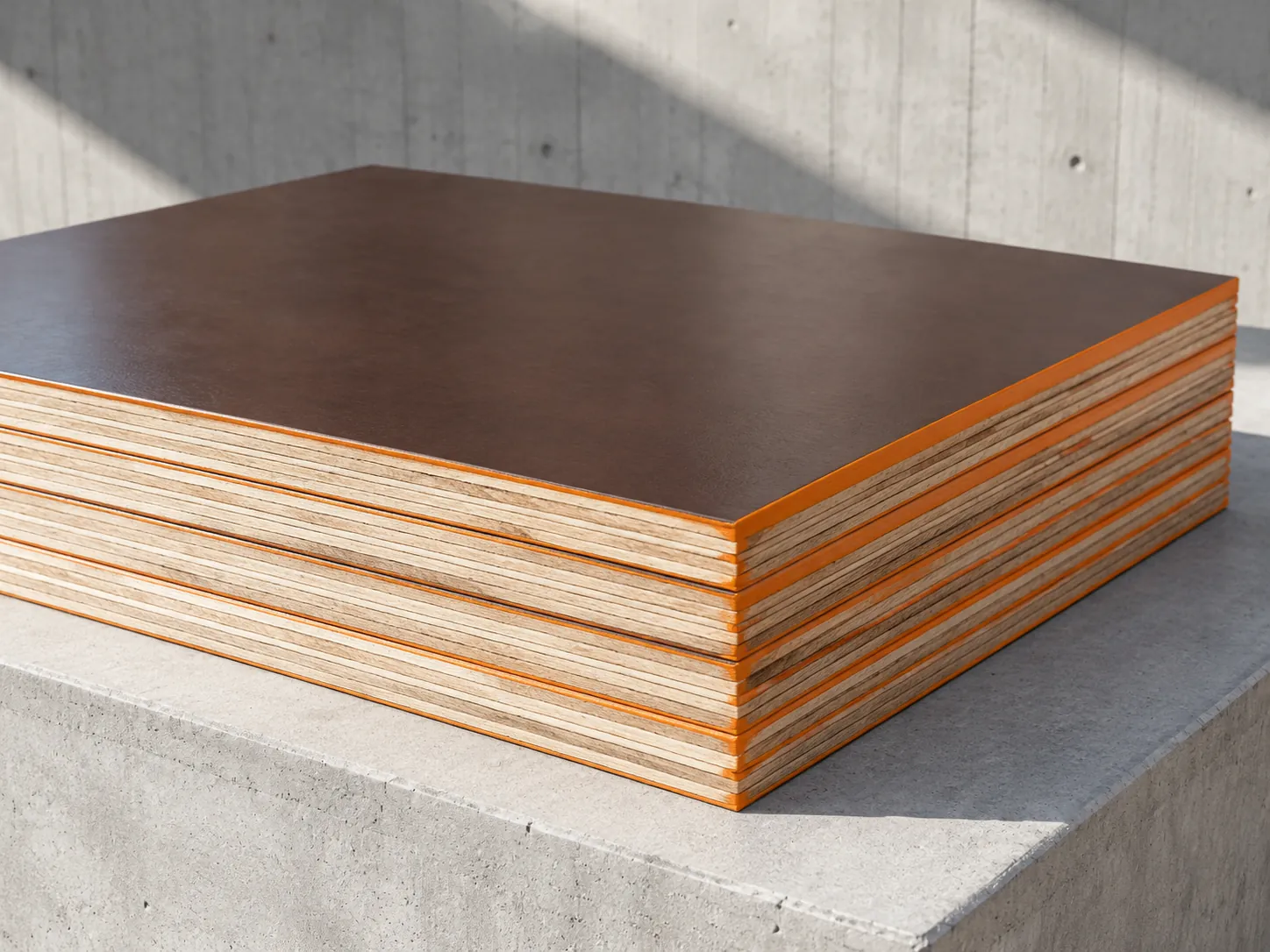
These photos were taken at our mill: a tall stack of pressed plywood before facing, with the veneer layers on every edge. More photos of structural sheets, thickness checks and labelled packs are being taken and will be added. The same press lines make the structural build and our formwork panels.
Specification
Our structural panel is a hardwood-core plywood pressed with MUF or phenolic glue and, as standard, film on both faces. Any other face is agreed on the technical sheet before production. For a CE-marked order, the panel thickness must fall inside the certified 3.6–30 mm scope; the performance values for each thickness are on the Declaration of Performance, not on the certificate.
| Item | Standard | Options by order |
|---|---|---|
| CE marking | EN 13986:2004+A1:2015, AVCP System 2+ | CE documents issued with structural orders |
| Use conditions in scope | Structural use in dry, humid and external conditions | Condition stated on the order and the DoP |
| Glue | Phenolic | MUF |
| Core | Acacia hardwood veneers, laid crosswise | Eucalyptus hardwood veneers |
| Faces | Film on both faces, dark brown | Black film; other faces agreed on the technical sheet |
| Thickness | 12, 15, 18 and 21 mm | Inside the CE scope: 3.6–30 mm; outside it to 40 mm without CE |
| Sheet size | 1220 × 2440 mm | 1250 × 2500 mm; cut sizes |
| Thickness tolerance | ±0.5 mm | Declared values per thickness on the DoP |
| Length and width | ±2 mm | Agreed per order |
| Edges | Edge paint, all four sides | Colour of your choice |
| Formaldehyde | E1 pass on the SGS 21 mm phenolic specimen (EN 717-1) | Your test method, through SGS |
CE scope
CE2+ is shorthand for CE marking under assessment and verification of constancy of performance System 2+. Under Regulation (EU) 305/2011 and EN 13986, the manufacturer declares the performance of the panel and runs factory production control, and a notified body certifies that control after an initial inspection of the plant and keeps it under surveillance.
Our factory production control certificate is 0407-CPR-2146, issued by Istituto Giordano S.p.A., notified body 0407. It covers plywood for structural use in dry, humid and external conditions, from 3.6 mm to 30 mm, with MUF or phenolic glue. It has no expiry date; it stays valid while the standard and plant conditions are unchanged, unless suspended or withdrawn.
Our production range is wider, 9–40 mm, than the certified scope. A panel thicker than 30 mm is still made with the same glue and checks, but it is sold without CE marking. When you order for structural use, we confirm on the technical sheet that the panel is inside the scope before production.
| Item | Inside CE certificate 0407-CPR-2146 | Our production range |
|---|---|---|
| Thickness | 3.6–30 mm | 9–40 mm |
| Glue | MUF or phenolic | MUF or phenolic |
| Use | Structural, dry, humid and external conditions | Formwork, floors, structural |
| Standard | EN 13986:2004+A1:2015 | EN 13986 build for CE orders |
| Performance values | On the DoP per thickness | On the technical sheet |
Use classes
For structural plywood, the grade that matters most is the use class, not the look of the face. EN 13986 refers to EN 636, which sets three plywood specifications by service condition: EN 636-1 for dry, EN 636-2 for humid and EN 636-3 for exterior conditions. Our CE certificate covers structural use in all three conditions.
Bond quality is tested under EN 314. Class 3 is the bonding class for exterior conditions, and our phenolic bond passed it on an SGS-tested 21 mm specimen. When you order, state the service condition; we write the glue and the condition on the technical sheet, and the DoP of your panel states its declared performance.
Many buyers search for "WBP plywood" or "marine" when they mean exterior plywood. WBP is an older name for a weather- and boil-proof bond, which today is described by EN 314 Class 3. Marine plywood is a separate specification for boat building that we do not make.
| Service condition | Plywood specification | Typical structural use | What we write on the technical sheet |
|---|---|---|---|
| Dry | EN 636-1 | Interior floors and linings that stay dry | Glue and condition per order |
| Humid | EN 636-2 | Covered structures, roof decks under a membrane | Glue and condition per order |
| External | EN 636-3 | Exposed decks, hoardings, platforms, temporary works | Phenolic glue, bond Class 3 |
Core and build
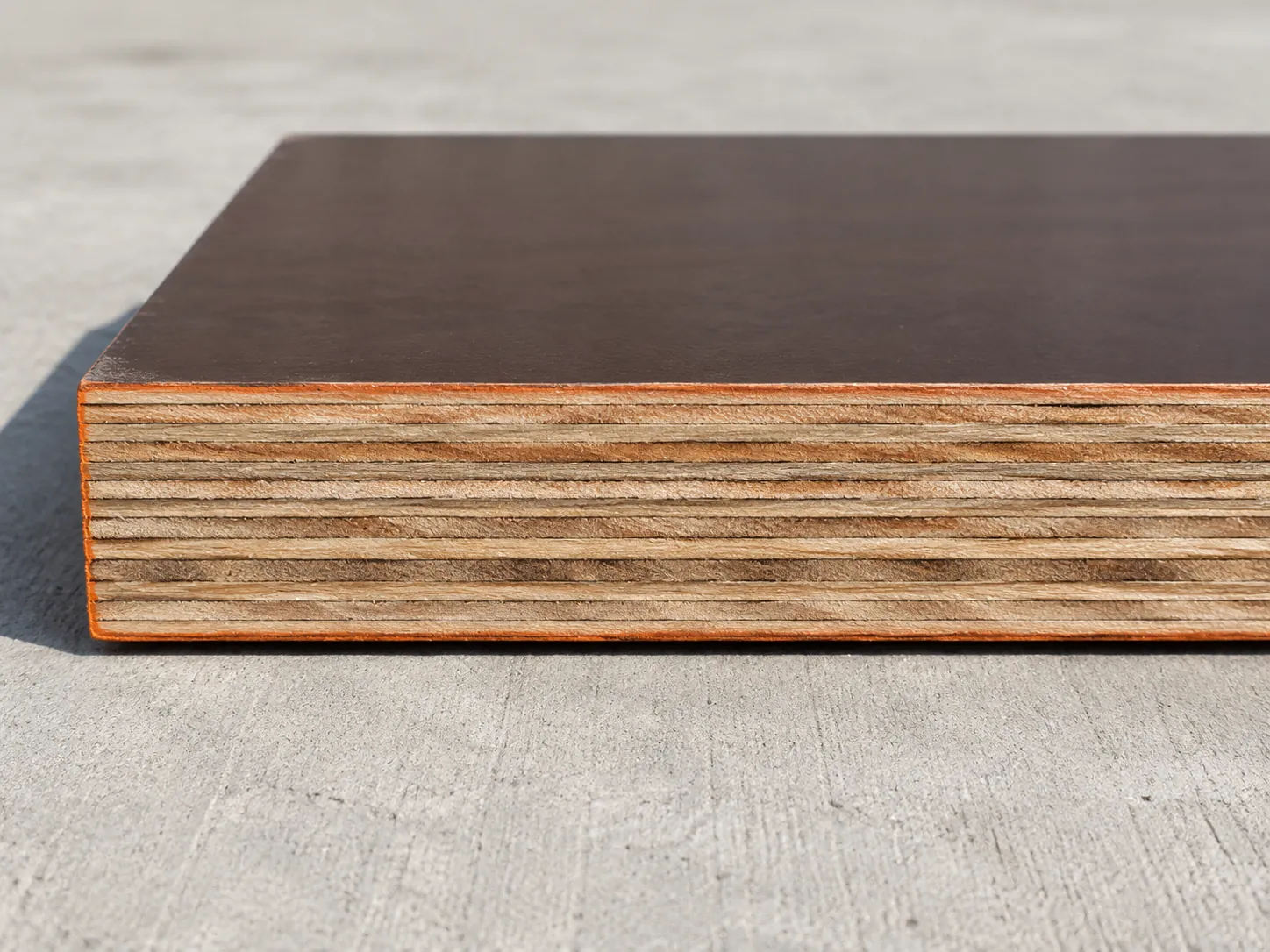
The panel is built from hardwood veneers, Acacia or Eucalyptus, laid crosswise and glued under heat and pressure; hot pressing for phenolic bonds runs at about 130–145 °C. An 18 mm panel has film on both faces, hardwood face veneers under the film, core veneers laid crosswise and painted edges.
For a structural panel the core has to be full: veneers without gaps or overlaps, so stiffness is even across the sheet. Sample sheets from each production run are cut open and checked layer by layer, and the run is recorded under our factory production control.
Acacia is lighter and loads more volume per container. Eucalyptus is denser; buyers often choose it for floors and platforms under point loads.
| Item | Acacia core | Eucalyptus core |
|---|---|---|
| Planning density | 580 kg/m³ | 650 kg/m³; measured 650–750 kg/m³ |
| Measured density, SGS 21 mm phenolic specimen | 642 kg/m³ | Not tested |
| 18 mm sheet, 1250 × 2500 mm | 32.6 kg | 36.6 kg |
| 21 mm sheet, 1250 × 2500 mm | 38.1 kg | 42.7 kg |
| Load per 40HC | About 47 m³ | About 43 m³ |
Glue and bond
For panels that will be wet, exposed or outdoors for long periods, we press with phenolic glue; MUF suits dry and humid conditions.
Our phenolic bond was tested by SGS Vietnam on a submitted 21 mm dark-brown film-faced specimen with an Acacia core, report issued 23 December 2025. It passed bonding quality Class 3 under EN 314-1 and EN 314-2 after three pretreatments: 24 h water soak, boil-dry-boil and 72 h boiling.
The same specimen measured 642 kg/m³ density under EN 323. Measured in the EN 717-1 chamber, its formaldehyde emission stayed below the 0.04 mg/m³ reporting limit (not detected), which passes E1 at 0.124 mg/m³. These are results for the specimen we submitted, not a guarantee for every panel; we test your build to your method on request.
MUF glue is inside our CE scope as well and is a sound choice for dry and humid conditions at a lower price. Tell us the service condition and we recommend the glue; it is written on the technical sheet you approve.
Yes, within reason. A phenolic panel with a Class 3 bond, film faces and painted edges takes rain during construction. Store it flat and covered, and seal every cut edge, because water enters through bare veneer first.
The bond is water- and boil-resistant; the wood itself still takes up water at open edges. Sealed edges and faces keep it out.
E1 pass on the SGS 21 mm specimen; ND does not mean zero and is not an E0 claim.
Sizes
We press 1220 × 2440 mm and 1250 × 2500 mm sheets and cut other sizes from them; nothing larger than 1250 × 2500 mm. For CE-marked orders the thickness stays inside 3.6–30 mm; the most ordered structural thicknesses are 18 mm and 21 mm.
We hold thickness to ±0.5 mm and length and width to ±2 mm, and print both on the technical sheet you sign off.
| Thickness | Inside CE scope | Typical use |
|---|---|---|
| 12 mm | Yes | Linings and bracing panels |
| 15 mm | Yes | Platform and floor panels on close joists |
| 18 mm | Yes | Floors, decks, hoardings; the most ordered |
| 21 mm | Yes | Platforms and decks with wider spans |
| 25–30 mm | Yes | Heavy-duty floors |
| Over 30 mm, up to 40 mm | No, sold without CE | Special uses by agreement |
Applications
Our buyers in construction use the structural build where a panel carries load and stays outdoors. The film faces and phenolic bond make it a good fit for temporary and semi-permanent works.
18 mm film-faced panels on timber frames; the film takes paint or graphics and sheds rain.
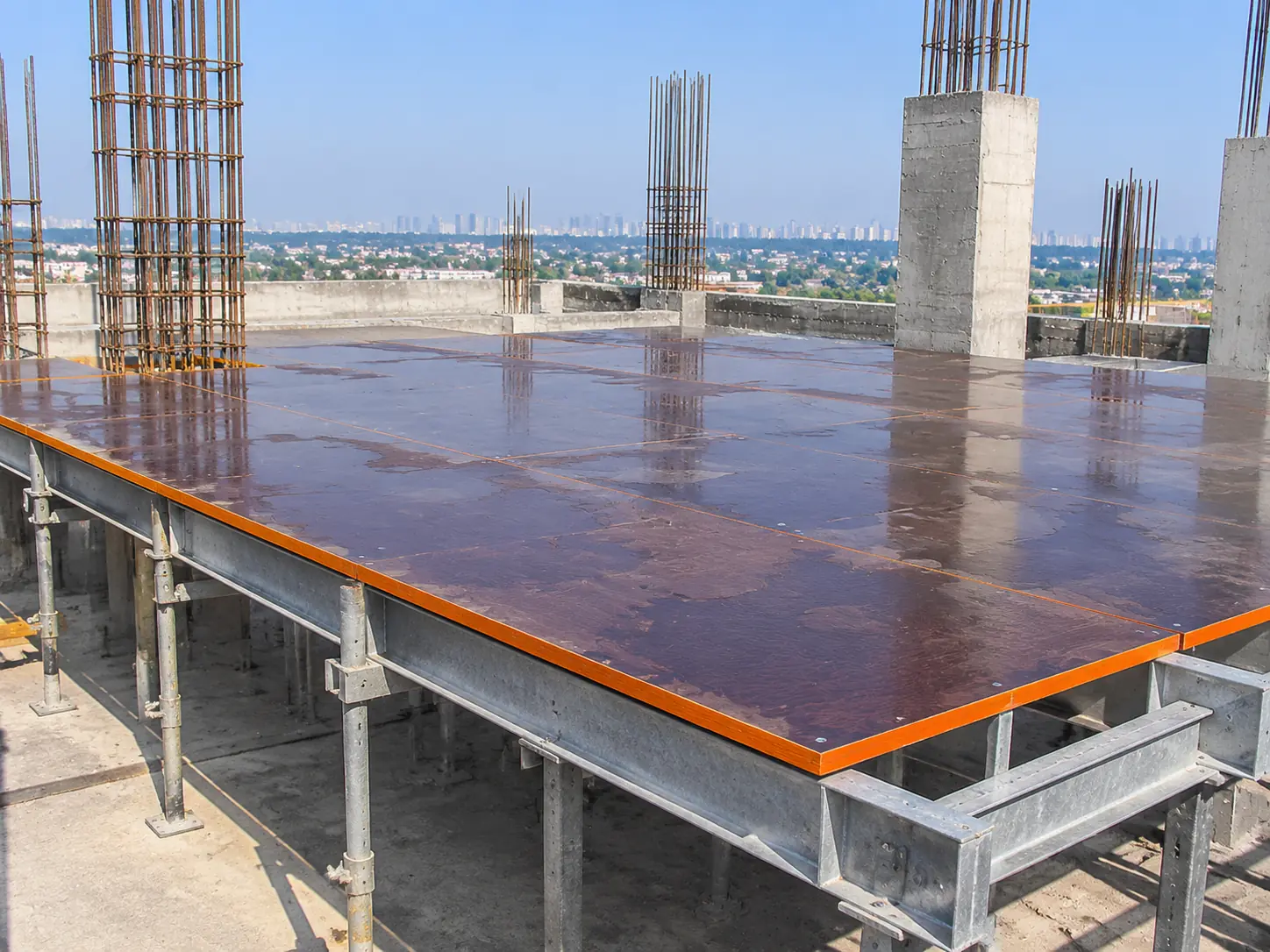
18 mm and 21 mm panels on steel beams, fixed down, edges and holes sealed.
Floors and walls of site cabins, stair landings and covered walkways.
Eucalyptus-core panels for floors that take wheels and point loads; anti-slip faces on request.
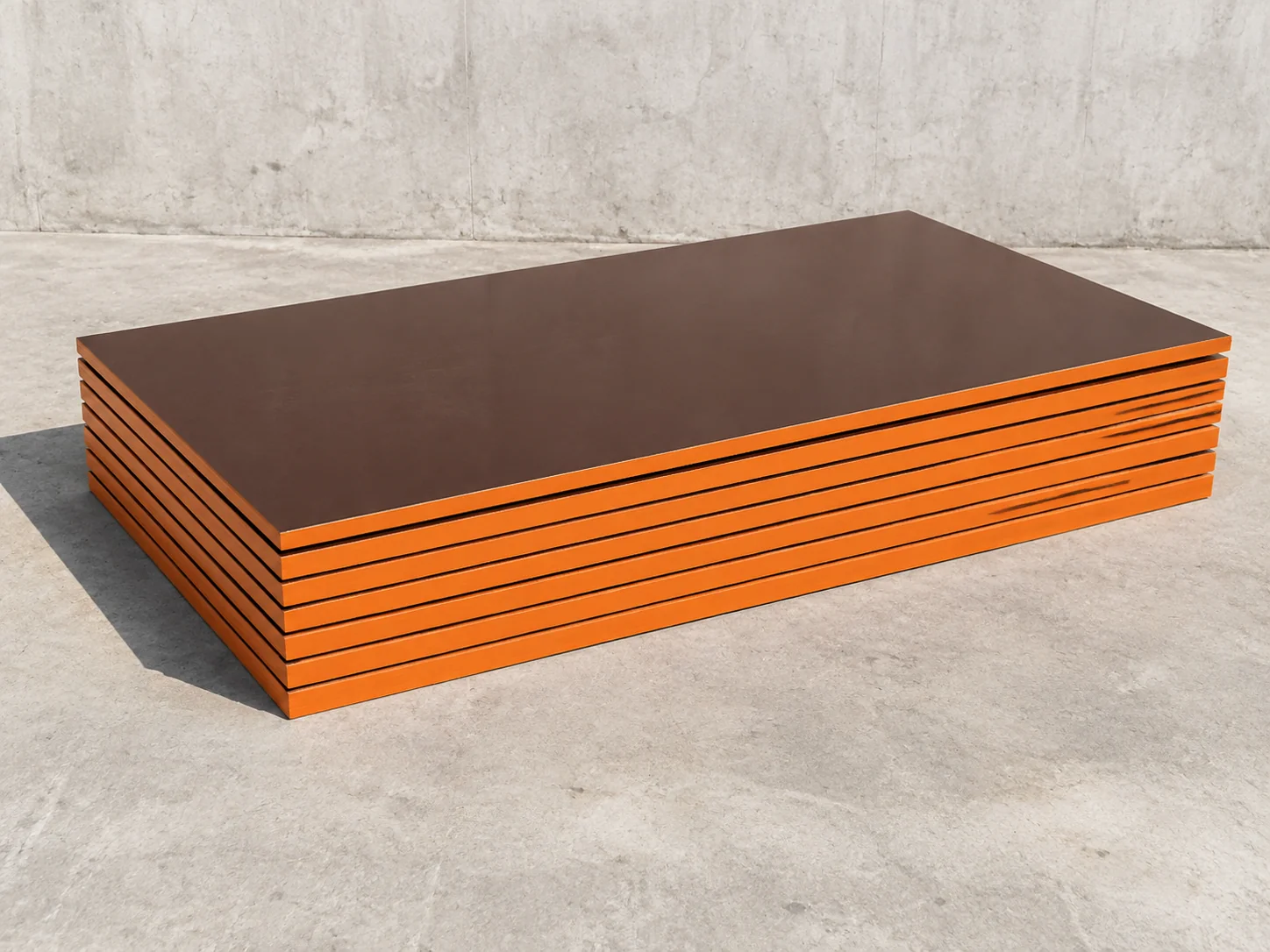
Where a project asks for CE-marked panels, our formwork build inside 3.6–30 mm ships with CE documents.
Compare
Buyers compare our CE structural panel with the names they see in shops: WBP exterior, marine and interior plywood. The difference lies in the documents and the bond, more than in the look of the face.
| Item | PK Ply structural CE | Generic WBP exterior | Marine plywood | Interior plywood |
|---|---|---|---|---|
| CE marking for structural use | Yes, EN 13986, AVCP 2+ | Depends on the maker | Depends on the maker | Usually not structural |
| Bond | Phenolic, Class 3 on SGS specimen; or MUF | Weather and boil proof claim | Boil-proof, BS 1088 style | Interior bond |
| Faces | Film on both faces as standard | Sanded veneer | Selected veneer | Sanded veneer |
| Edges | Painted at the mill | Usually raw | Usually raw | Raw |
| Documents | DoP, CE label, FPC certificate copy | Varies | Varies | None for structure |
| We make it | Yes | Our structural build covers this need | No | No |
Factory production control
Factory production control is the part of CE marking that the notified body inspects. For our structural build it means each production run is checked and recorded against the technical sheet, so the declared performance holds from container to container. ISO 9001 quality management runs alongside it at our mills.
Veneers are graded and dried before lay-up; wet or broken veneers are rejected.
Veneers laid crosswise, full core without gaps or overlaps.
Glue type as ordered; phenolic bonds pressed at about 130–145 °C.
Sample pieces from each run are boiled and checked for open glue lines.
Calipers and tape on sample sheets: ±0.5 mm thickness, ±2 mm length and width.
CE marking and run records kept for each structural order.
Certificates
The scans below show our certificates with the legal entity, tax ID, address and dates blurred. Copies go out with the quotation, and the DoP for your thickness is issued with the order.
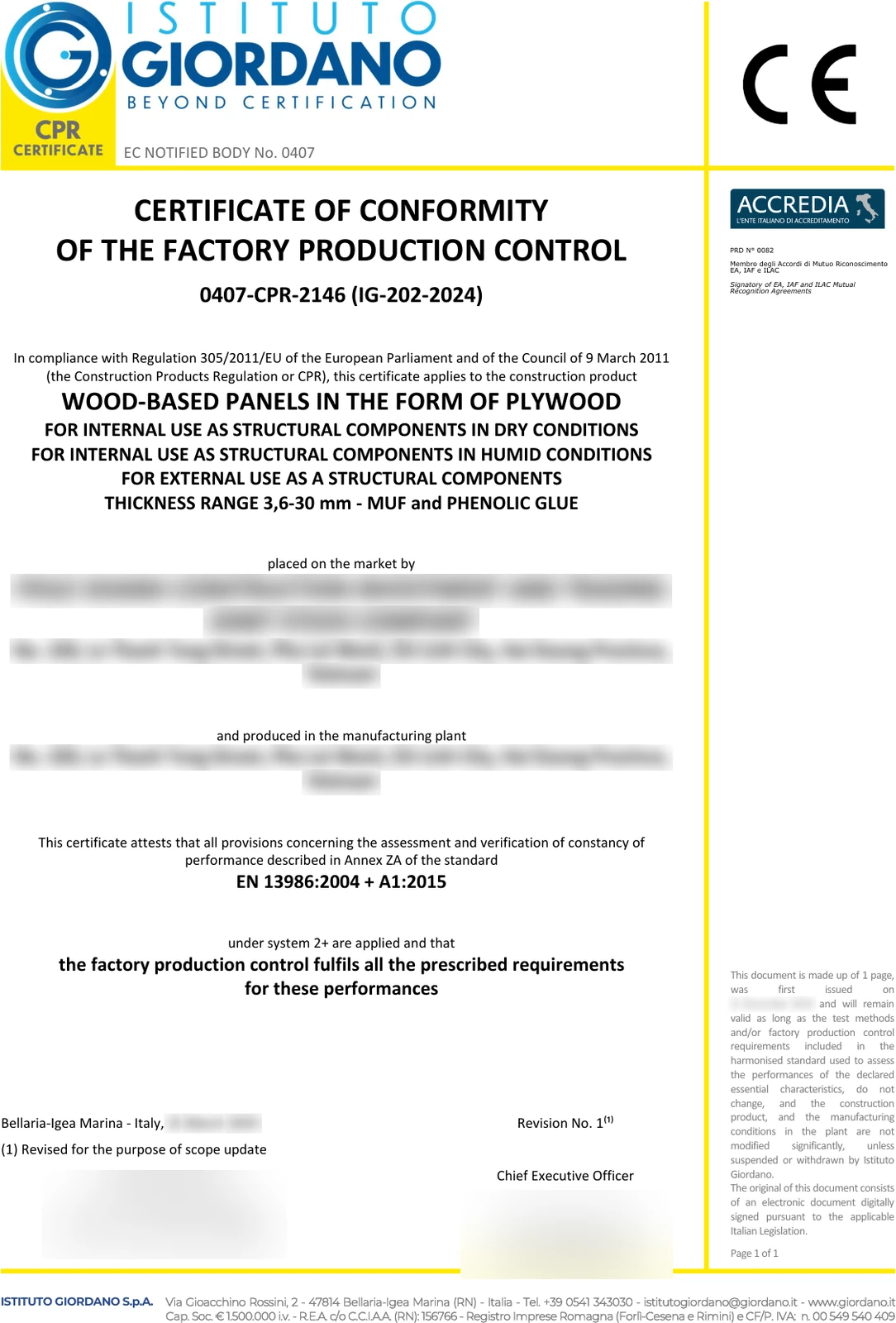
0407-CPR-2146
Plywood for structural use in dry, humid and external conditions, 3.6–30 mm, MUF or phenolic glue; EN 13986:2004+A1:2015, AVCP System 2+, notified body 0407.
CE certificate scan; legal entity, tax ID, address and dates blurred.
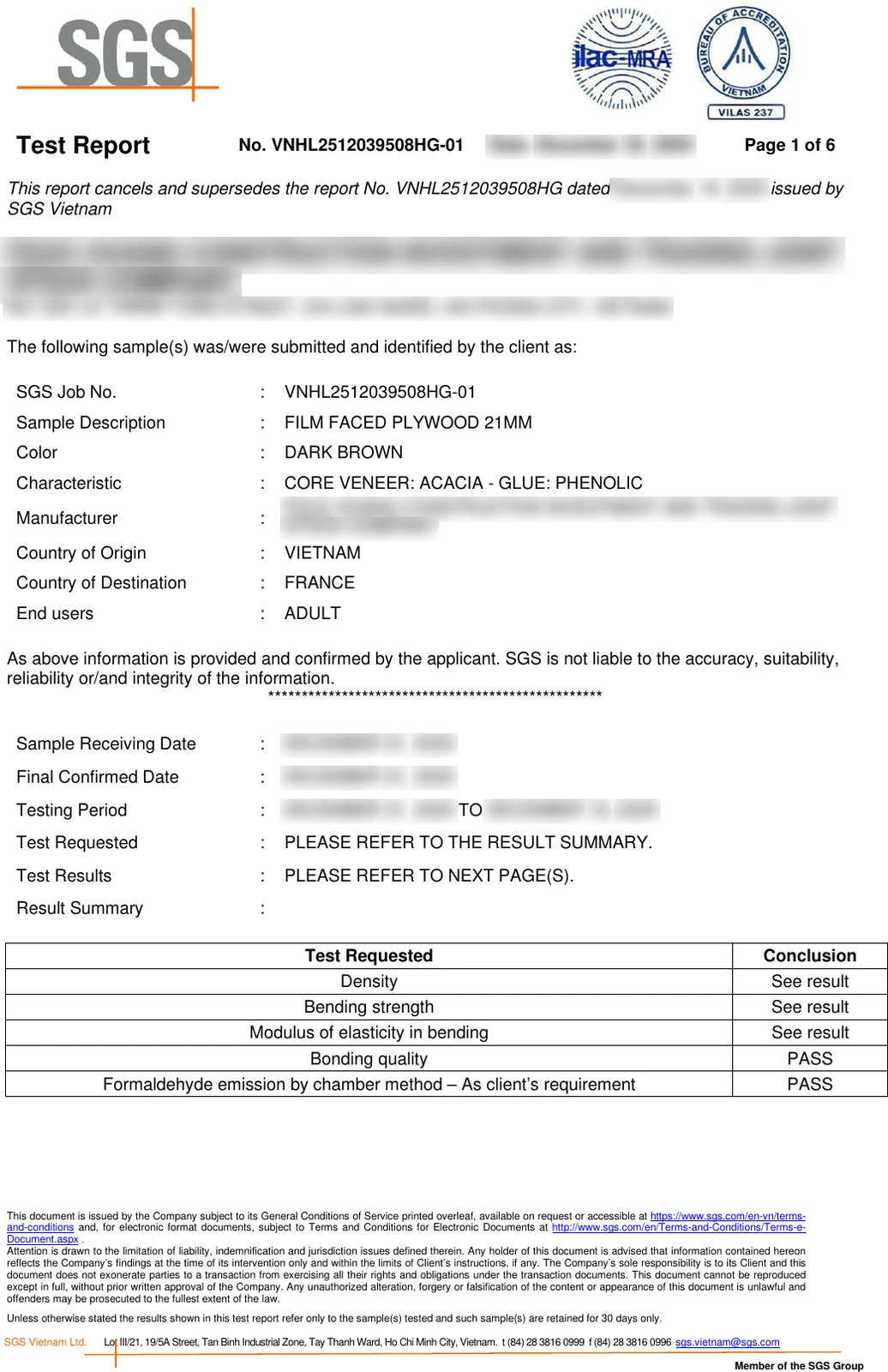
Submitted 21 mm phenolic specimen, Acacia core: bonding Class 3 (EN 314), density 642 kg/m³, formaldehyde ND at 0.04 mg/m³, E1 pass.
SGS 21 mm report page; legal entity, address and dates blurred.
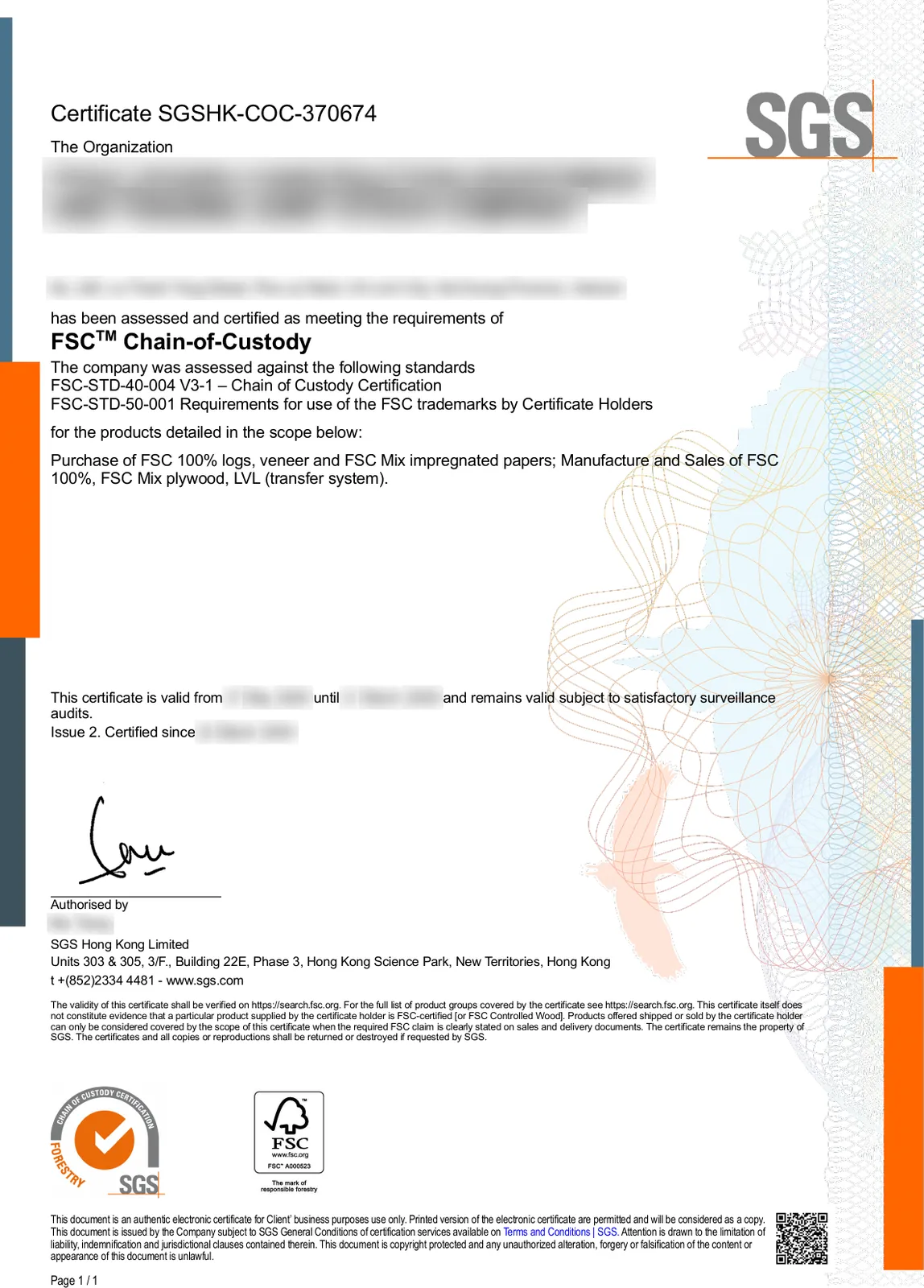
SGSHK-COC-370674
FSC 100% or FSC Mix plywood on request; claim printed on the sales documents.
FSC certificate scan; legal entity, tax ID, address and dates blurred.
Packing
Structural panels are packed in strapped stacks about 1,000 mm high on pallet feet, covered with a board on top, with the pack number and your marks on the side. CE-marked packs carry the CE label information for the order.
The figures below are planning loads for 1250 × 2500 mm sheets, the European size; the final count follows the booking and the weighed sheets.
| Core | Thickness | Sheets per pack | Sheets per 40HC | m³ per 40HC |
|---|---|---|---|---|
| Acacia | 12 mm | 80 sheets | 1,280 sheets | 48.0 m³ |
| Acacia | 15 mm | 64 sheets | 1,024 sheets | 48.0 m³ |
| Acacia | 18 mm | 53 sheets | 848 sheets | 47.7 m³ |
| Acacia | 21 mm | 45 sheets | 720 sheets | 47.3 m³ |
| Eucalyptus | 18 mm | 50 sheets | 750 sheets | 42.2 m³ |
| Eucalyptus | 21 mm | 42 sheets | 630 sheets | 41.3 m³ |
Planning figures for 1250 × 2500 mm: Acacia loads 16 packs (580 kg/m³), Eucalyptus 15 packs (650 kg/m³).
Buy from the mill
Structural plywood ships in full containers from our two mills in Chi Linh, Hai Phong, with capacity for up to 150 containers a month. One 40HC is the smallest order, and it can carry structural and formwork panels together.
A structural run starts when the 30% deposit is in and takes 15–45 days, by volume. Payment of the other 70% follows the scanned bill of lading, by T/T, or an irrevocable L/C at sight covers the order; our prices are FOB Hai Phong, CFR or CIF. For EU lots, the EUDR geolocation dossier and the certificate of origin travel with the shipping documents.
How to order
Service condition (dry, humid or external), thickness, size, glue, quantity and port.
We confirm on the technical sheet that the panel is inside 3.6–30 mm and send the DoP reference with the price.
A free sample of the exact build.
30% by T/T starts production; 15–45 days by quantity.
CE label data, DoP and shipping drafts for approval; balance against the scanned B/L.
Buyer questions
Plywood CE marked under EN 13986 with assessment System 2+: the manufacturer declares performance and runs factory production control, and a notified body certifies that control. Ours is certificate 0407-CPR-2146 from notified body 0407.
Plywood for structural use in dry, humid and external conditions, 3.6–30 mm thick, with MUF or phenolic glue, under factory production control certificate 0407-CPR-2146.
3.6–30 mm. We press 9–40 mm, so panels over 30 mm are sold without CE marking.
Yes, within reason: our phenolic panels have a Class 3 bond, film faces and painted edges. Store them flat and covered and seal every cut edge, because water enters at bare veneer.
Phenolic. Our phenolic bond passed EN 314 Class 3 on an SGS-tested 21 mm specimen. MUF is inside the CE scope too and suits dry and humid conditions.
A submitted 21 mm dark-brown phenolic specimen with an Acacia core passed Class 3 under EN 314-1 and EN 314-2 after 24 h soak, boil-dry-boil and 72 h boiling; density 642 kg/m³, formaldehyde ND at 0.04 mg/m³. Report issued 23 December 2025.
WBP is an older name for a weather- and boil-proof bond; today that bond is described by EN 314 Class 3, which our phenolic bond passed on an SGS specimen. Ask for WBP plywood 18mm and we quote our 18 mm phenolic structural build.
No. Marine plywood is a separate boat-building specification. Our exterior structural build serves outdoor construction uses.
On the Declaration of Performance issued for your order, not on the FPC certificate.
It has no expiry date; it stays valid while the standard and plant conditions are unchanged, unless suspended or withdrawn.
1220 × 2440 mm and 1250 × 2500 mm, plus sizes cut from them; nothing larger than 1250 × 2500 mm.
Our presses need 15–45 days from the 30% deposit, by volume, and the smallest order is one 40HC.
Quotation
Send the service condition, thickness, size, glue, quantity and port of discharge. We reply with a technical sheet, the DoP reference and an FOB Hai Phong, CFR or CIF price.