
How to verify a plywood factory in Vietnam: walk its line in production order and match each station to a document: veneer and drying, lay-up and glue, the hot press, sanding and film, edge sealing, then packing. PK Ply opens both mills in Chi Linh, Hai Phong to buyers, in person or on a live video, before the deposit.
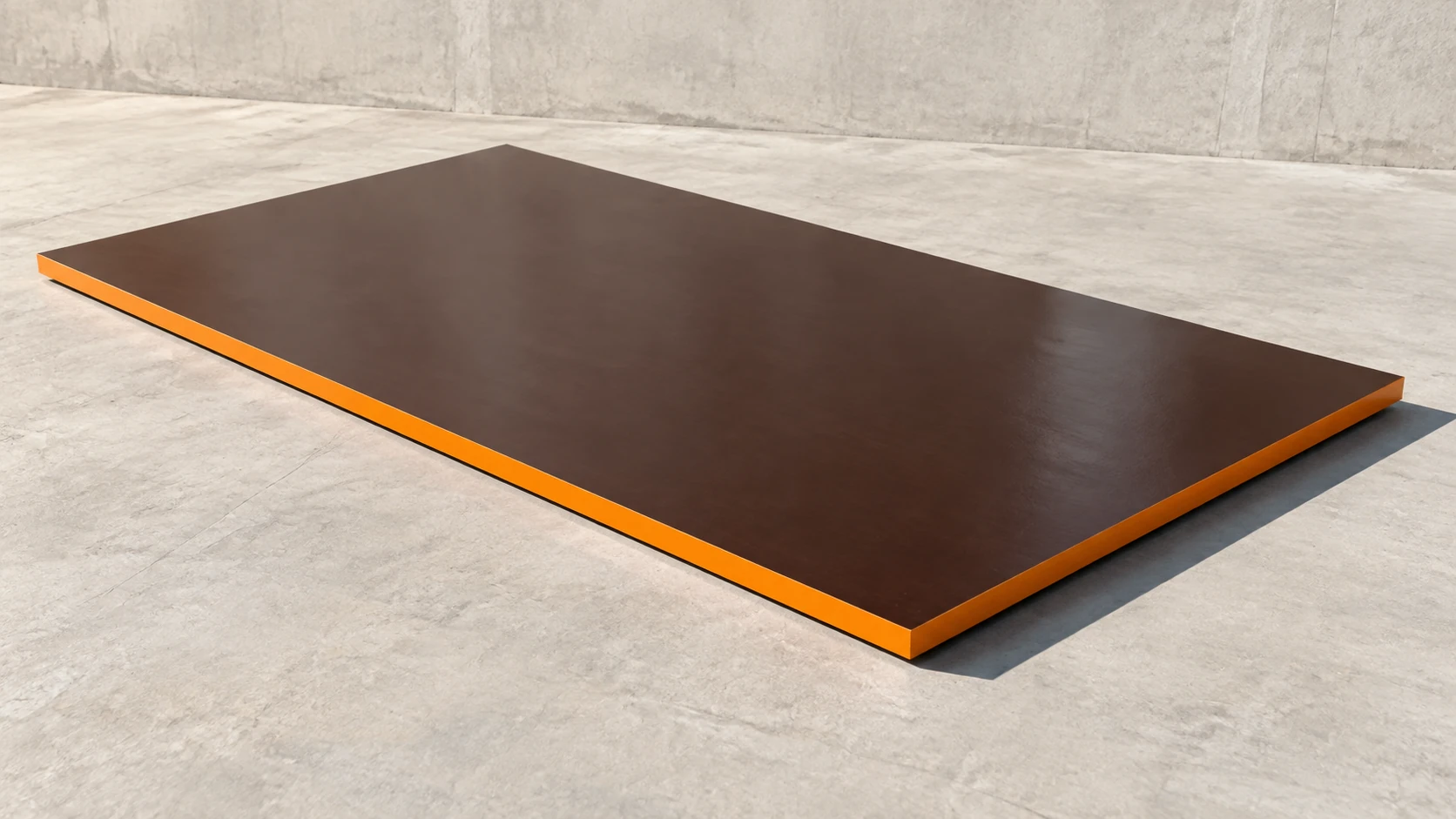
How to verify a plywood factory in Vietnam before the deposit?
Verify a plywood factory in Vietnam by walking its line in production order and matching every station to a document you can check: certificate codes, test reports on a named specimen and the technical sheet for your build. Do it in person or on a live video, then test samples cut from the build before the deposit.
A plywood mill is a sequence, and every claim it makes belongs to one point in it. The species claim belongs at veneer intake, the glue claim at glue spreading, the bond and the flatness at the hot press and the sander, the face at the film press, the “sealed edges” at the edge-painting station. Walking the sequence in order lets you put each claim where it can be seen.
| Station | Claim it proves or disproves | Document to hold beside it |
|---|---|---|
| Veneer intake and drying | Core species, sorted veneer | Technical sheet: core |
| Core lay-up | Crosswise core, gaps rejected | Technical sheet: build |
| Glue and press | Glue system, bond | Test report on a named specimen |
| Sizing and sanding | Thickness tolerance | Technical sheet: tolerance |
| Film press | Film weight and colour | Technical sheet: film |
| Edge sealing | Paint on every edge | Technical sheet: edges |
| Marking and packing | Marks and packing per order | Order and packing list |
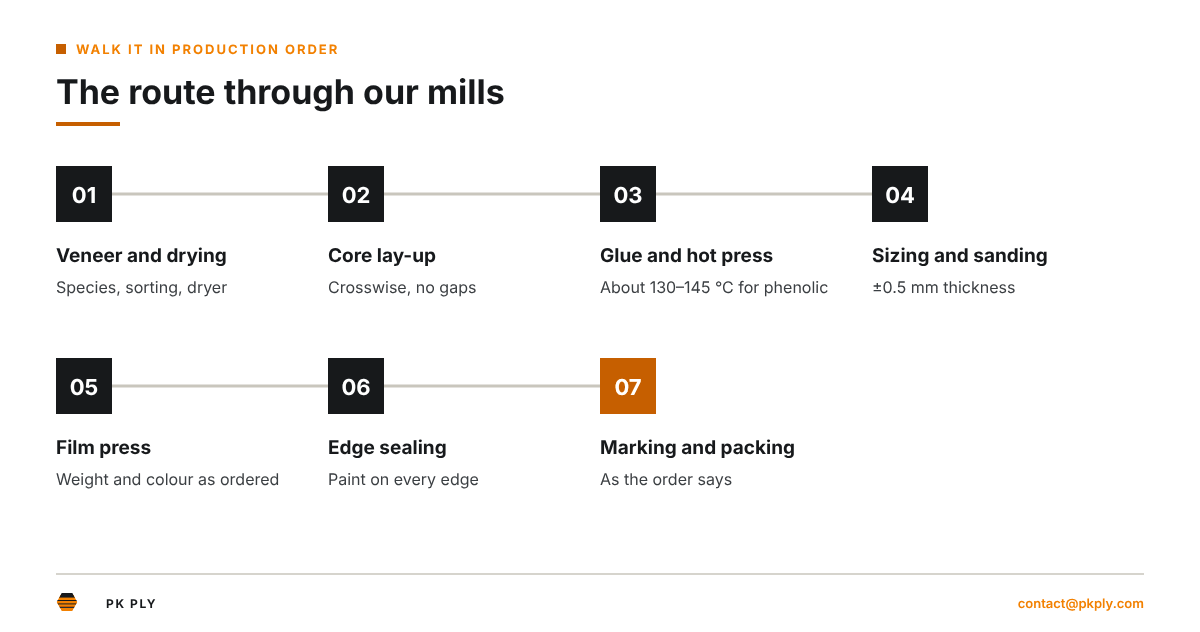
Our two mills in Chi Linh, Hai Phong run this sequence: veneer intake, drying, core lay-up, glue and press, sizing and sanding, film press, edge sealing, marking and packing. The rest of this note walks it station by station.
Can I see both of your mills in Chi Linh, Hai Phong?
Yes. Both of our mills are in Chi Linh, Hai Phong, so one visit can take in both: the first mill and the modern plant that started production in 2026. Tell us your dates and the builds you are interested in, and we plan the walk so you see those builds on the line.
| Visit plan | What you see |
|---|---|
| One mill | The full sequence for the build you plan to order |
| Both mills | The same sequence at both plants, and how a build is kept the same between them |
| Live video, either mill | The same stations, led by our team, with the certificates on screen |
Two mills matter to a buyer for one reason: if your build is pressed at both, it has to be the same panel from both. That is what the technical sheet is for, and on a visit you can check that both plants work to it. Our mills page describes the two plants.
Booking a visit: what to send and what we prepare
Send your dates, the names of the people coming, the builds you want to see and the questions you want answered. We prepare the walk in production order, the certificates and reports in the room, and samples cut from your build. We share the meeting point and route directly when the visit is booked.
- Your dates and visitors. Who is coming and whether an inspector joins you.
- The builds. Core, glue, film weight, thickness and use, so the line runs them while you are there.
- Your questions. Anything you need answered on the day, from the press setting to the packing.
- Documents to see. Name the certificates and reports you want to hold.
- Samples. Say how many pieces of which build you want to take away.
We do not publish the mills’ street address; the public location is Chi Linh, Hai Phong, Vietnam. Hai Phong is also our port of loading, so a visit can be planned around a loading if you want to see one. Send the booking through the specification form or to [email protected].
Veneer intake and drying: the start of the core
At veneer intake, check the species and the sorting: our cores are Acacia or Eucalyptus hardwood veneers, and the veneer should be sorted before it reaches lay-up. At the dryer, check that veneer is dried before it is glued, because wet veneer weakens the bond and moves after pressing.
| Look at | A good sign | Ask |
|---|---|---|
| Species | Acacia or Eucalyptus, as on the technical sheet | Which species goes into my build? |
| Sorting | Veneer graded into face, core and reject | Where do rejected sheets go? |
| Drying | Veneer passes the dryer before lay-up | How is moisture checked before glue? |
| Storage | Dry veneer kept off the floor and covered | How long does dried veneer wait? |
Species is not a detail. An Acacia core and a Eucalyptus core give different weights and container fills: about 47 m³ of Acacia-core panels or about 43 m³ of Eucalyptus-core panels per 40HC. Our veneer sorting page shows this station.
Core lay-up and glue spreading
At lay-up, check that core veneers are laid crosswise, whole and without gaps or overlaps, and that each glue line is spread evenly. These two things decide whether the panel stays flat and holds through wet cycles; neither can be seen once the film is on, so this is where to look.
| Look at | A good sign | A warning sign |
|---|---|---|
| Lay-up direction | Long-grain and cross-grain layers alternate | Two layers in the same direction |
| Joints in the core | Edges butted tight | Open gaps or overlapping veneers |
| Glue spread | Even film of glue across the whole sheet | Dry patches or pools |
| Glue type | MUF or phenolic, as on the technical sheet | “WBP” with no glue named |
Ask which glue goes into your build and see it mixed. Melamine (MUF) and phenolic glues lead to different pour counts: with proper handling, a release agent on every pour and sealed edges, about 12–15 pours for MUF film-faced and up to about 25 for phenolic. Our glue mixing and spreading page shows this station.
What should I watch at the hot press during a mill visit?
At the hot press, watch three things: the glued lay-ups going in square and complete, the press setting and how long panels stay in it, and the panels coming out flat and fully bonded. Hot pressing for phenolic bonds at our mills runs at about 130–145 °C; ask the operator for the setting of the panel on the press.
| At the press | What to check |
|---|---|
| Loading | Lay-ups square, no veneer sticking out or missing |
| Setting | Temperature and pressing time for the glue in use |
| Unloading | Panels flat, no blisters or open edges |
| After pressing | Panels rest before sizing and sanding |
The hot press is where the glue becomes a bond, and it is where a mill that rushes shows it: short pressing times give panels that look fine and open up in the first wet weeks. A buyer cannot measure a bond by eye, which is why a visit is paired with test reports.
EN 314-2 specifies requirements for bonding classes of veneer plywood according to their end uses. Our SGS report on one submitted 21 mm phenolic specimen shows Class 3 PASS after a 24 h soak, boil-dry-boil and 72 h boiling. Our two-stage pressing page shows how the core is pressed before the film goes on.
Sizing, sanding and the film press
After the first press, panels are sized and sanded to an even thickness, then the film is pressed on. Check the sanding: a calibrated core is what lets the film lie flat and what holds the ±0.5 mm thickness tolerance. Then check the film: weight and colour as ordered, pressed smooth on both faces.
| Look at | A good sign | Ask |
|---|---|---|
| Sanding | Even thickness across the sheet | How is thickness measured after sanding? |
| Tolerance | ±0.5 mm thickness, ±2 mm length and width | Is the tolerance written on my technical sheet? |
| Film | Weight and colour as on the sheet | Which film weight is on the press today? |
| Film face | Smooth, no wrinkles, blisters or bare patches | What happens to a sheet with a face defect? |
Our film weights run from 120–125 g/m², with about 130–135 g/m² most common now and 165, 185 or over 200 g/m² for long programmes; black or dark brown. Measure a few sheets with your own caliper while you are there: that number, against ±0.5 mm, is worth more than any brochure line.
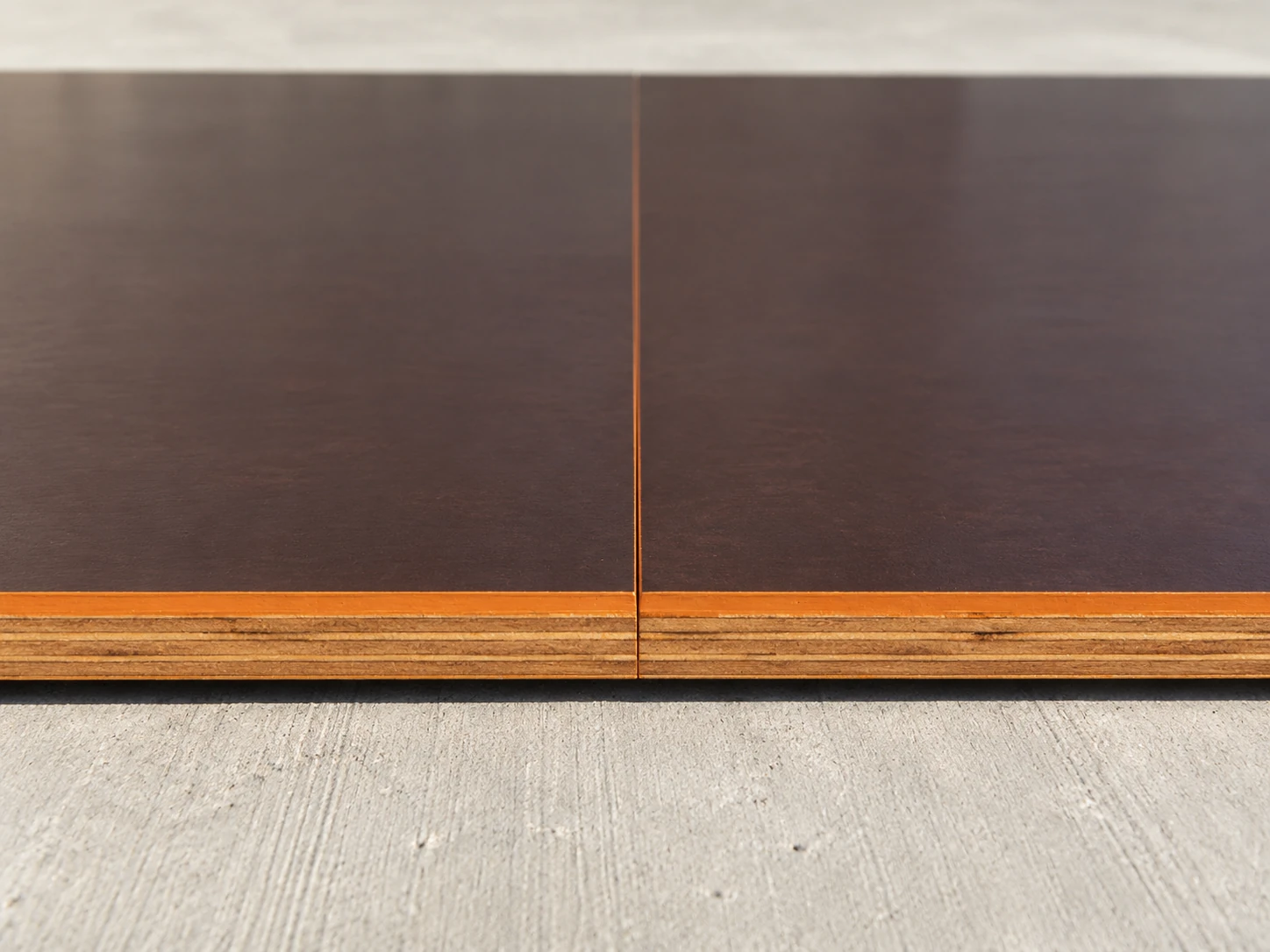
How is edge sealing checked before packing?
Edge sealing is checked at its own station: after sizing, every edge of every panel is painted with water-resistant paint, and the paint is checked for full cover over the veneer ends before the panel is marked and packed. On a visit, pick panels from the station and look along each edge for bare wood.
| Check on the edge | Pass | Fail |
|---|---|---|
| Cover | Paint over every veneer end on all four edges | Bare veneer at a corner or along an edge |
| Thickness of coat | Smooth, continuous layer | Streaks or thin patches |
| Corners | Paint wrapped over the corner | Corners left bare |
| Dry before packing | Paint dry to the touch | Wet paint pressed against the next sheet |
Edges matter because water enters plywood through its edges. A formwork panel with bare edges swells at the joints after a few pours, and the swelling prints on the concrete. The same rule holds on site: every cut edge has to be sealed again before the panel goes back into service.
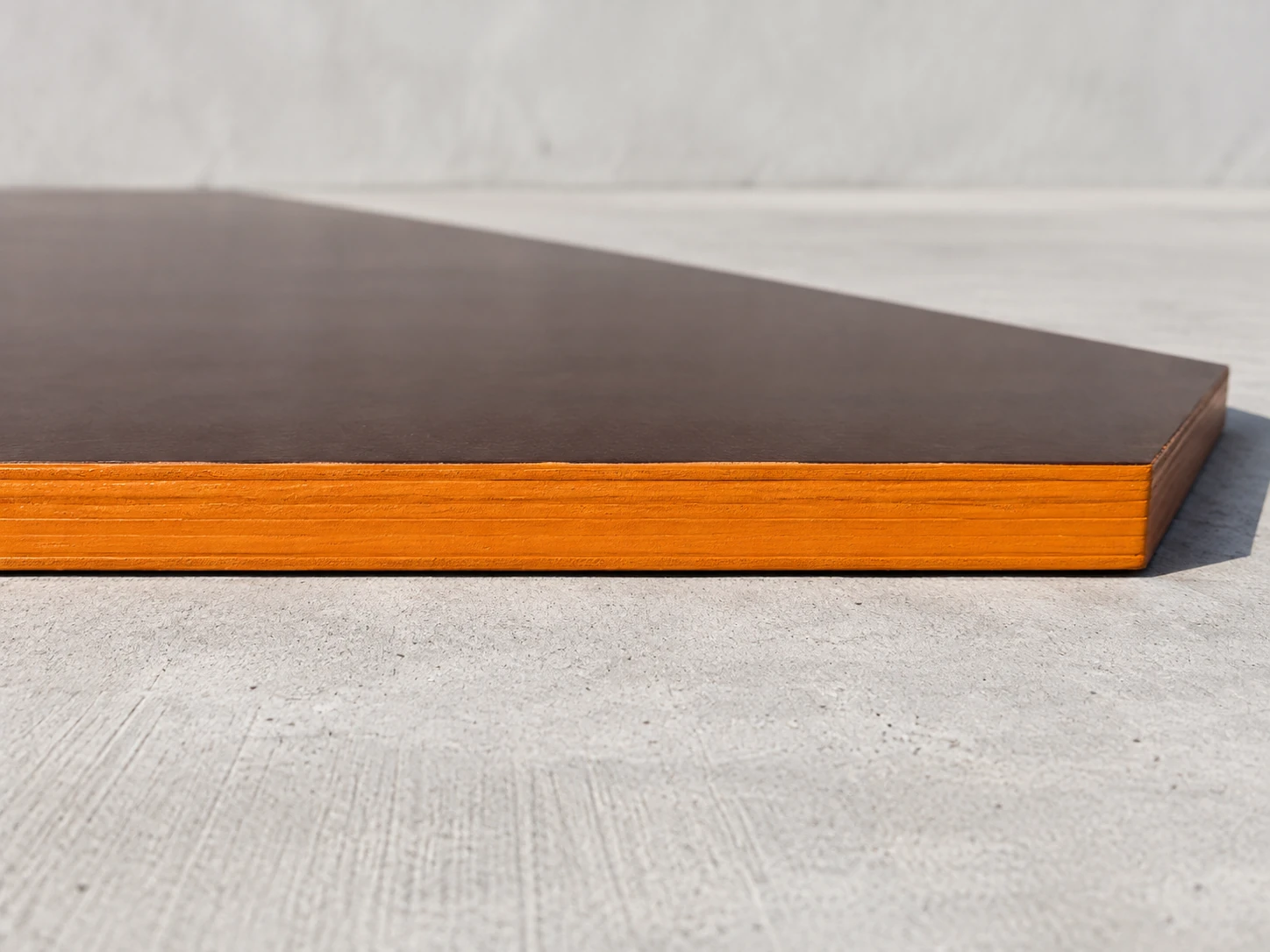
Marking, packing and loading
At the end of the line, check that panels are marked and packed as the order says, and ask to see a loading if one is planned during your visit. The packing list made at loading is the number that counts for your container, so see how it is made.
| Look at | What to check |
|---|---|
| Marking | The marks and labels your order asks for |
| Pack build | Sheets per pack as planned, packs about 1,000 mm high |
| Pallets and battens | Solid-wood pallets, battens and dunnage fall under ISPM 15 |
| Loading | Packs placed as planned, weight recorded |
For a 40HC, our planning model stacks packs about 1,000 mm high: 16 packs with an Acacia core, 15 with Eucalyptus, against a planning payload of 28,000 kg of panels that the carrier and route confirm. For 18 mm sheets of 1220 × 2440 mm that gives about 880 sheets with an Acacia core and about 795 with Eucalyptus, as planning figures. Our pallets and packing page and 40HC loading page show the last two stations.
Which certificates can I match to the production line on the day?
On the day you can match four documents to the line. They are the CE factory production control certificate 0407-CPR-2146 for structural plywood from 3.6–30 mm, the FSC chain-of-custody certificate SGSHK-COC-370674 for FSC orders, our ISO 9001 documentation and the SGS reports on named specimens. Ask for each in the room.
Each document belongs to a part of the line. The CE certificate covers the factory production control of the plant, and the notified body’s work is defined in law.
Under System 2+, the notified production control certification body shall issue the certificate of conformity of the factory production control on the basis of initial inspection of the manufacturing plant and of factory production control and continuous surveillance, assessment and evaluation of factory production control. Under the same system the manufacturer shall carry out testing of samples taken at the factory in accordance with the prescribed test plan. Our CE route is System 2+, so on a visit ask to see the production control records and the factory test plan for your thickness.
| Document | Where it meets the line | What to check on the day |
|---|---|---|
| CE FPC 0407-CPR-2146 | Production control records, scope 3.6–30 mm, MUF or phenolic | That your structural panel’s thickness and glue sit inside the scope |
| FSC SGSHK-COC-370674 | Separation and records of FSC material | How FSC material is kept apart and recorded |
| ISO 9001 documentation | Quality procedures across the line | How a defect found at a station is recorded |
| SGS report, 23 December 2025 | The 21 mm phenolic build | That your build matches the specimen’s |
FSC offices or representatives do not issue certificates; to obtain certification, interested applicants must contact an independent certification body. The FSC code therefore names the body that audits us, which you can look up. Our certification page shows each certificate.
What does the plant that started production in 2026 add?
The plant that started production in 2026 is our second mill in Chi Linh, Hai Phong: a modern plant running the same production sequence as the first, from veneer intake to marking and packing. It adds a second line of supply, so that together the two mills can produce up to 150 containers a month.
| First mill | 2026 plant | |
|---|---|---|
| Location | Chi Linh, Hai Phong | Chi Linh, Hai Phong |
| Sequence | Veneer intake to marking and packing | The same sequence |
| Products | Film-faced, anti-slip and structural panels | The same range |
| Build control | Technical sheet per order | The same technical sheet per order |
| Combined capacity | Up to 150 containers a month across both |
For a buyer, a second plant means the same build can come from either mill when programmes are large. On a visit, ask to see your build at both, and check that the sanding, the film and the edge painting match. Our second plant page describes the 2026 plant.
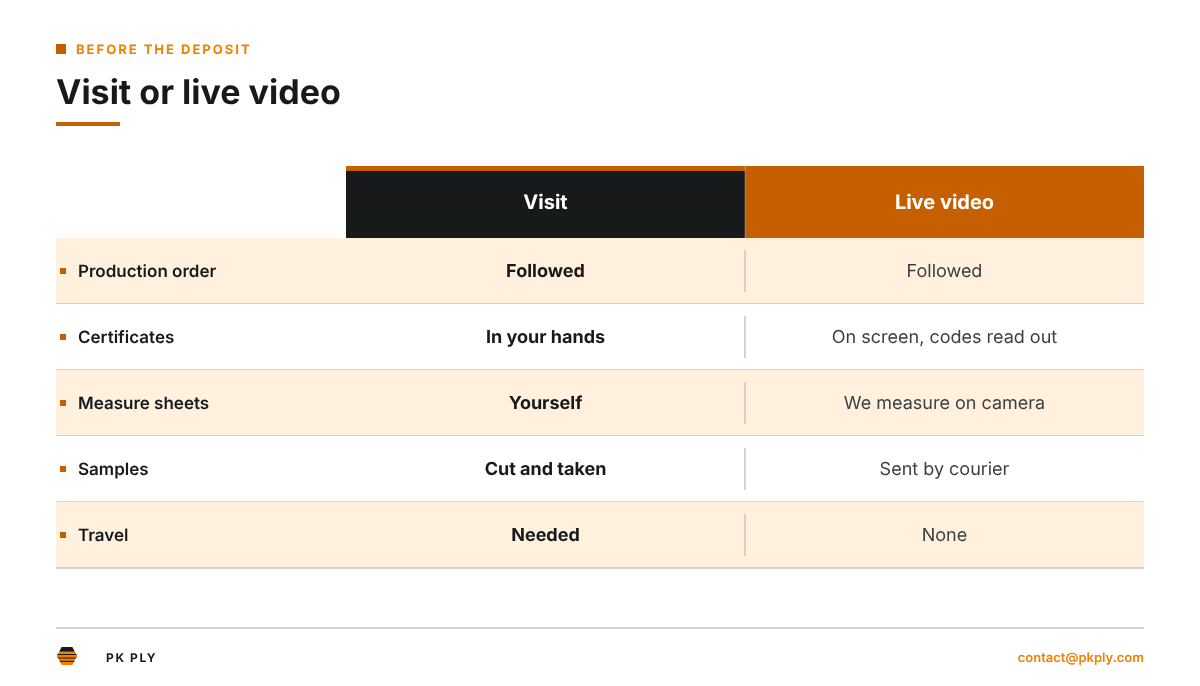
Can a video walk-through replace a visit before the deposit?
For many buyers, yes. A live video walk-through that follows the production order, shows the certificates on screen and lets you ask for a close look at any station answers most of the questions a visit answers. What it cannot give you is handling panels, cutting samples and measuring sheets with your own tools.
| Visit | Live video walk-through | |
|---|---|---|
| Production order followed | Yes | Yes |
| Certificates shown | In your hands | On screen, codes read out |
| Close look at a station | Yes | Yes, on request |
| Measure sheets yourself | Yes | No; we measure while you watch |
| Take samples | Yes | Sent by courier |
| Travel | Needed | None |
A video works best live, not recorded: you choose where the camera points. Ask for the press setting to be read out, a sheet to be measured on camera, an edge to be shown close up and the certificate codes to be read so you can look them up while the call runs.
A visit checklist to take with you
Take a checklist that follows the line, with one line per station and a space for what you saw. A checklist keeps the visit on the build you plan to order instead of on a showroom tour, and it gives you a record to hold against the first container.
| Station | Check | Seen? | Notes |
|---|---|---|---|
| Veneer intake | Species as on the technical sheet | ||
| Drying | Veneer dried before glue | ||
| Lay-up | Crosswise, whole, no gaps | ||
| Glue | MUF or phenolic as ordered, spread even | ||
| Hot press | Setting read; panels flat and bonded | ||
| Sanding | Thickness within ±0.5 mm on your caliper | ||
| Film press | Weight and colour as ordered | ||
| Edge sealing | Paint over every veneer end | ||
| Packing | Marks and pack build as ordered | ||
| Documents | CE, FSC, ISO 9001, SGS reports seen |
Add your own lines for anything your market needs, for example the EUDR file set for EU lots or AS 6669 certification for Australia. Our note on how to check any formwork plywood mill covers the checks that come before a visit.
After the visit: from notes to a technical sheet
After the visit, turn your notes into the technical sheet for your order: the build you saw, the tolerance you measured against, the film you chose and the edge sealing you checked. We confirm it with a dated offer; a 30% deposit then starts production, which takes 15–45 days.
| Step | What happens |
|---|---|
| Your notes and test results | The build you approve, line by line |
| Technical sheet | Core, glue, film, thickness and tolerance, size, edges |
| Dated offer | FOB Hai Phong, CFR or CIF |
| Deposit | 30% to start production |
| Production | 15–45 days, depending on quantity, production conditions and agreement |
| Balance | 70% against the scanned bill of lading |
Keep a sample piece from the visit untouched, with your checklist, until the first container arrives. Our note on film-faced samples shows how to test the others, and our production process page shows the full sequence. To book a visit or a live video, write to [email protected].
Questions buyers ask us
How do I verify a plywood factory in Vietnam before paying a deposit?
Walk the line in production order, in person or on a live video, and match each station to a document: certificates by code, test reports on a named specimen and the technical sheet for your build. Then test samples cut from that build.
Can I visit both of your mills in Chi Linh, Hai Phong?
Yes. Both mills are in Chi Linh, Hai Phong, and a visit can take in both; tell us your dates and the builds you are interested in, and we plan the walk around them.
What should I watch at the hot press?
Glue spread on the veneers before lay-up, the press setting and how long panels stay in it, and the panels coming out flat and fully bonded. For phenolic bonds our presses run at about 130–145 °C.
How is edge sealing checked before packing?
Every edge of every panel is painted with water-resistant paint after sizing, and the paint is checked for full cover over the veneer ends before the panel is marked and packed.
Which certificates can I match to the production line on the day?
The CE factory production control certificate 0407-CPR-2146 for structural plywood from 3.6–30 mm, the FSC chain-of-custody certificate SGSHK-COC-370674 for FSC orders, ISO 9001 documentation and the SGS reports on named specimens.
Can a video walk-through replace a visit before the deposit?
For many buyers, yes: a live video that follows the production order and shows the certificates can answer the same questions. A visit adds what video cannot: handling panels and cutting samples yourself.
What does the plant that started production in 2026 add?
A second, modern plant in Chi Linh, Hai Phong that runs the same production sequence as the first. Together the two mills can supply up to 150 containers a month.
Do you give your street address for the visit?
We share the meeting point and route directly with visitors when the visit is booked. Publicly, our mills are in Chi Linh, Hai Phong, Vietnam.
Can I take samples during the visit?
Yes. Ask for pieces cut from the build you plan to order, test one and keep one untouched to compare with your first container.
How can I tell a factory from a trading company on a visit?
A factory can walk you through every station of the line that will press your order, and its certificates name that production. If any step happens somewhere you cannot see, ask where and why.
What happens after the visit?
We write the build you approved on a technical sheet and send a dated offer. A 30% deposit then starts production, which takes 15–45 days.