
Production process
The eight-step sequence from veneer intake to packing.
OpenVeneer grading · film-faced build
In short
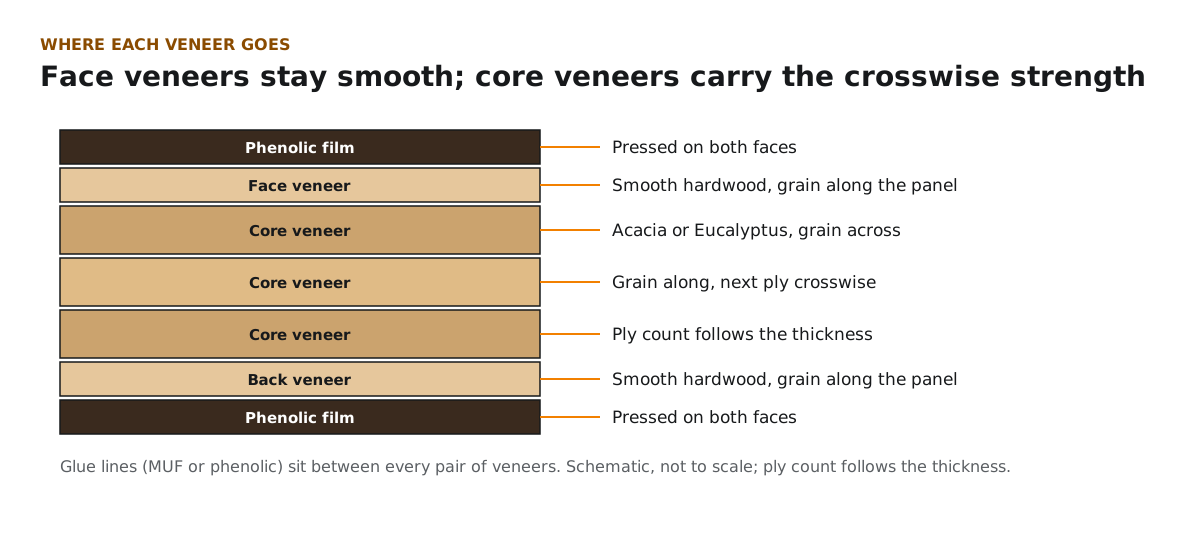
At our two mills in Chi Linh, Hai Phong, Acacia and Eucalyptus veneer is dried and then graded into face veneer, core veneer and sheets that are set aside. Under a film, a face veneer has to be smooth and even in thickness; how it looks is secondary. That grading is the first step toward holding film-faced thickness to ±0.5 mm. PK Ply makes construction plywood only, with up to 150 containers a month across the two mills.
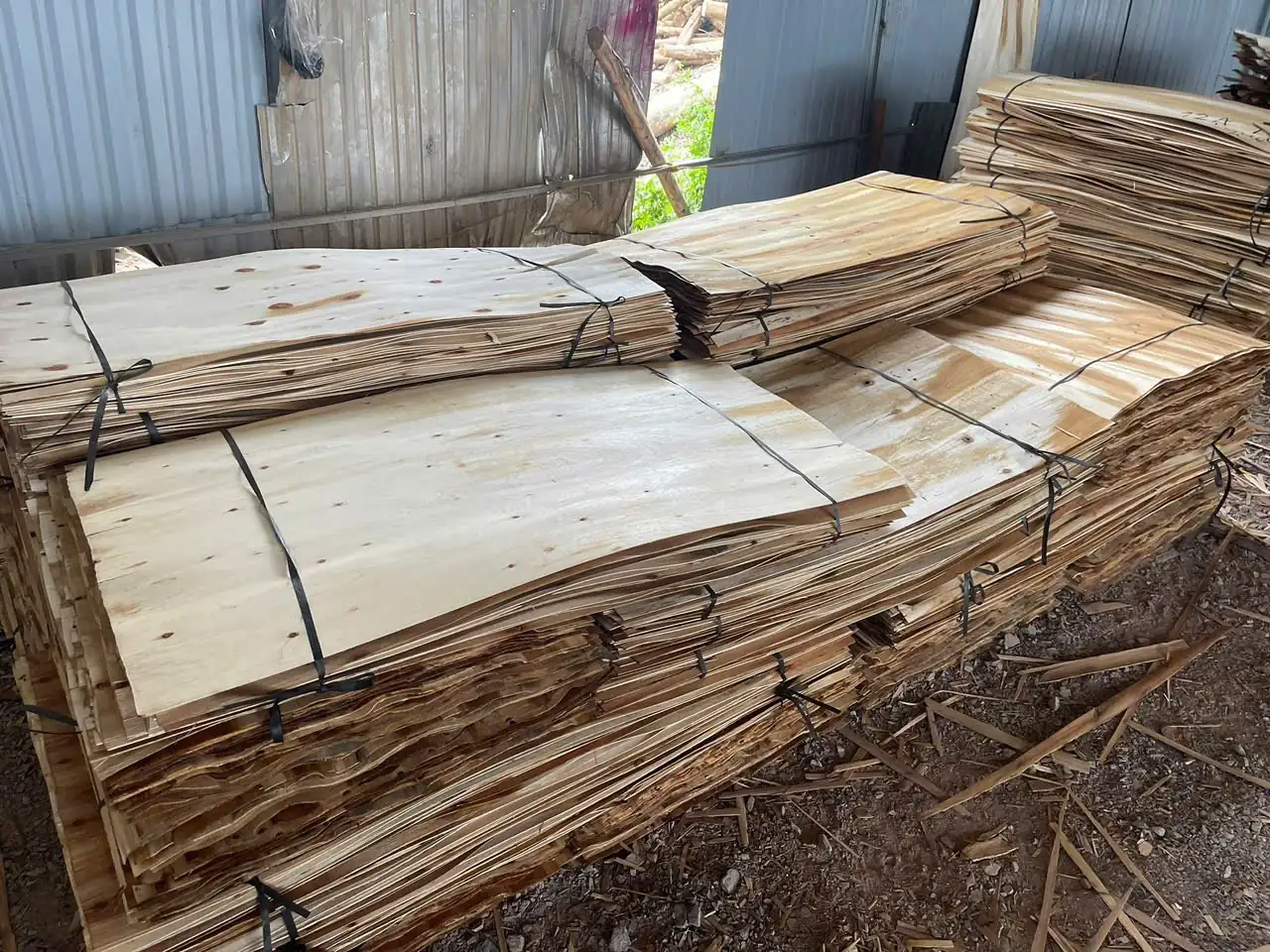
Page film
The film follows a veneer sheet from the bundle to the lay-up table and shows what the grader looks at.
The chapters follow the order on this page: bundles arriving, the drying stage, the grading table with its three piles, and the stack handed to the lay-up table.
A buyer who has never seen a veneer grading step can watch what a grader actually checks: the surface, the thickness and the defects, one sheet at a time.
Certificates
Veneer grading is where a certified chain of custody starts to matter: the veneer that is graded into a face or a core is the material the certificate scope talks about.
The FSC claim for an order is written on the sales documents and is confirmed per order; not every order is an FSC order. The CE certificate covers 3.6–30 mm, narrower than our 9–40 mm range, so a panel thicker than 30 mm carries no CE marking.
Certificate scans are lightly blurred: legal-entity name, tax ID, street address and dates are hidden.
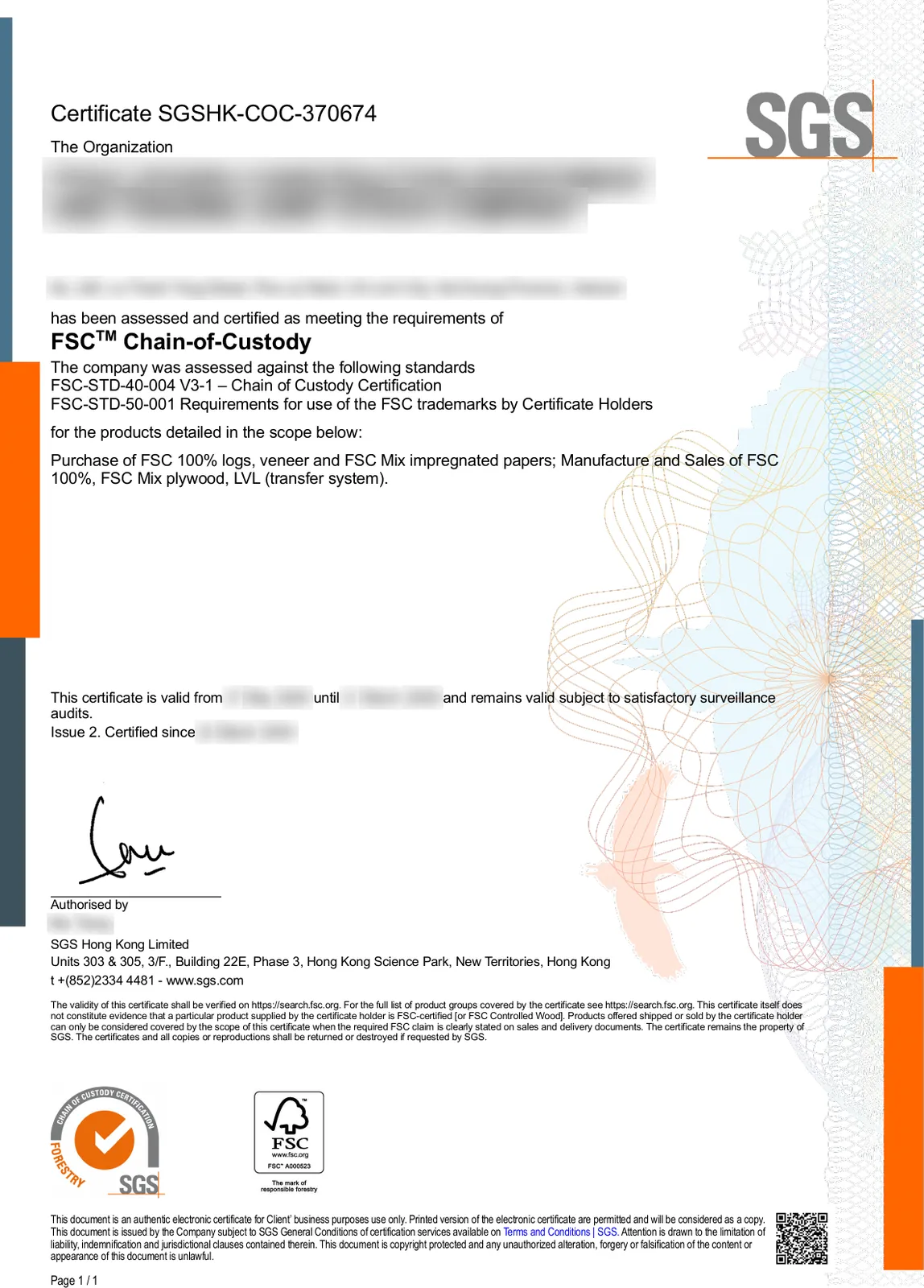
SGSHK-COC-370674
Purchase of FSC 100% logs and veneer and manufacture of FSC 100% and FSC Mix plywood; the claim for an order is confirmed on the sales documents.
FSC chain of custody certificate, page one; identifying details lightly blurred.
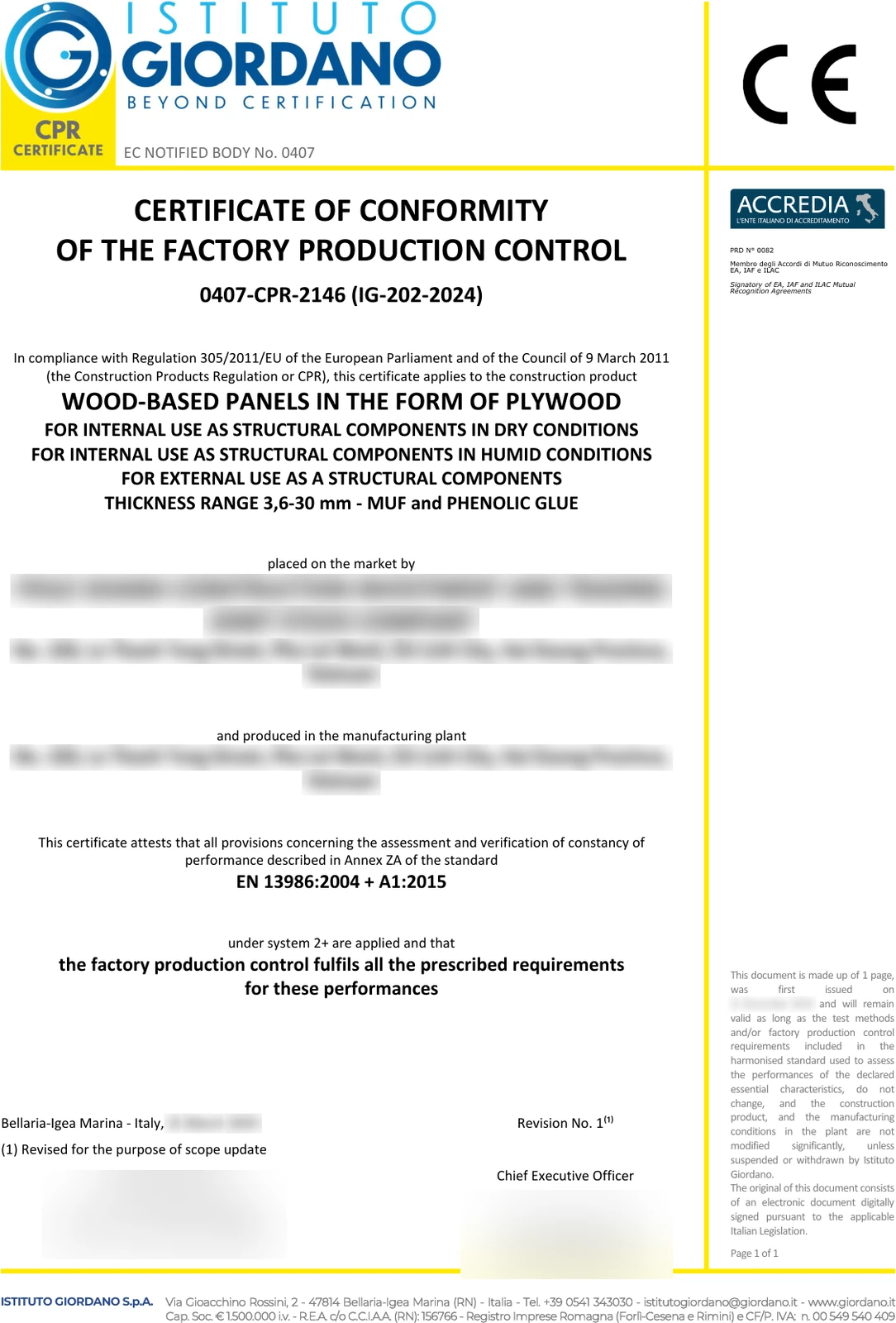
0407-CPR-2146
Plywood for structural use, 3.6–30 mm, MUF or phenolic glue; the panel offered must fall inside that range.
CE factory production control certificate, page one; identifying details lightly blurred.
At a glance
Veneer grading is the step that decides which sheet goes where in a panel. It comes after drying and before the glue is spread.
Think of it as the first inspection of the order. Nothing in the later steps can make a rough, uneven sheet smooth again, so the grading table is where a good face is chosen rather than hoped for.
The sequence of eight steps is the same at both mills: veneer intake, drying, core lay-up, glue and press, sizing and sanding, film press, edge sealing, marking and packing. This page covers the second and third of those in detail.
| Stage | What happens | Hands over |
|---|---|---|
| Veneer intake | Acacia or Eucalyptus veneer arrives in bundles and is checked in | Bundles for drying |
| Drying | Veneer is dried so its moisture suits the glue and the lay-up | Dry sheets for grading |
| Veneer grading | Each sheet is judged on surface, thickness and defects and put on a face, core or set-aside pile | Face veneer and core veneer, sorted |
| Core lay-up | Core veneers are laid crosswise with glue between them | A lay-up ready for the hot press |
| Glue and press | Hot press of the core; about 130–145 °C for phenolic bonds | A pressed core for sanding |
By product line
The three piles are the same on every line; what changes is how strict the face pile is and what the film will and will not hide.
A glossy film is unforgiving: a dent, a patch or a thickness step in the face veneer can show as a mark in the film, and the mark prints into every concrete surface the panel forms. A patterned anti-slip film is more forgiving of small surface faults but still needs an even substrate.
The specification sheet of each order states the permitted defects, the joining and the patching for the face and the core; the grading table works to that sheet.
| Product line | Face veneer | Core veneer |
|---|---|---|
| Film-faced (melamine or phenolic film) | Smooth and even under a smooth film; surface defects are covered but not erased | Acacia or Eucalyptus laid crosswise, graded for thickness and soundness |
| Anti-slip (patterned film) | Smooth under a patterned film; the pattern does not hide a rough face | Same core families; the film and duty are confirmed per order |
| Structural CE (3.6–30 mm) | Grade and surface agreed on the technical sheet for the structural use | MUF or phenolic glue; the panel must fall inside the CE range |
Steps
One grader handles one stack at a time. The order of the steps matters more than the speed.
The bundle is opened and the sheets are fanned so the grader sees species, colour, thickness and obvious damage before any sheet is lifted. Acacia and Eucalyptus differ in colour and grain, and the two are never mixed in one pile for one order. Check: species matches the order; no wet or mouldy sheet in the stack.
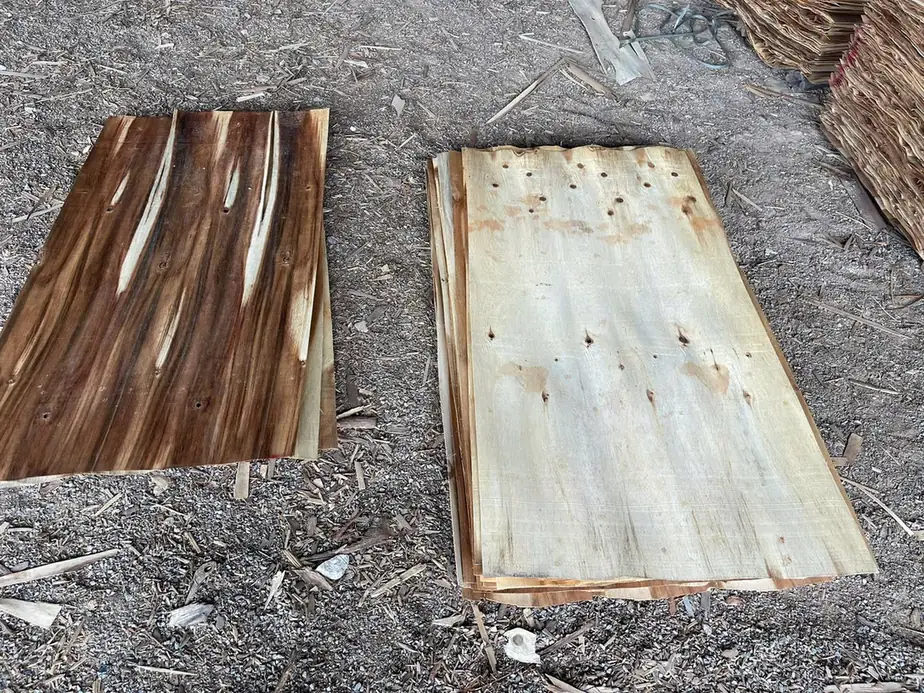
The grader looks at the surface (splits, knots, holes, roughness), the thickness (an even sheet, not a wedge) and the soundness of the edges. A sheet is not judged on beauty. Check: the sheet lies flat on the table and shows no step across its width.
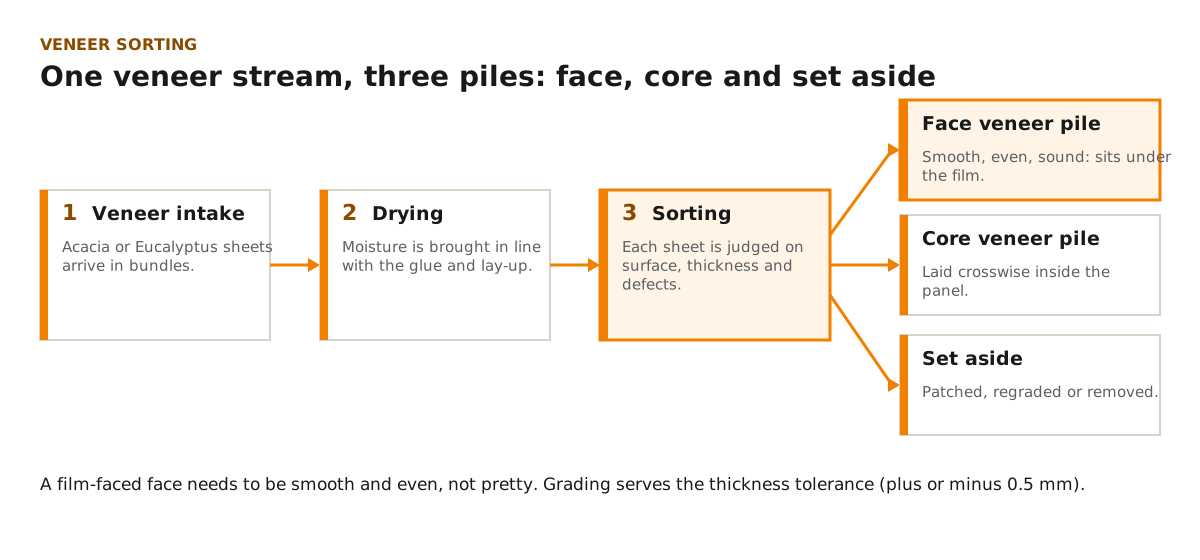
Smooth, even, sound sheets go to the face pile. Sheets that are sound and even but carry knots or colour variation go to the core pile, where crosswise lay-up and glue lines carry them. Sheets with splits, holes or uneven thickness are set aside for patching, regrading or removal. Check: every pile has one purpose and the set-aside pile is not used for faces.
Piles are stacked flat and counted against the order's ply count for the thickness. Check: the number of face and core sheets matches the build for the thickness on the order, with the set-aside pile accounted for.
The face and core stacks go to the lay-up table together with the order sheet. Check: the order sheet names the species, the glue system and the film so the table does not mix builds.
Real photos and clips
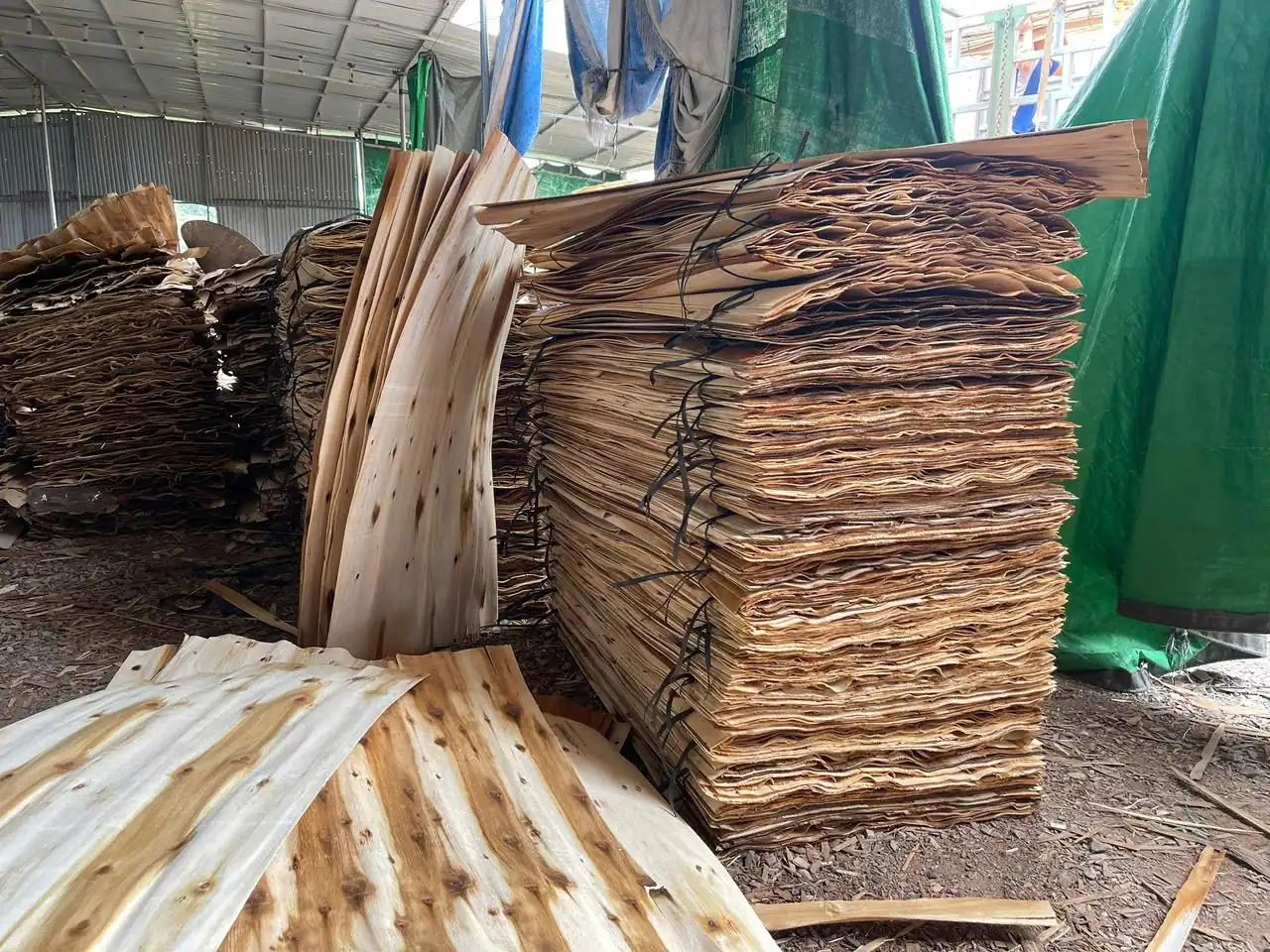
The photos show core veneer as it is graded: strapped stacks, knots in the grain and sheets laid flat. Knots on a core sheet are normal; the same knot on a face sheet under a film is not, which is why the piles exist.
Clips of the grading table are added as soon as the footage is cleared. Captions say only what the picture shows.
Defects
Each defect is judged on where it ends up in the panel, not only on what it looks like.
A hole is harmless in the middle of a crosswise core ply and ruinous on a face under a film. Thickness faults are the quietest defect: they show up later as soft spots in the press or a thickness step after sanding.
| Defect | Usual cause | What grading does |
|---|---|---|
| Split or crack along the grain | Drying stress or rough peeling | Set aside, or patched for a core ply |
| Hole or missing knot | Knot dropped out in peeling or drying | Core pile if small and patched; never on a face |
| Uneven thickness (wedge) | Peeling set-up drift | Set aside; thickness steps print through the film |
| Wavy or cockled sheet | Uneven drying | Flattened or set aside; waves cause gaps in the press |
| Mould or stain | Wet storage | Removed from the stack |
| Mixed species in one bundle | Bundle sorting at intake | Re-sorted by species before the order is built |
Numbers and tolerances
These are the numbers the grading table works toward; every one of them is confirmed per order on the technical sheet.
A thickness tolerance is not met in the sanding step alone. Sanding removes a limited amount from each face, so a stack of veneers with even thickness gives a panel that sands to size without taking off the face veneer.
| Item | Value | Condition |
|---|---|---|
| Film-faced thickness tolerance | ±0.5 mm | Written on the technical sheet for each order |
| Length and width tolerance | ±2 mm | Film-faced line |
| Panel thickness range | 9–40 mm | Everyday sizes: 12, 15, 18 and 21 mm |
| Sheet size | 1220 × 2440 mm or 1250 × 2500 mm | Custom sizes and cutting lists by request |
| Core species | Acacia or Eucalyptus | Chosen per order |
| Glue | MUF (melamine) or phenolic | Chosen per order |
| Hot press, phenolic bond | About 130–145 °C | Next step after grading |
Buyer guide
The first thing a buyer sees is the face. The grading step is why a film-faced panel arrives with an even face and a consistent thickness from sheet to sheet. Measure thickness at several points on several sheets of each pack, not only at the corner of the top sheet.
A panel with grading faults shows them in three places: a thickness step across the sheet, a dent or patch mark that prints into the concrete surface, and soft spots when the panel is nailed or screwed. None of them can be fixed on site.
If two offers with the same name differ in price, the difference is often the core grade, the joining and the tolerance. Ask what grade of face veneer sits under the film and what is permitted in the core.
Shipment proof
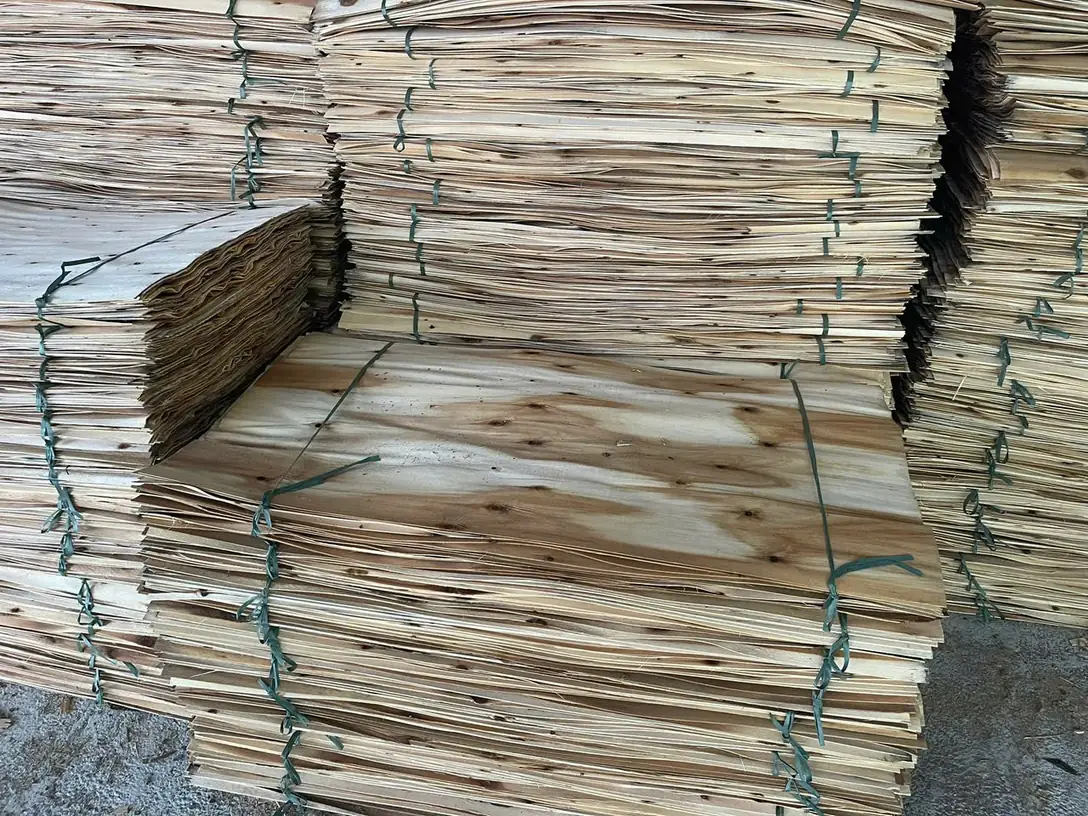
The proof of grading is in the shipment: even thickness from sheet to sheet, a clean face under the film and a core of the species on the order. The order documents carry the species and the glue system; the photo set for an order shows the stack as packed.
We do not show an image as proof of an order unless it is a photograph of that order.
Documents
Grading itself leaves no separate certificate. Its result is the panel, and its record is the technical sheet and the reference sample.
Technical sheet
The agreed build: core species, glue system, film, thickness and tolerance, and the permitted defects.
Specification and reference sample
Agreed before production; the sample shows the face and the edge.
FSC claim on sales documents
Where the order is an FSC order; confirmed per order.
Test reports
Specimen reports for the agreed build, always with the specimen and method stated.
Packing list
Species, thickness, size and sheet counts by pack.
Capacity
Across our two mills in Chi Linh, Hai Phong, capacity is up to 150 containers a month. A 40HC takes about 47 m³ of Acacia-core panels or about 43 m³ of Eucalyptus-core panels, so the grading table feeds a lot of lay-up every day.
Production runs 15–45 days after the 30% deposit, depending on quantity, production conditions and agreement. Veneer grading is not the longest step, but it is the one that cannot be hurried: a rushed grading table pushes defects downstream.
Order checklist
Put these six lines in the enquiry and grading can be set up before the order starts.
Acacia or Eucalyptus, as you need it; the species also changes the container load.
Say what is permitted on the face: patches, joints, colour variation.
State the permitted defects, joining and patching in the core.
MUF (melamine) or phenolic; it changes the reuse target.
The thickness in millimetres and the ±0.5 mm on the film-faced line, or the tolerance you need.
Agree a reference sample before production so the face can be compared on arrival.
Buyer questions
Because the film shows the surface beneath it and prints it into every concrete surface the panel forms. A smooth, even, sound face gives a clean film face; colour and beauty do not matter under a dark film. A dent or a thickness step on the veneer is visible as a mark in the film.
Acacia or Eucalyptus core veneers laid crosswise, with MUF or phenolic glue lines. The core carries the panel; its veneers may have knots that a face may not, provided they are sound and even in thickness.
Yes. Acacia is lighter, at a reference density of about 580 kg/m³, and Eucalyptus heavier, at about 650 kg/m³. That changes the container load: about 47 m³ per 40HC with Acacia against about 43 m³ with Eucalyptus.
After drying and before the glue is spread. The sequence is veneer intake, drying, core lay-up, glue and press, sizing and sanding, film press, edge sealing, marking and packing; grading is the sorting that makes the lay-up possible.
Even veneer thickness is the first condition. Sanding removes only a limited amount, so wedge-shaped or uneven sheets would leave a thickness step in the panel. The ±0.5 mm tolerance is written on the technical sheet for each order.
The grade is set per order on the technical sheet. The glue system changes the bond and the reuse target, up to about 25 pours for phenolic and about 12–15 for melamine (MUF), with proper handling, a release agent and sealed edges. The core grade you specify should be the one that supports that target.
Ask for the photo set and the reference sample at the enquiry stage. New buyers receive free samples and book their own courier; the courier cost can be credited against a real order.
They are set aside. Small faults in a core ply can be patched; sheets that are split, wedge-shaped or stained are regraded or removed. They never go on a face.
The core species is chosen per order and stated on the technical sheet. Mixing species within one order is agreed in advance, because it changes weight and container load.
Eligible FSC orders can use certified material for core, face and back, under chain of custody certificate SGSHK-COC-370674. The claim is confirmed per order on the sales documents.
Related steps
The eight-step sequence from veneer intake to packing.
OpenThe next step after grading: glue, lay-up and the hot press.
OpenCore press, sanding and film press.
OpenWhere the panel is checked after pressing.
OpenThe panel this grading builds.
OpenHow face and core show up in reuse.
OpenQuote
Send the core species, the glue system, the thickness and the face requirement. We answer with the technical sheet and the lead time for your quantity.