
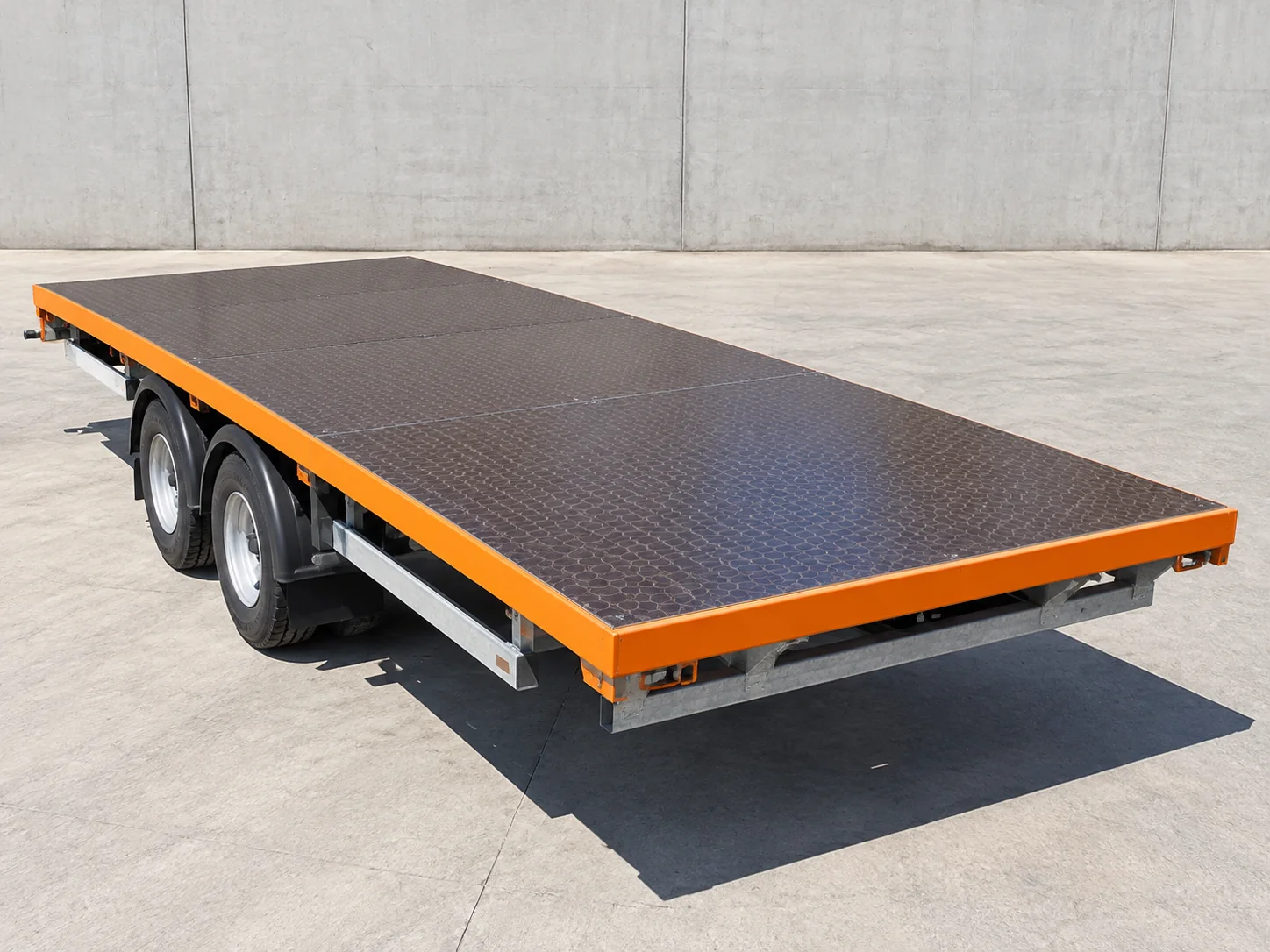
Trailer and truck floors
18 mm and 21 mm hexagon panels with phenolic glue, laid on the trailer frame and bolted through; the smooth back sits on the cross-members.
Floor and deck panels · made in Chi Linh, Hai Phong
In short
Plywood anti slip panels are hardwood plywood with a patterned phenolic film pressed onto the walking face, so boots and wheels find grip where a smooth film would be slick. We press hexagon, wire-mesh and rice patterns on Acacia or Eucalyptus cores, with MUF or phenolic glue, in 9–40 mm. SGS pendulum readings on two of our specimens were 58 dry / 40 wet and 60 dry / 53 wet; we claim no slip class.
Film
The page film follows one anti-slip panel: the core lay-up, the patterned plate in the film press, the painted edges and the packs going into a 40HC. It is cut from real clips at our mills and will carry captions.
Real panels
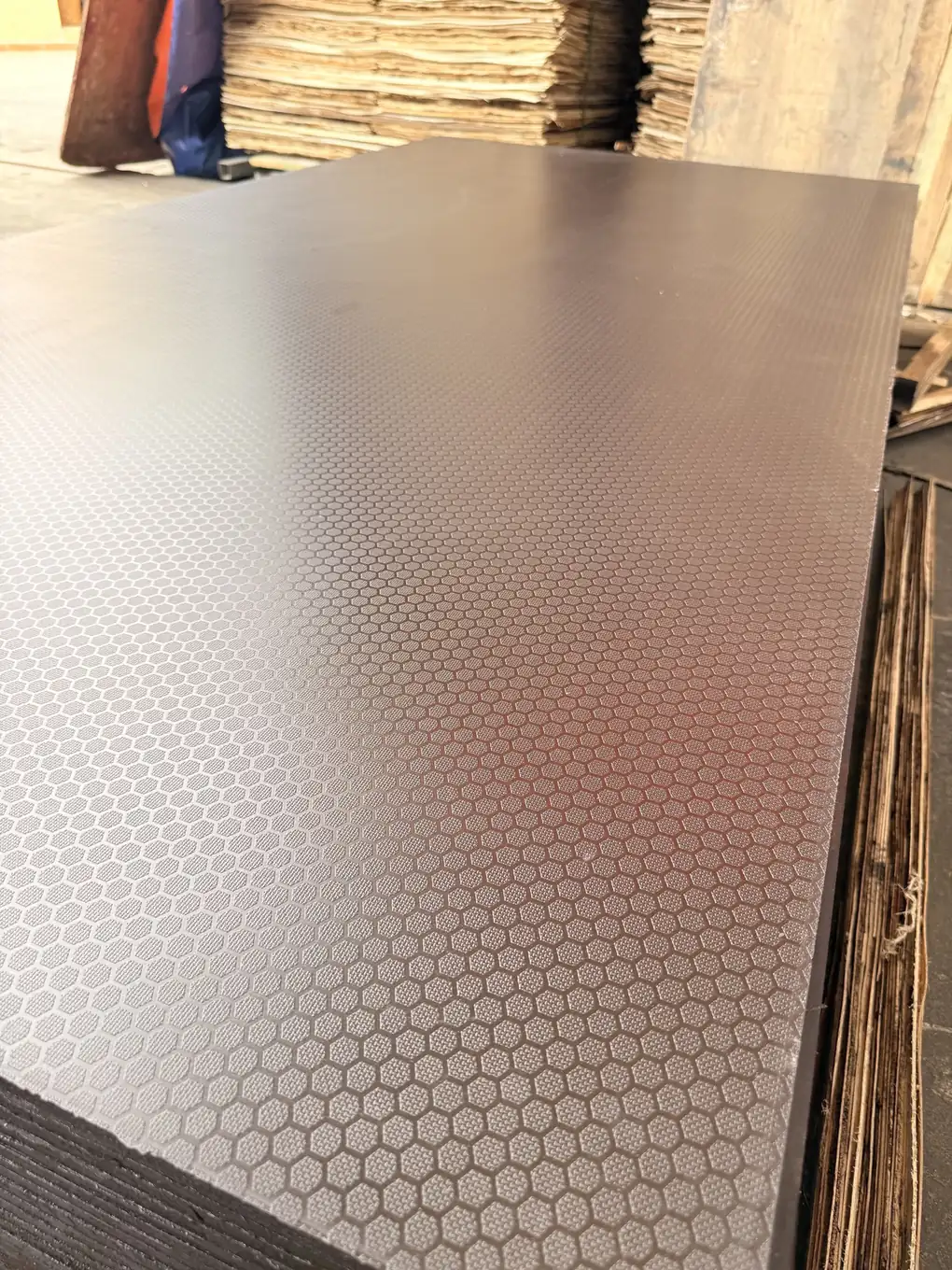
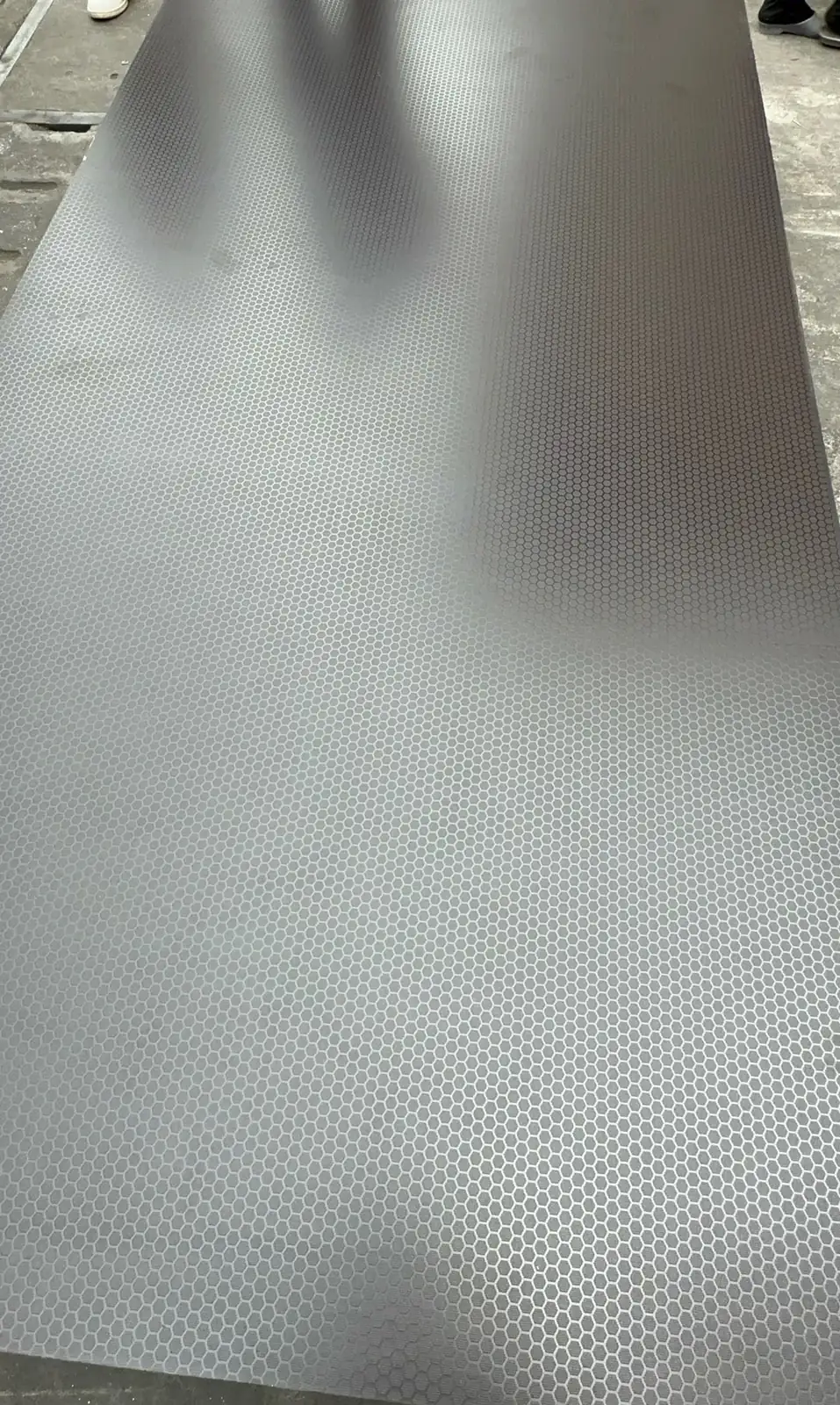
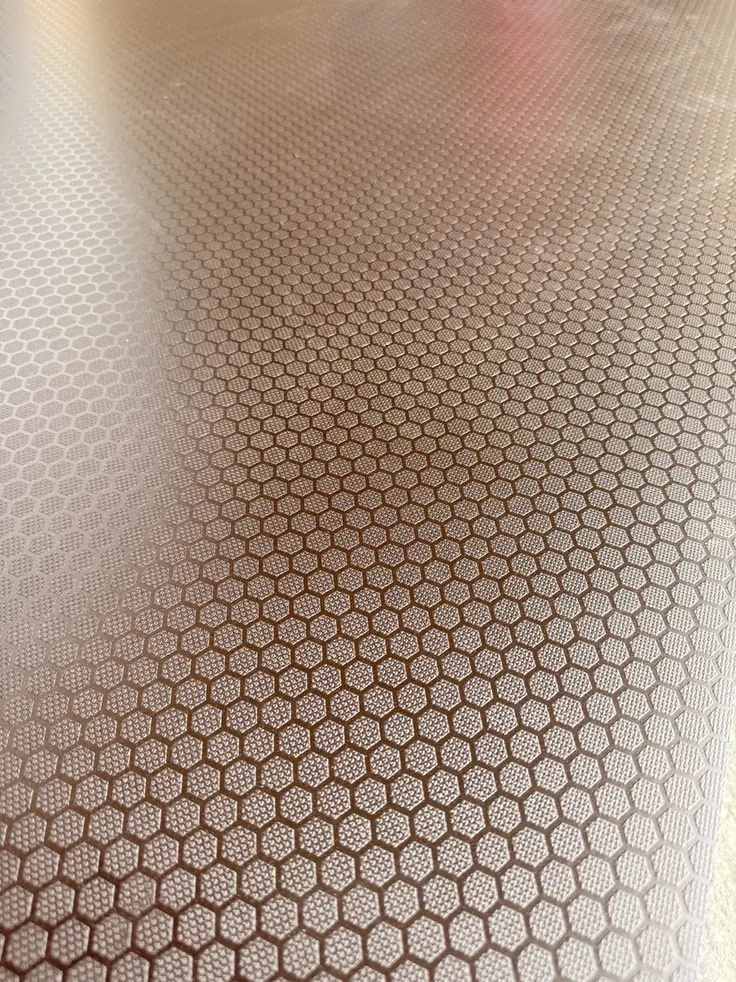
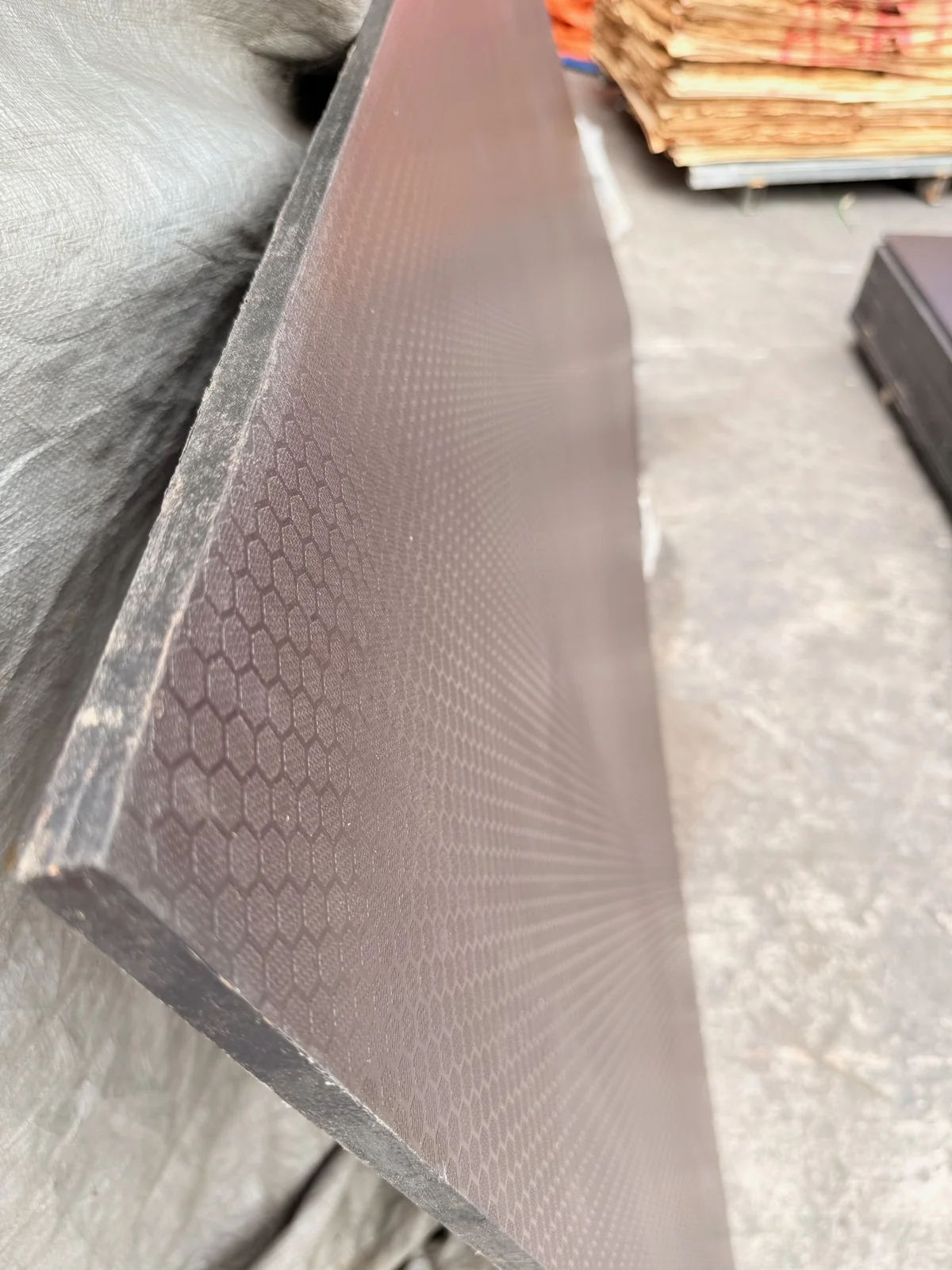
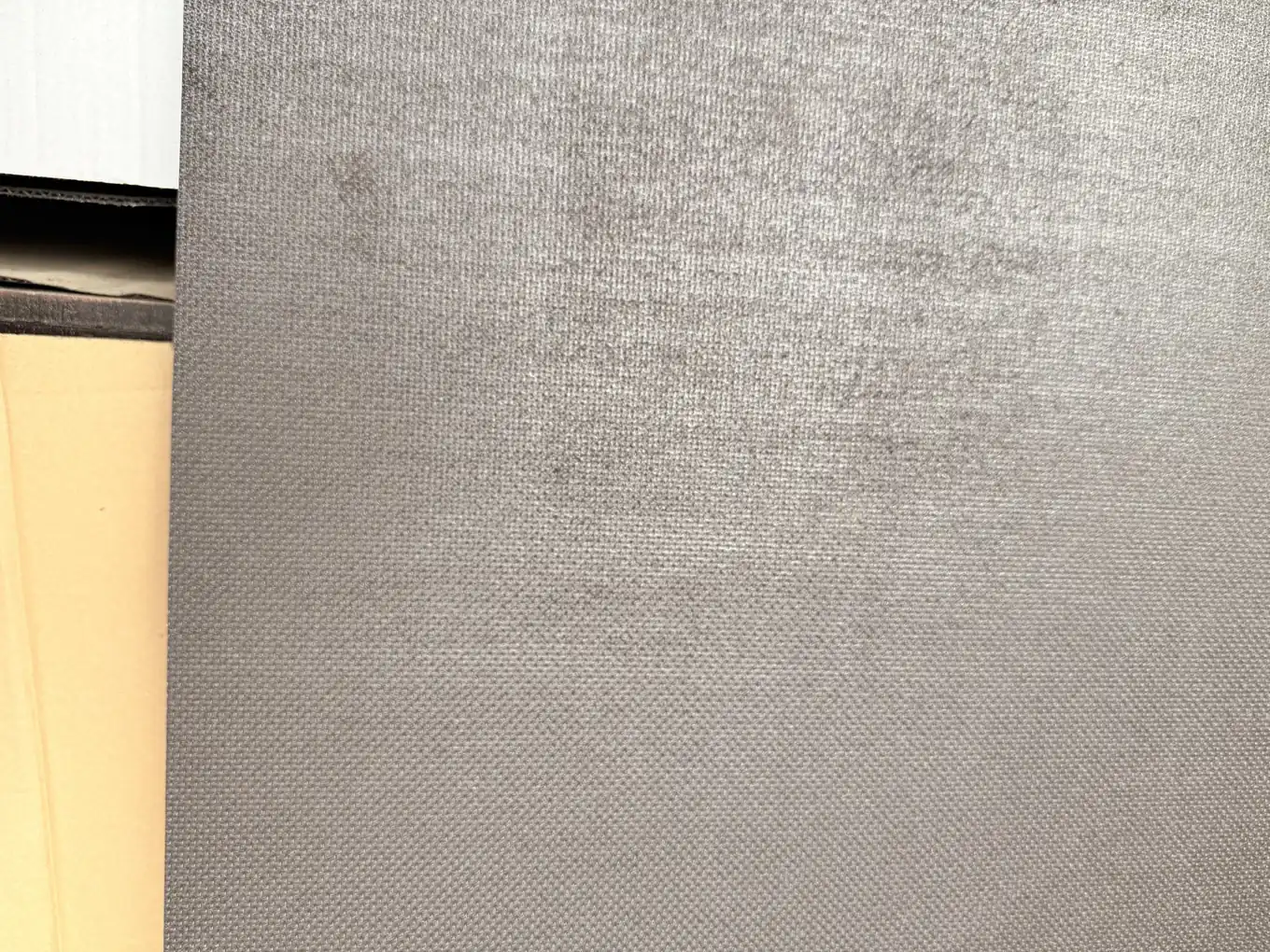
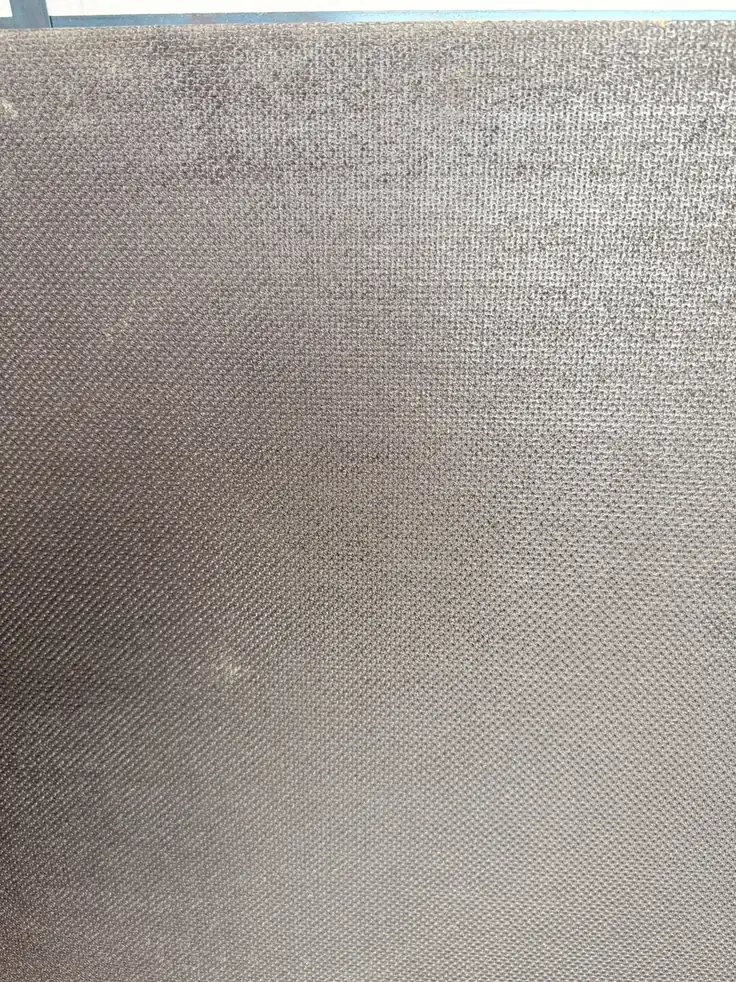
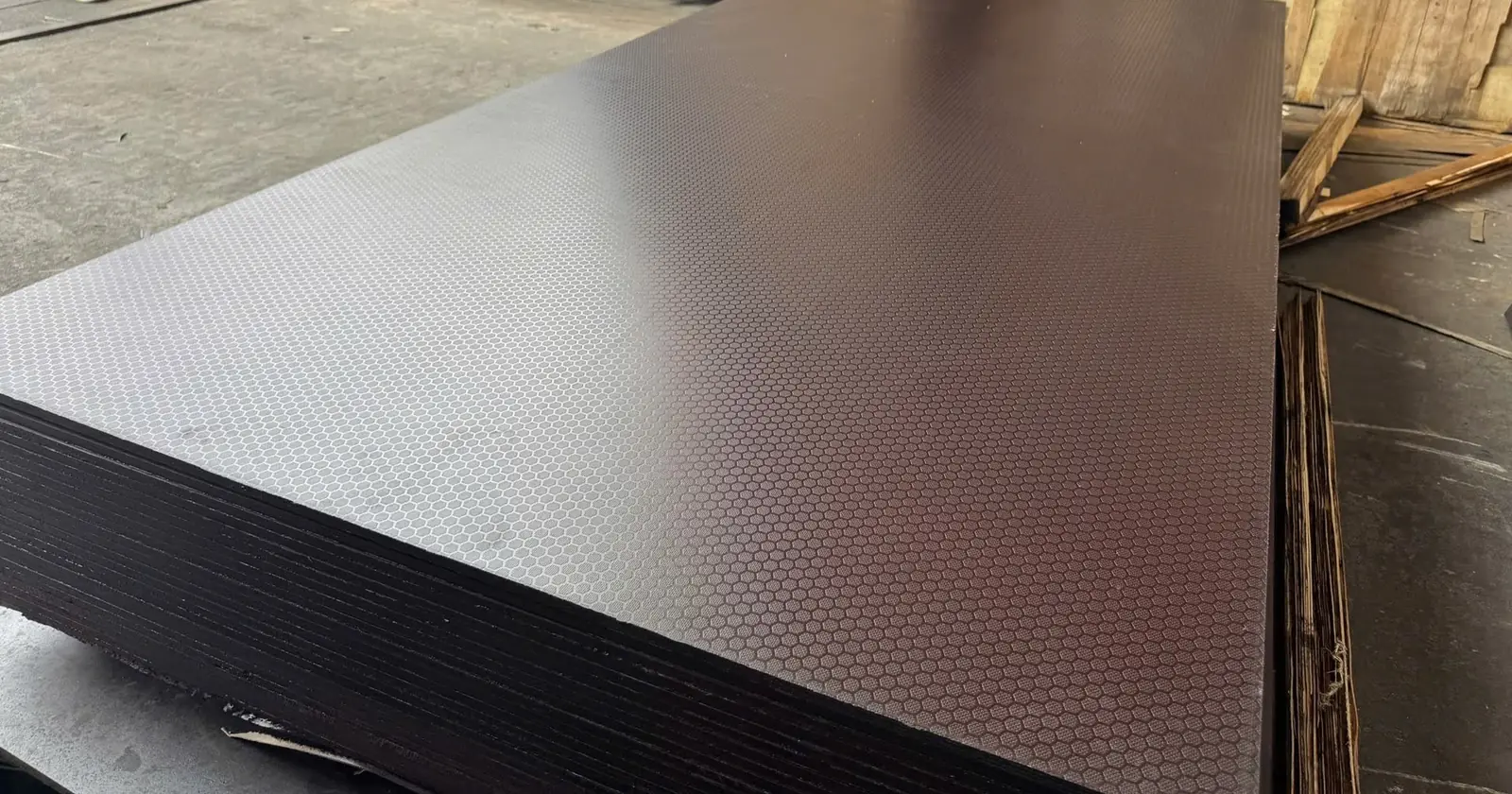
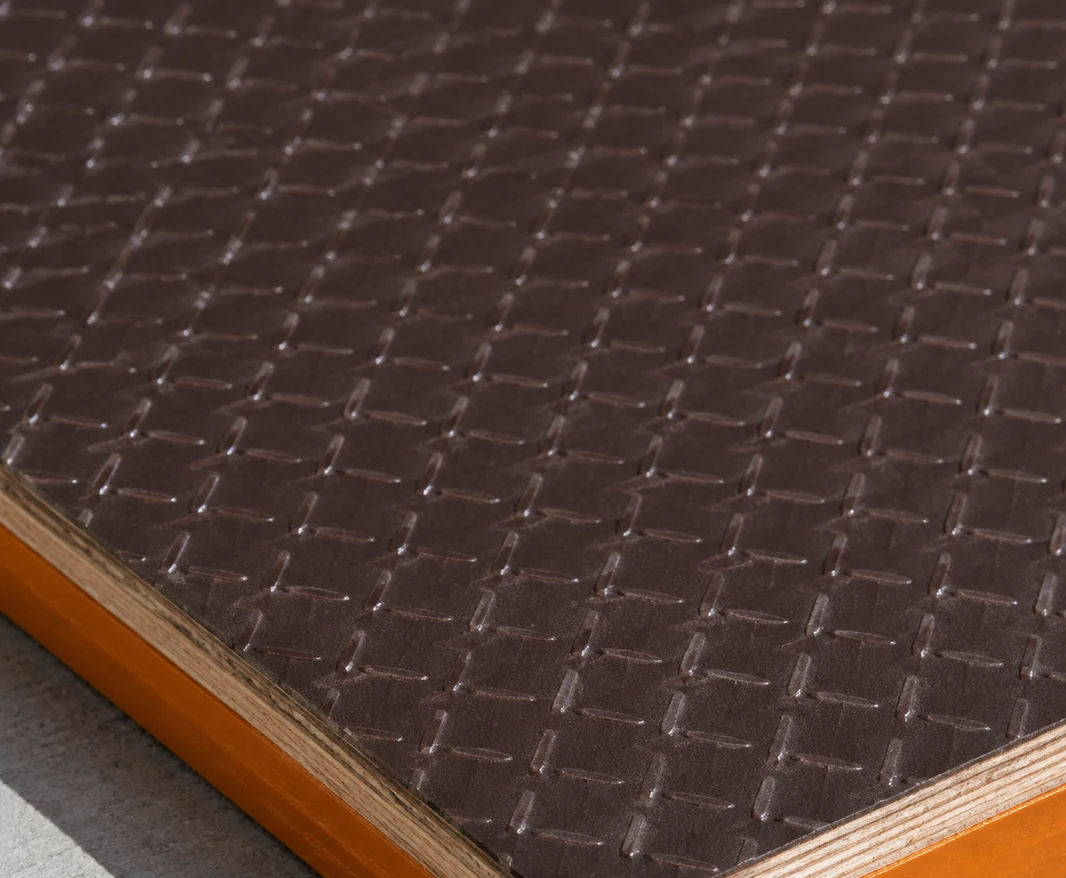
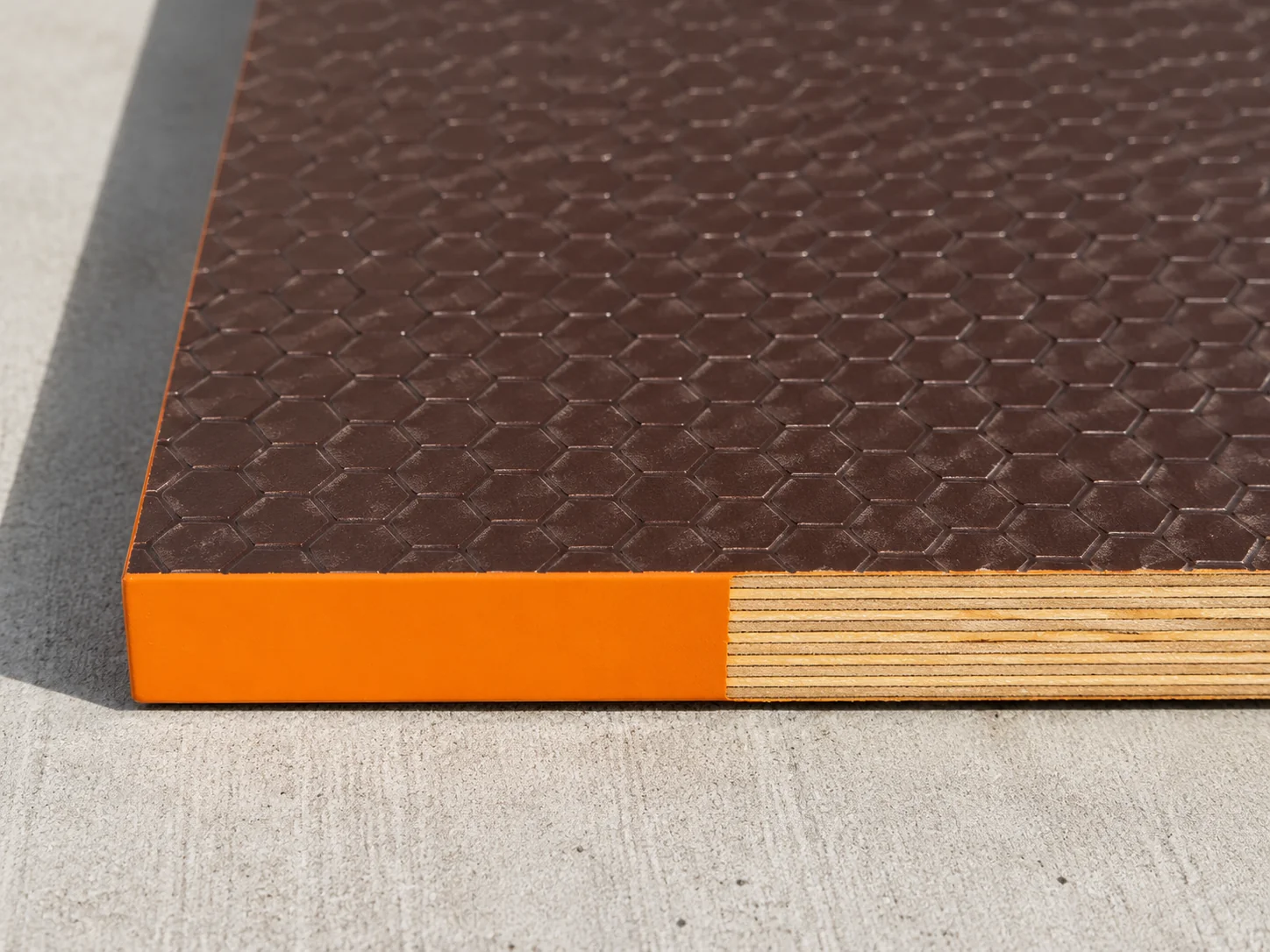
These photos were taken at our mill in Chi Linh. They show the two patterns we press most, hexagon and rice, on full sheets, on the top of finished stacks and at a cut edge. The pattern is moulded into the film itself during pressing; nothing is glued or painted on afterwards.
Specification
Our anti-slip panel is the same hardwood plywood we press for formwork, with a patterned film on the walking face and, as standard, a smooth film on the back. Every line in the table is an order field: we write your choice on a technical sheet you approve before production, and the repeat order is pressed to that sheet.
| Item | Standard | Options by order |
|---|---|---|
| Walking face | Patterned phenolic film, dark brown, hexagon pattern | Wire-mesh or rice pattern; black film |
| Back | Smooth film, dark brown | Patterned film on both faces for reversible floors |
| Film reference | 220 g/m² anti-slip film | Weight confirmed per order with the duty |
| Core | Acacia hardwood veneers, laid crosswise | Eucalyptus hardwood veneers |
| Glue | Phenolic | MUF for dry, covered floors |
| Thickness | 18 mm most ordered; 12, 15 and 21 mm | 9 mm up to 40 mm by order |
| Sheet size | 1220 × 2440 mm (4 × 8 ft) | 1250 × 2500 mm, or cut to the deck width |
| Thickness tolerance | ±0.5 mm | Held per pack, checked with calipers |
| Length and width | ±2 mm | Tighter fit agreed for trailer decks |
| Edges | Painted on all four sides at the mill | Your edge colour |
| Formaldehyde | E1 class build; chamber result on a 21 mm phenolic specimen | Test to your method through SGS on request |
| Marking | Pack labels with pack number | Your stamp on the back and your pack labels |
Pendulum test
SGS tested two anti-slip specimens we submitted, using the pendulum method of DIN EN 16165-02:2023, Annex C, with slider 96. The reports are dated 14 October 2025. Each specimen was measured dry and then wet, because water on the film is what buyers worry about on trailers, ramps and outdoor decks.
The two specimens gave different readings. The thicker one read 58 dry and 40 wet; the thinner one read 60 dry and 53 wet. The drop from dry to wet is the useful number: it shows how much grip is lost when the surface is wet with clean water.
We do not claim a slip class from these results and we do not link a reading to one pattern. A pendulum value describes the specimen on the test day, not every panel or every floor after months of use, mud, oil or wear. If your market or your client needs a class, send us the standard and the method and we arrange a test on samples from your own build.
| Specimen | Size tested | Dry | Wet |
|---|---|---|---|
| Specimen 1 | 200 × 145 × 18.38 mm | 58 | 40 |
| Specimen 2 | 200 × 150 × 14.62 mm | 60 | 53 |
Specimen evidence only: no slip class, pattern association or field-safety guarantee is claimed.
Patterns and film
The pattern is the grade choice of anti-slip plywood. All three are moulded into the phenolic film by a textured plate in the press, so the grip is part of the face and cannot flake off like a paint or grit coating.
Hexagon is the pattern most buyers order: a regular grid of raised cells that gives grip in every direction and drains water between the cells. Wire-mesh has a crossed, slightly deeper texture that suits loads dragged across the floor. Rice is a fine, dense grain that feels smoother under foot and is easier to sweep, which suits walkways, stage floors and covered decks.
Our anti-slip film reference is 220 g/m². The film weight and the duty are confirmed per order: tell us what runs over the floor, wheels, pallets, boots or animals, and we write the film and glue on the technical sheet.
| Pattern | Texture | Typical use | Cleaning |
|---|---|---|---|
| Hexagon | Regular raised cells, grip in every direction | Trailer and truck floors, scaffold and loading platforms | Brush and water; cells drain |
| Wire-mesh | Crossed, deeper mesh texture | Floors where loads are dragged or pushed, ramps | Stiff brush; pressure washer |
| Rice | Fine, dense grain | Walkways, stage floors, covered decks | Easiest to sweep |
Core
The patterned film only works on a flat, stiff panel. A core with gaps or overlapping veneers shows as soft spots under a wheel and lets the face crack over a void. Our cores are full hardwood veneers laid crosswise, and sample sheets from each production run are cut open to check that every layer is in place.
Acacia is the lighter core and fills a container by volume; Eucalyptus is denser, a little stiffer under point loads and reaches the container's weight limit before it is full. Floors that take forklift wheels or heavy point loads are usually ordered in Eucalyptus; decks and walkways in Acacia.
| Item | Acacia core | Eucalyptus core |
|---|---|---|
| Planning density | 580 kg/m³ | 650 kg/m³; measured 650–750 kg/m³ |
| 18 mm sheet, 1220 × 2440 mm | 31.1 kg | 34.8 kg |
| 21 mm sheet, 1220 × 2440 mm | 36.3 kg | 40.6 kg |
| Load per 40HC | About 47 m³ | About 43 m³ |
| Measured density, SGS 21 mm specimen | 642 kg/m³ | Not tested |
Glue and edges
Phenolic glue is our standard for anti-slip plywood, because these panels live outdoors on open trailers, ramps and scaffold decks that get rain, washing and sun for years.
SGS tested our phenolic bond on a 21 mm Acacia-core specimen and recorded a pass at bonding Class 3 (EN 314-1 and EN 314-2), the exterior bond class, after soaking in water for 24 h, a boil-dry-boil cycle and boiling for 72 h.
MUF glue is a fair choice for covered floors, stages and indoor walkways that stay dry, and it lowers the panel price. We do not recommend it for open trailer floors.
In the EN 717-1 chamber, formaldehyde on that 21 mm phenolic specimen was not detected at the 0.04 mg/m³ reporting limit, an E1 pass against 0.124 mg/m³. That is a result for the specimen, not a guarantee for every panel; we test your build to your method on request.
The edge decides how long a floor lasts. Water that enters a cut or chipped edge swells the core and lifts the film from the outside in. We paint all four edges at the mill; on site, every cut, notch and bolt hole needs sealer the same day.
Phenolic glue, sealed edges, and a bead of sealant where panels meet the frame.
MUF is enough where the floor stays dry; choose phenolic if it is washed down.
Seal the inside of every hole before the bolt goes in; water follows the bolt.
Thickness and size
We press anti-slip plywood in any thickness from 9 mm to 40 mm, on 1220 × 2440 mm and 1250 × 2500 mm sheets. Most orders are 12, 15, 18 or 21 mm. The right thickness depends on the span between bearers and the load, so tell us the bearer spacing of your frame along with the use.
Thickness tolerance is ±0.5 mm and length and width tolerance ±2 mm. Trailer builders often order panels cut to the deck width at the mill; every cut edge is painted before packing.
| Thickness | Typical use |
|---|---|
| 9 mm | Linings, covers on existing floors |
| 12 mm | Walkways and stage floors on close bearers |
| 15 mm | Scaffold boards and decks on light frames |
| 18 mm | Trailer and van floors, platforms; the most ordered thickness |
| 21 mm | Truck floors and loading platforms with wider bearer spacing |
| Up to 40 mm | Heavy-duty floors by agreement |
Applications
Anti-slip plywood is a floor panel: it carries people, wheels and loads and keeps its grip when wet. Our buyers use it in five kinds of floors.
18 mm and 21 mm hexagon panels with phenolic glue, laid on the trailer frame and bolted through; the smooth back sits on the cross-members.
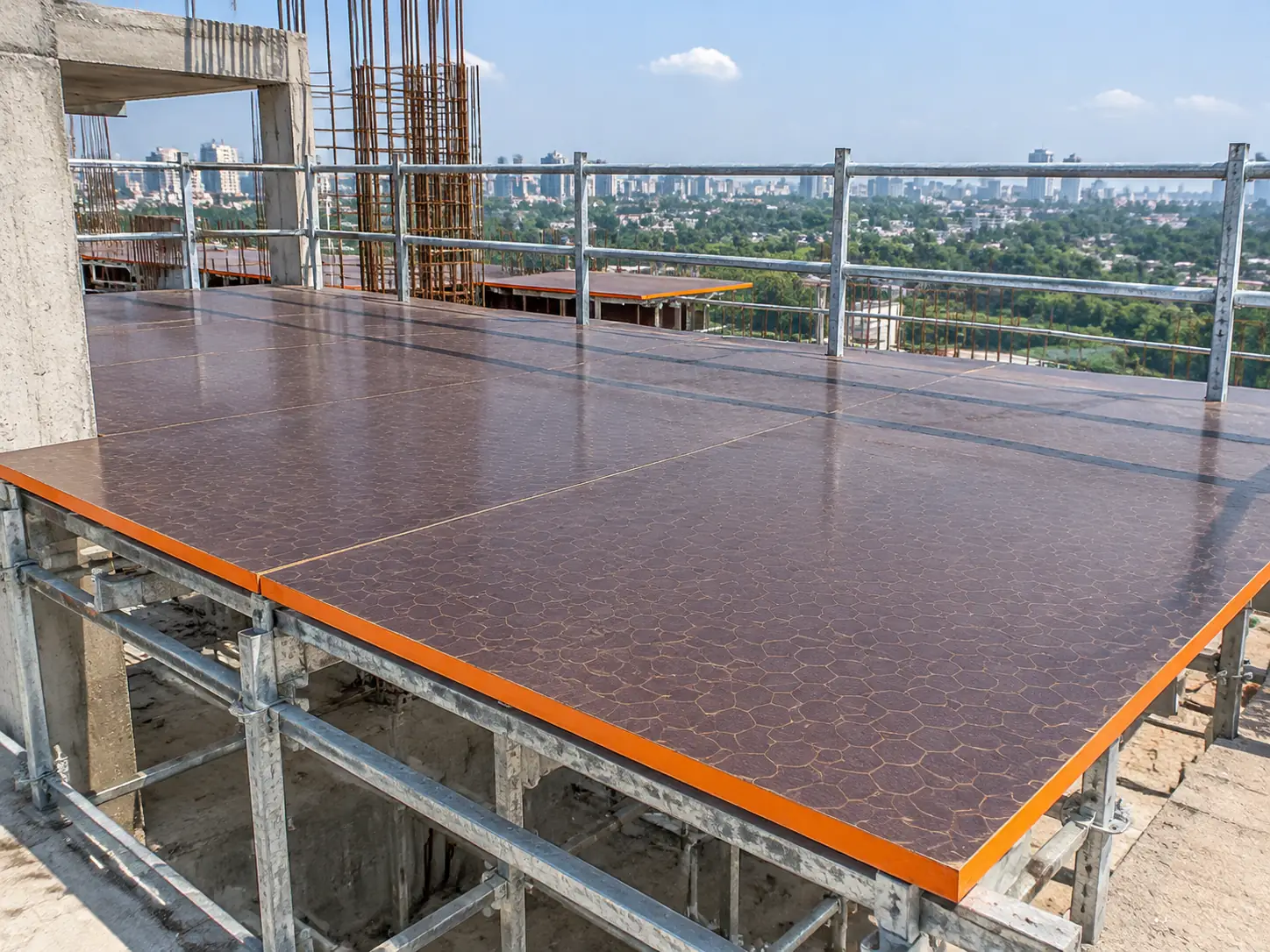
15 mm and 18 mm panels on scaffold beams; the hexagon face keeps grip when the deck is wet from rain or curing water.
Wire-mesh or hexagon faces where pallets and trolleys are pushed up a slope.
Rice-pattern panels that are easy to sweep and quiet under foot, often 12 mm or 15 mm.
Phenolic panels with sealed edges on covered or open walkways; seal every fixing hole.
Trailer and truck floors
For most trailer and truck floors we recommend the hexagon pattern on an 18 mm or 21 mm phenolic panel. Hexagon cells give grip in every direction, so a load pushed sideways or a boot turning on a wet floor finds the same texture, and water drains between the cells instead of standing on the face.
Wire-mesh suits floors where pallets, cages or machinery are dragged along the length of the trailer. Its crossed texture is a little deeper and rougher, which helps traction under loaded wheels but collects more dirt, so it needs a stiff brush or a pressure washer.
Whichever pattern you choose, the floor lasts as long as its edges and fixings stay sealed. Specify the thickness from the cross-member spacing and the axle load, ask for panels cut to the deck width so the only site cuts are at the ends, and seal every bolt hole before fixing. Our anti-slip panels are made under the same ISO 9001 quality management and run records as our formwork panels, and the technical sheet you approve lists the pattern, film, core, glue and tolerances line by line.
18 mm on most trailers and vans; 21 mm where cross-members are further apart.
Hexagon for all-direction grip; wire-mesh for dragged loads.
Bolts through sealed holes; a sealant bead where panels meet the frame.
Compare floors
Buyers weigh a pressed anti-slip face against a smooth film panel painted with grit, against a coated floor, and against steel checker plate. The table sets out the differences that matter for a floor.
A grit paint can be rolled onto any panel and recoated, but it wears in the wheel tracks and must be renewed. A pressed pattern is part of the film and lasts as long as the film does; when it wears, the panel is turned or replaced.
| Item | Anti-slip plywood (pressed pattern) | Smooth film panel | Smooth panel with grit coating | Steel checker plate |
|---|---|---|---|---|
| Where the grip is | Moulded into the film | None; slick when wet | In the paint layer | Raised steel pattern |
| Wet grip | Pendulum-tested on two specimens | Low | Good until the coating wears | Low on wet or oily steel |
| Upkeep | Brush and water | Brush and water | Recoat in wheel tracks | Rust protection |
| Weight, 18 mm area | 31.1 kg Acacia or 34.8 kg Eucalyptus per 1220 × 2440 mm sheet | Same | Same plus coating | Much heavier per m² |
| Repair | Replace one panel | Replace one panel | Recoat | Cut and weld |
Checks
Every anti-slip panel is checked at the press line before packing. The checks are recorded per production run against the technical sheet of your order, and your inspector or a third-party company is welcome before loading.
The pattern is full and even across the whole face, with no flat patches, bubbles or bare spots near the edges.
Calipers on sample sheets of each pack: within ±0.5 mm of the ordered thickness.
Within ±2 mm on length and width, corners square, so panels butt tight on the frame.
Smooth back film fully bonded, or the second pattern when ordered.
All four edges painted, no bare veneer.
Sample pieces from the run are boiled and checked for open glue lines.
Certificates and reports
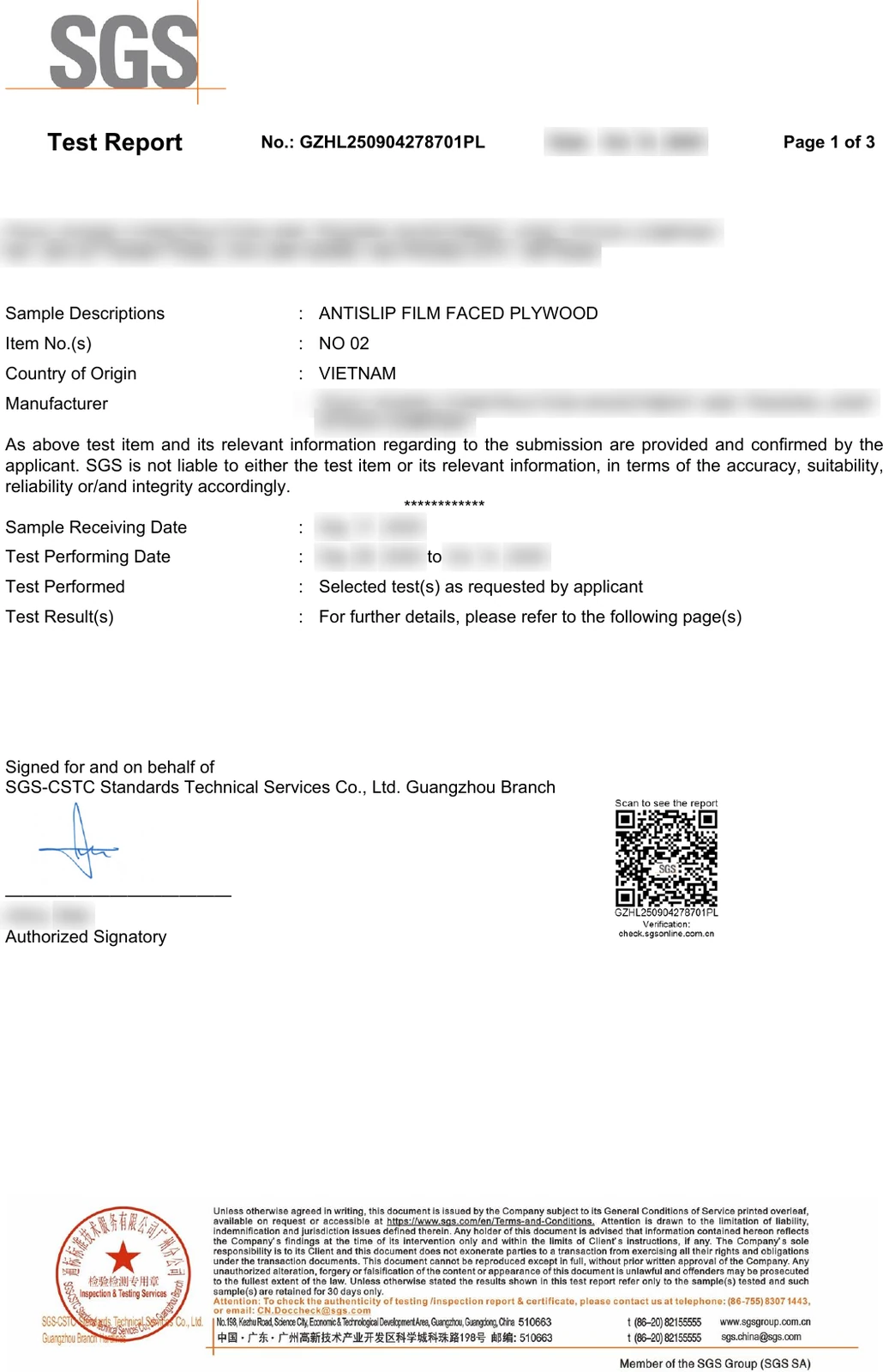
The two SGS pendulum reports are shown below with the legal entity, address and dates blurred. Our certificate copies go out with the quotation; the FSC claim, when ordered, is printed on the invoice.
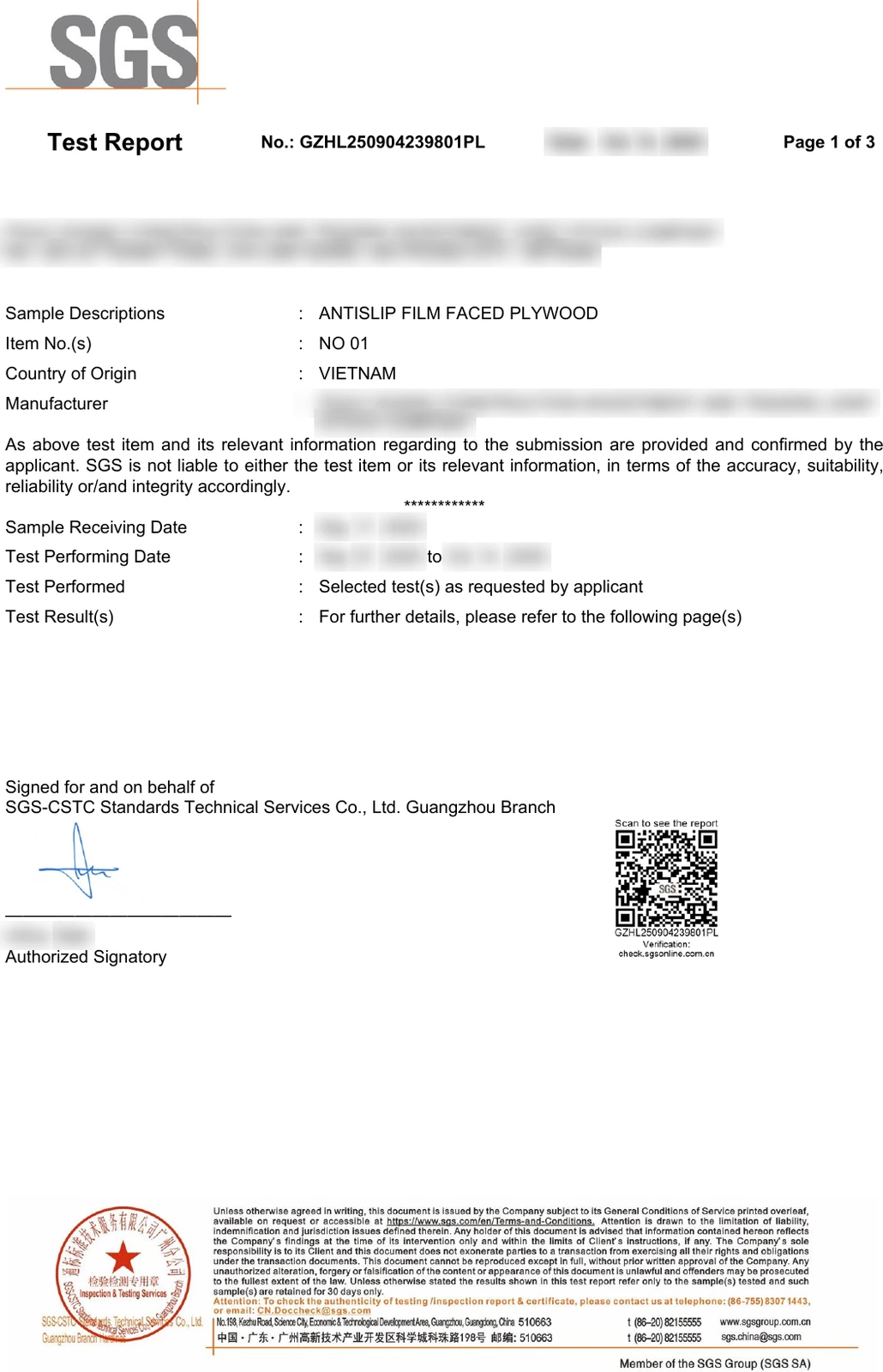
DIN EN 16165-02:2023
Specimen 200 × 145 × 18.38 mm: 58 dry, 40 wet, slider 96. Specimen result, no slip class.
Pendulum report, specimen 1; legal entity, address and dates blurred.
DIN EN 16165-02:2023
Specimen 200 × 150 × 14.62 mm: 60 dry, 53 wet, slider 96. Specimen result, no slip class.
Pendulum report, specimen 2; legal entity, address and dates blurred.
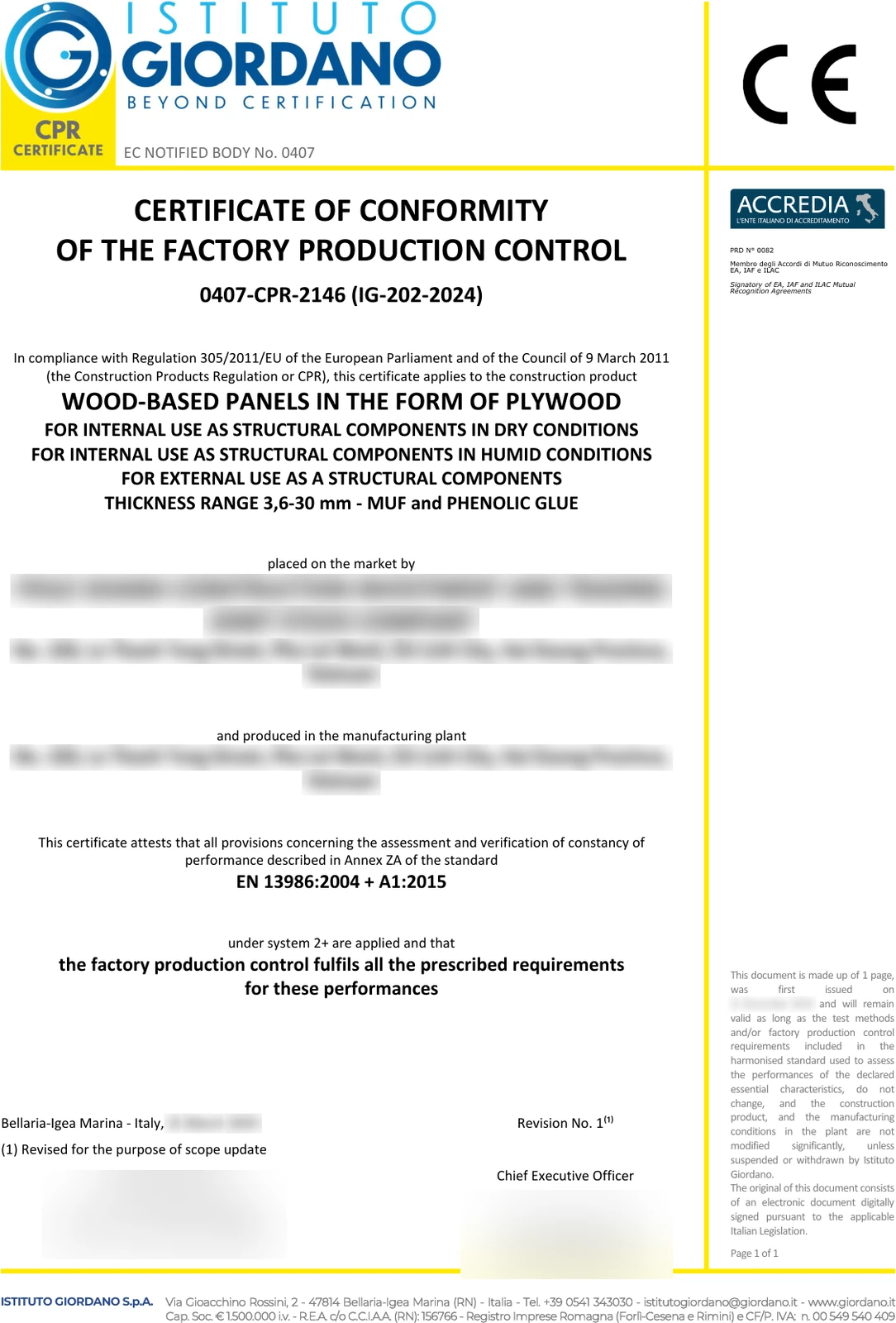
0407-CPR-2146
EN 13986, AVCP System 2+: structural plywood 3.6–30 mm with MUF or phenolic glue for dry, humid and external use. CE documents are issued when a panel inside that scope is ordered for structural use.
CE certificate scan; legal entity, tax ID, address and dates blurred.
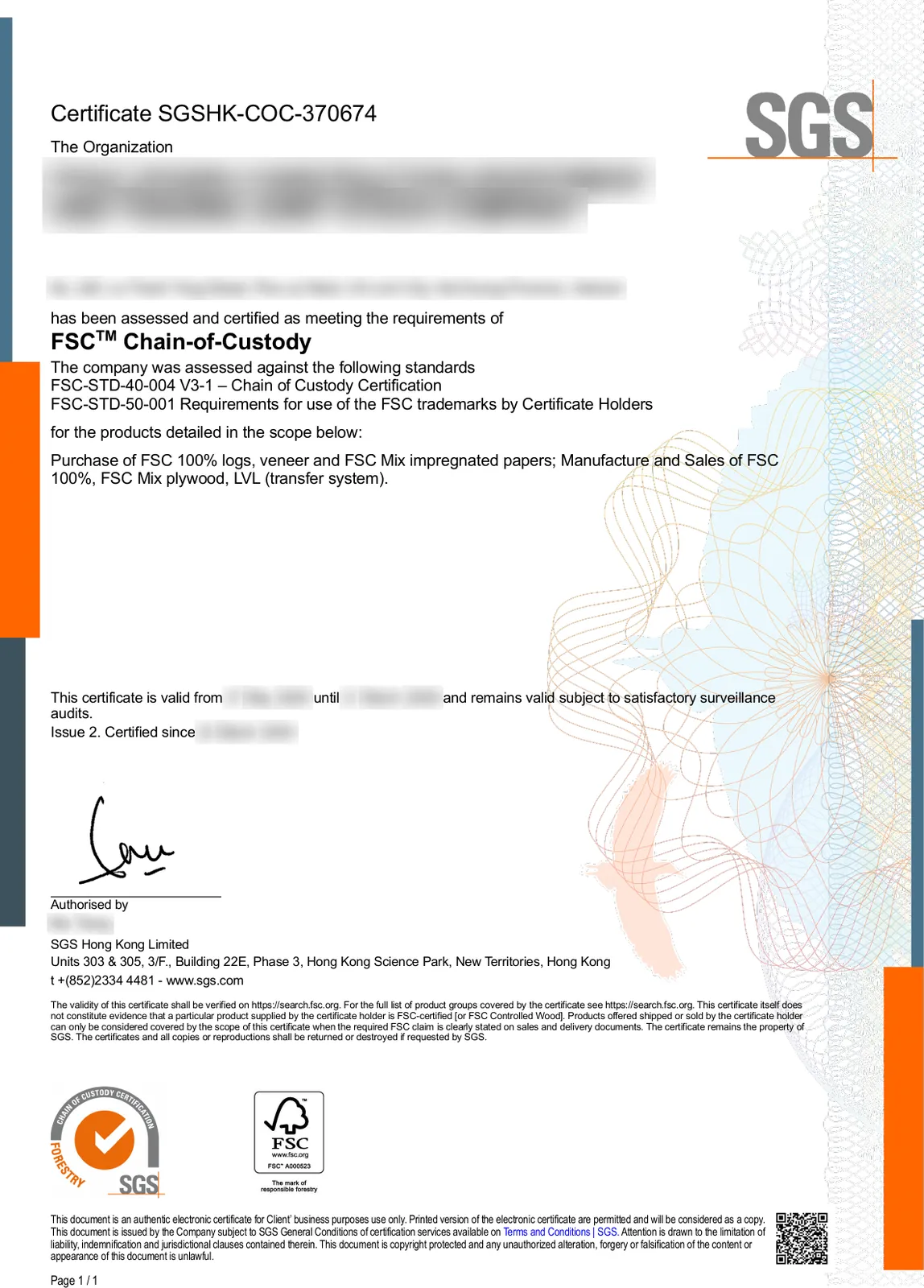
SGSHK-COC-370674
FSC 100% or FSC Mix plywood on request; the claim is confirmed per order on the sales documents.
FSC certificate scan; legal entity, tax ID, address and dates blurred.
Packing and loading
Anti-slip panels are packed like our film-faced panels: strapped stacks about 1,000 mm high on pallet feet, covered on top, with the pack number and your marks on the side. The pattern faces are stacked face to back so the cells do not lock into each other in transit.
The figures are our planning load from the same packing model as our formwork panels; the final count follows the booking, the route and the weighed sheets. A container usually carries one or two builds; anti-slip and smooth film-faced panels can share a 40HC.
| Core | Thickness | Sheets per pack | Sheets per 40HC | m³ per 40HC |
|---|---|---|---|---|
| Acacia | 12 mm | 83 sheets | 1,328 sheets | 47.4 m³ |
| Acacia | 15 mm | 66 sheets | 1,056 sheets | 47.2 m³ |
| Acacia | 18 mm | 55 sheets | 880 sheets | 47.2 m³ |
| Acacia | 21 mm | 47 sheets | 752 sheets | 47.0 m³ |
| Eucalyptus | 18 mm | 53 sheets | 795 sheets | 42.6 m³ |
| Eucalyptus | 21 mm | 45 sheets | 675 sheets | 42.2 m³ |
Planning load only, not a packing list: Acacia 16 packs at 580 kg/m³, Eucalyptus 15 packs at 650 kg/m³.
Buy from the mill
We sell anti-slip plywood by the container from our two mills in Chi Linh, Hai Phong, which together ship up to 150 containers a month. The minimum order is one 40HC; three to six builds can share it by agreement.
Once your 30% deposit arrives, an anti-slip order is pressed in 15–45 days, depending on how many containers it fills. You settle the remaining 70% when we send the scanned bill of lading, by T/T or through an irrevocable L/C at sight, and prices are quoted FOB Hai Phong, CFR or CIF. Samples of your pattern and thickness are free; new buyers book their own courier and the cost is credited against the first order.
Care
A patterned face keeps its grip as long as the cells stay open and the film stays bonded. Five habits make the difference on trailers and decks.
Paint every cut edge, notch and bolt hole with edge sealer before the panel goes on the frame.
Clean the cells with a stiff brush and water; a steel scraper flattens the pattern.
Oil and grease fill the cells and remove the grip; clean them off the same day.
Leave a small gap or a sealant bead where panels meet so water runs off instead of standing on the face.
Where the frame allows, swap panels from the wheel tracks with panels from the sides to spread the wear.
How to order
What runs over it, bearer spacing, wet or dry, pattern, thickness, size, quantity and port.
Pattern, film, core, glue and tolerances on one sheet, with an FOB, CFR or CIF price.
A free sample of the exact pattern and thickness, so you can feel the grip before you order.
30% by T/T starts production; 15–45 days by quantity.
Pack photos, your inspector welcome, drafts for approval, balance against the scanned B/L.
Buyer questions
The walking face. Anti-slip plywood has a pattern such as hexagon, wire-mesh or rice moulded into the phenolic film for grip; regular film-faced plywood has a smooth film made to leave a clean concrete face. Core, glue and edges are the same build.
Hexagon, wire-mesh and rice. Hexagon is the most ordered; wire-mesh has a crossed, deeper texture; rice is a fine grain that is easy to sweep.
Under DIN EN 16165-02:2023 Annex C with slider 96, a 200 × 145 × 18.38 mm specimen read 58 dry and 40 wet, and a 200 × 150 × 14.62 mm specimen read 60 dry and 53 wet. Reports dated 14 October 2025.
No. The pendulum readings describe two submitted specimens, not every panel, so we claim no slip class and no field-safety rating. If you need a class, we test samples of your build to your standard.
Eucalyptus for floors with forklift wheels or heavy point loads, because it is denser; Acacia for decks and walkways, because it is lighter and loads about 47 m³ per 40HC against about 43 m³.
18 mm on most trailers and vans and 21 mm on truck floors with wider bearer spacing. Send the bearer spacing and the axle load and we confirm the thickness.
The phenolic film and painted edges keep water out of the face and core, and our phenolic bond passed EN 314 Class 3 on an SGS-tested 21 mm specimen. Cut edges and bolt holes must be sealed on site.
Yes. 12 mm is a stock thickness for walkways and stage floors, in hexagon, wire-mesh or rice pattern, on 1220 × 2440 mm or 1250 × 2500 mm sheets.
Yes. The standard back is smooth film; both faces can be patterned for reversible floors.
Our anti-slip film reference is 220 g/m². The weight is confirmed per order with the duty of the floor.
As a planning figure, about 880 sheets of 18 mm 1220 × 2440 mm with an Acacia core, or 795 with Eucalyptus; the final count follows the booking and weighing.
Yes. One or two builds per 40HC is usual, and three to six can be mixed by agreement.
Pressing runs 15–45 days from the 30% deposit, depending on the number of containers; the minimum is one 40HC.
Hexagon for most trailers, because its cells grip in every direction and drain water; wire-mesh where pallets or machinery are dragged along the floor. We press both at our mills in Chi Linh, Hai Phong, in 18 mm and 21 mm phenolic builds.
A grit coating sits on top and wears in the wheel tracks, so it needs recoating. A pressed pattern is part of the film and lasts as long as the film, needing only a brush and water.
Quotation
Send the pattern, thickness, size, core, what runs over the floor, quantity and port of discharge. We reply with a technical sheet and an FOB Hai Phong, CFR or CIF price.