
A test report sold as certification
An SGS chamber report is evidence; TSCA needs third-party certification of the mill.
CARB Phase 2 · TSCA Title VI · US formaldehyde rule
Yes. PK Ply holds CARB Phase 2 and EPA TSCA Title VI formaldehyde documentation for applicable products and orders, made at our two mills in Chi Linh, Hai Phong. The certificate copy on our file covers hardwood plywood with veneer core, 2–21 mm. The US limit for that product is 0.05 ppm formaldehyde.
Film
Short answer
Yes. We hold CARB Phase 2 and EPA TSCA Title VI formaldehyde documentation for applicable products and orders. Both programmes set the same level, 0.05 ppm formaldehyde for hardwood plywood with a veneer or composite core, and both rest on certification by a third-party certifier (TPC) that CARB approved and EPA recognises. Our Acacia and Eucalyptus veneer-core panels are hardwood plywood in that sense.
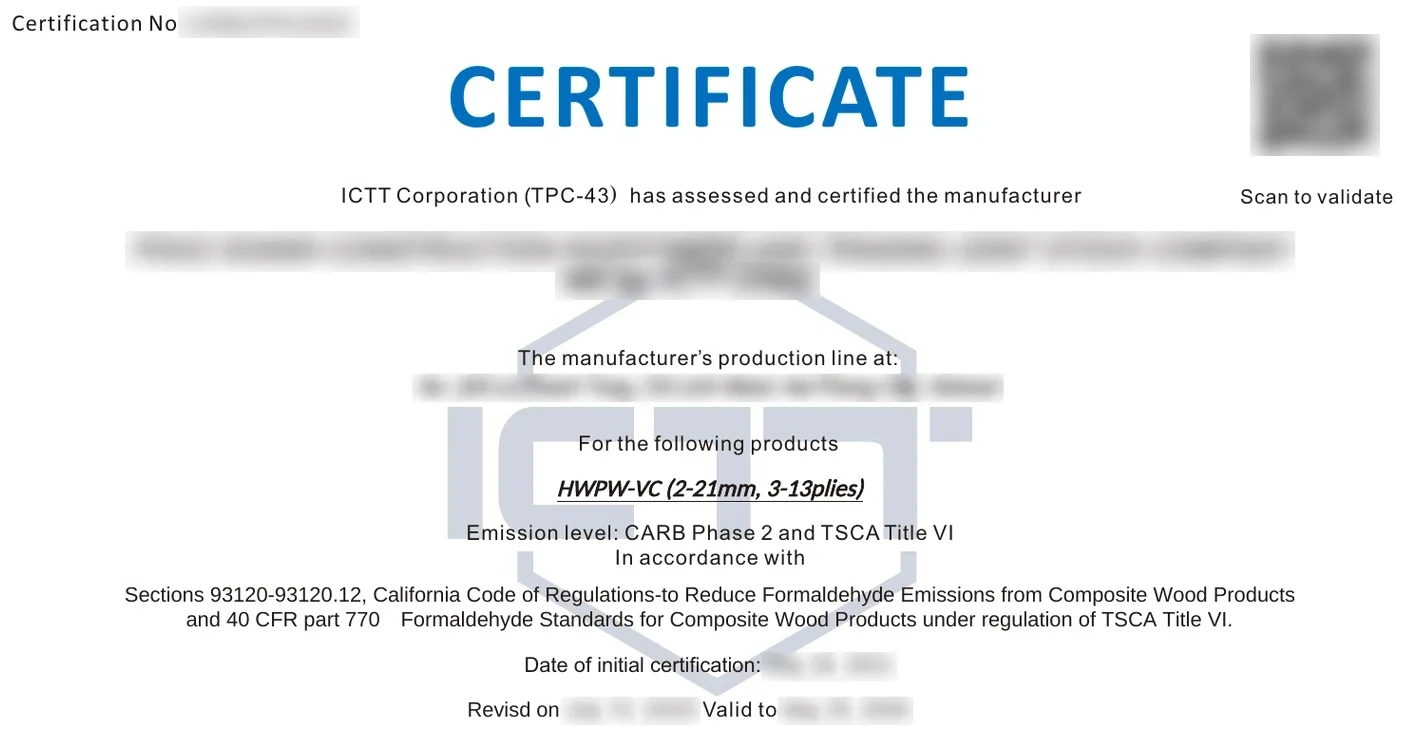
The scope printed on the certificate copy in our file is hardwood plywood with veneer core, 2–21 mm thick, 3–13 plies. Our everyday formwork thicknesses of 9, 12, 15 and 21 mm sit inside it. Panels of 25 mm and above are outside that printed range, so we do not call them CARB P2 or TSCA Title VI panels.
We do not print a validity statement or a certificate number in page text. The certificate itself, with its identifiers, goes out with the quotation, and the sales documents for your order state which panels it covers. Our SGS chamber result on a 21 mm specimen is separate evidence: it passed E1 and is not an E0 claim.
Documents as issued
Page 1 of the certificate as issued, in English. The holder name, address, contact details and dates are lightly blurred; the programme, product scope and certifier remain readable. The full PDF goes out by email with the quotation.
Test evidence
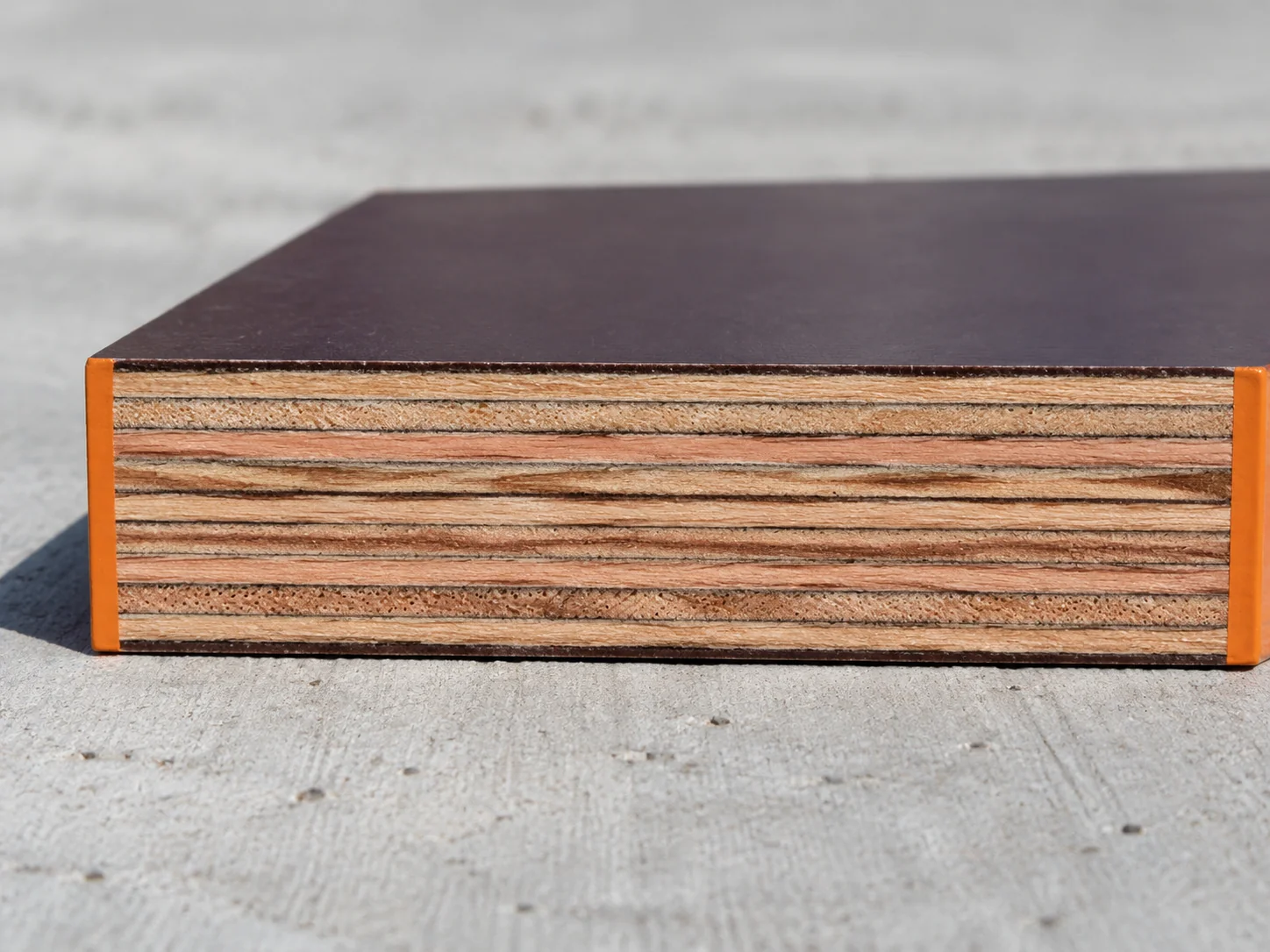
The certificate is the compliance document; this report is separate evidence. SGS Vietnam tested one submitted 21 mm dark-brown film-faced specimen with an Acacia core and phenolic glue from our mill. The values describe that specimen, not every panel.
| Property | Method | Result | Limit or class |
|---|---|---|---|
| Formaldehyde emission | EN 717-1 chamber | Not detected at the 0.04 mg/m³ reporting limit | E1: 0.124 mg/m³ (pass) |
| Bonding quality | EN 314-1 / EN 314-2: 24 h soak, boil-dry-boil, 72 h boil | Pass | Class 3 (exterior) |
| Density | BS EN 323 | 642 kg/m³ | Declared per product |
Not detected means below the laboratory's 0.04 mg/m³ reporting limit; it does not mean zero and it is not an E0 claim.
The US limit is written in ppm on the ASTM E1333 basis and the EN 717-1 result in mg/m³. The two units are not converted into each other, so this report does not show a TSCA pass by itself; the certificate does.
The rules
EPA's rule at 40 CFR Part 770 implements the Formaldehyde Standards for Composite Wood Products Act of 2010 and was written to match California's CARB ATCM. Checked 12 November 2026 against the EPA page and the eCFR text.
| Topic | What the rule says | Who does it |
|---|---|---|
| Products covered | Hardwood plywood, medium-density fiberboard and particleboard, as panels, component parts or inside finished goods | Seller, manufacturer and importer |
| Emission limit | Hardwood plywood with veneer or composite core: 0.05 ppm formaldehyde; the other products have higher limits (MDF 0.11 ppm, particleboard 0.09 ppm) | Manufacturer |
| Test method | ASTM E1333 is the basis of the emission standards | Laboratory under the certifier |
| Third-party certification | Panels must be certified by a third-party certifier that CARB approved and EPA recognises | Certifier and mill |
| Labelling | Since 22 March 2019 the label states TSCA Title VI compliance; the CARB-only label is no longer accepted | Mill, on the panel or pack |
| Imports | Importers of regulated panels and finished goods carry the import certification duties of the rule | US importer |
The 0.05 ppm figure applies to hardwood plywood with veneer or composite core; our Acacia and Eucalyptus panels are veneer-core.
Other markets
A US buyer needs the TSCA paper; buyers elsewhere ask for a different test and a different unit. The same panel can answer all of them with the right document.
| Market or rule | What the buyer needs | What we supply |
|---|---|---|
| United States, TSCA Title VI | Third-party certified hardwood plywood at 0.05 ppm, labelled TSCA Title VI compliant | CARB P2 and TSCA Title VI documentation for the thicknesses on the certificate scope |
| California, CARB ATCM Phase 2 | The same level as TSCA, certified by a CARB-approved certifier | The same certificate |
| European Union, REACH entry 77 | Wood-based articles at or below 0.062 mg/m³ in a chamber at 23 °C, 45% RH, 1 m²/m³ loading, from 6 August 2026 | SGS EN 717-1 chamber result on a 21 mm specimen: not detected at 0.04 mg/m³; a test to the reference conditions on request |
| Europe, E1 class | EN 717-1 chamber, E1 limit 0.124 mg/m³ | The same SGS report, specimen evidence |
| Other markets | Proof that emission was measured by a third party | The certificate, the SGS report and a new SGS test to your method |
Formwork used only outdoors is excluded from REACH entry 77; a panel sold for indoor use is not.
Scope
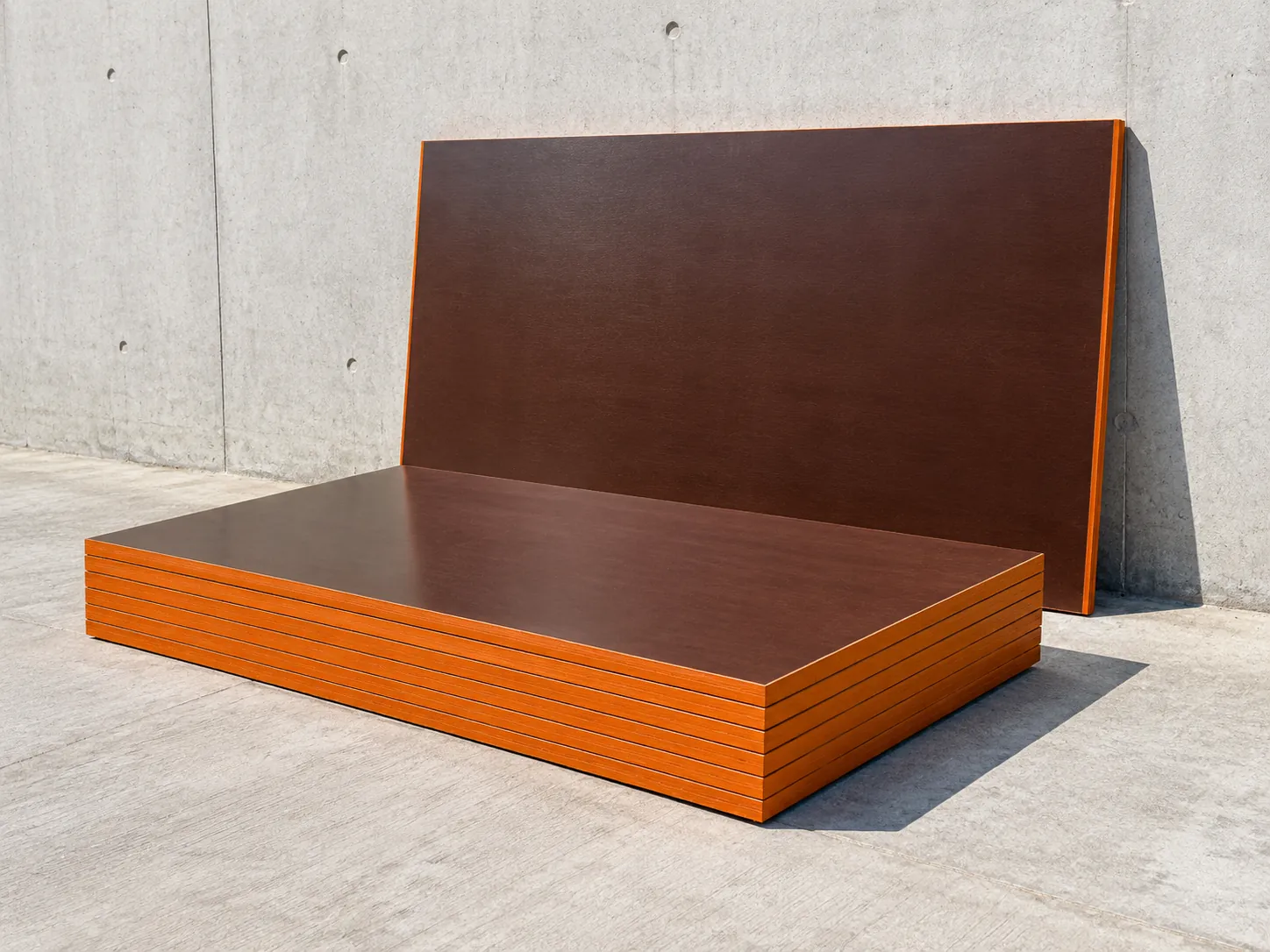
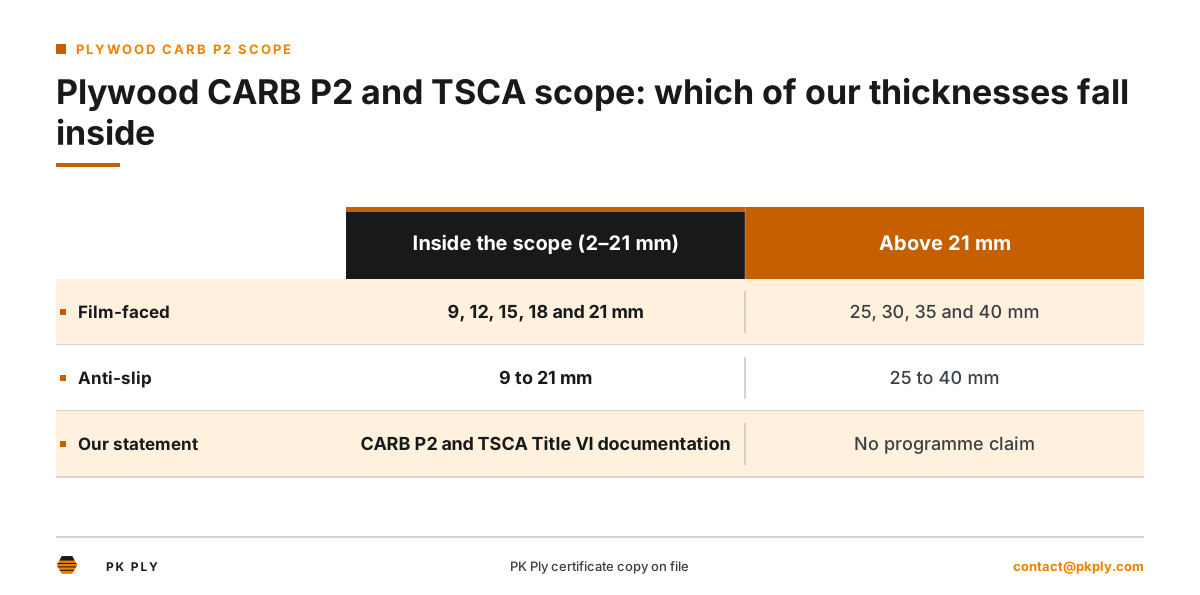
Our mills press 9–40 mm panels with Acacia or Eucalyptus hardwood veneer cores. The certificate copy on file lists 2–21 mm, so every thickness up to 21 mm is inside it and the thicker panels are not.
| Panel | Thickness | Core and glue | Inside the printed scope? |
|---|---|---|---|
| Film-faced plywood | 9, 12, 15, 18 mm | Acacia or Eucalyptus; MUF or phenolic | Yes |
| Film-faced plywood | 21 mm | Acacia or Eucalyptus; MUF or phenolic | Yes, the top of the range |
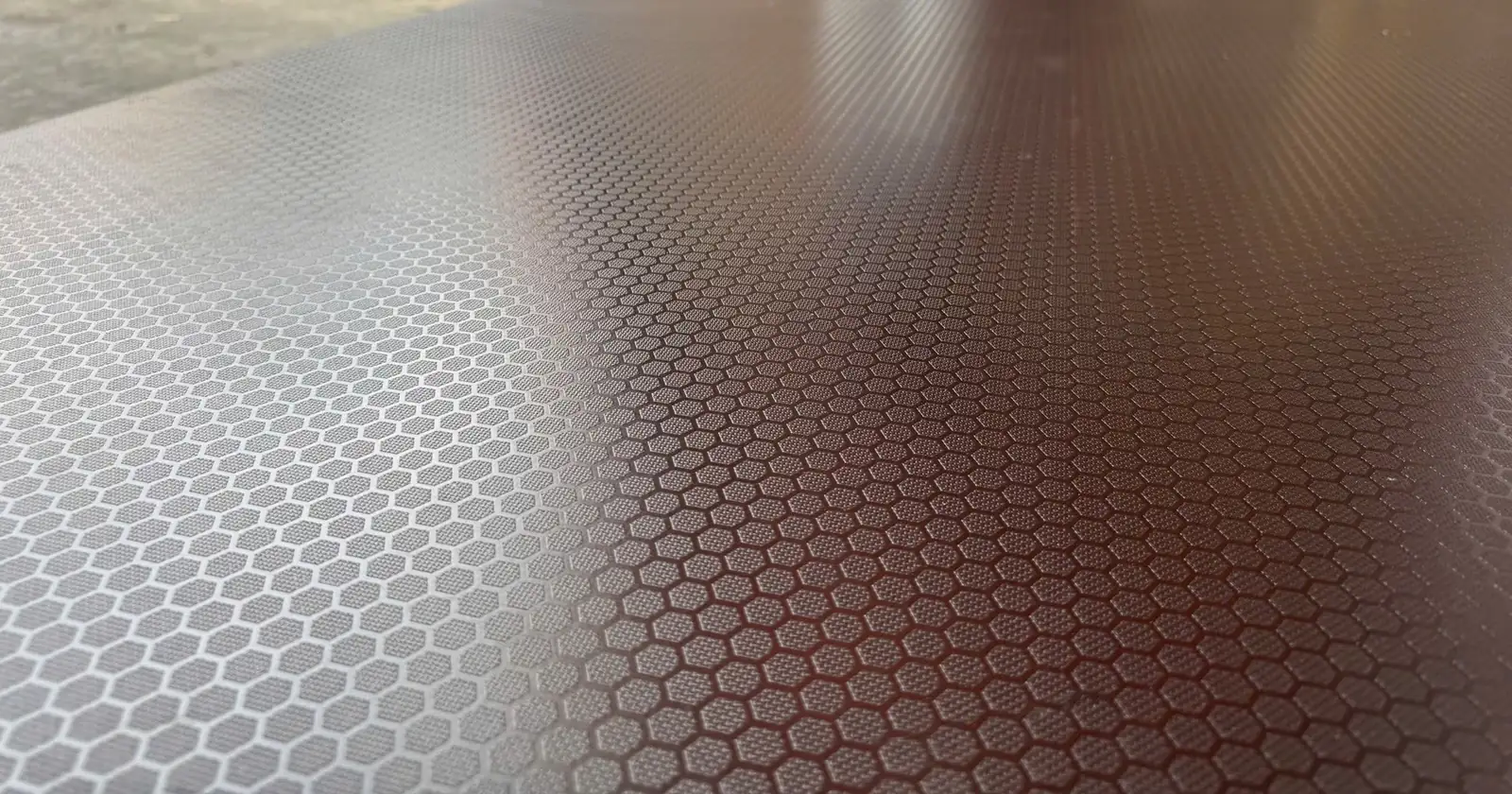
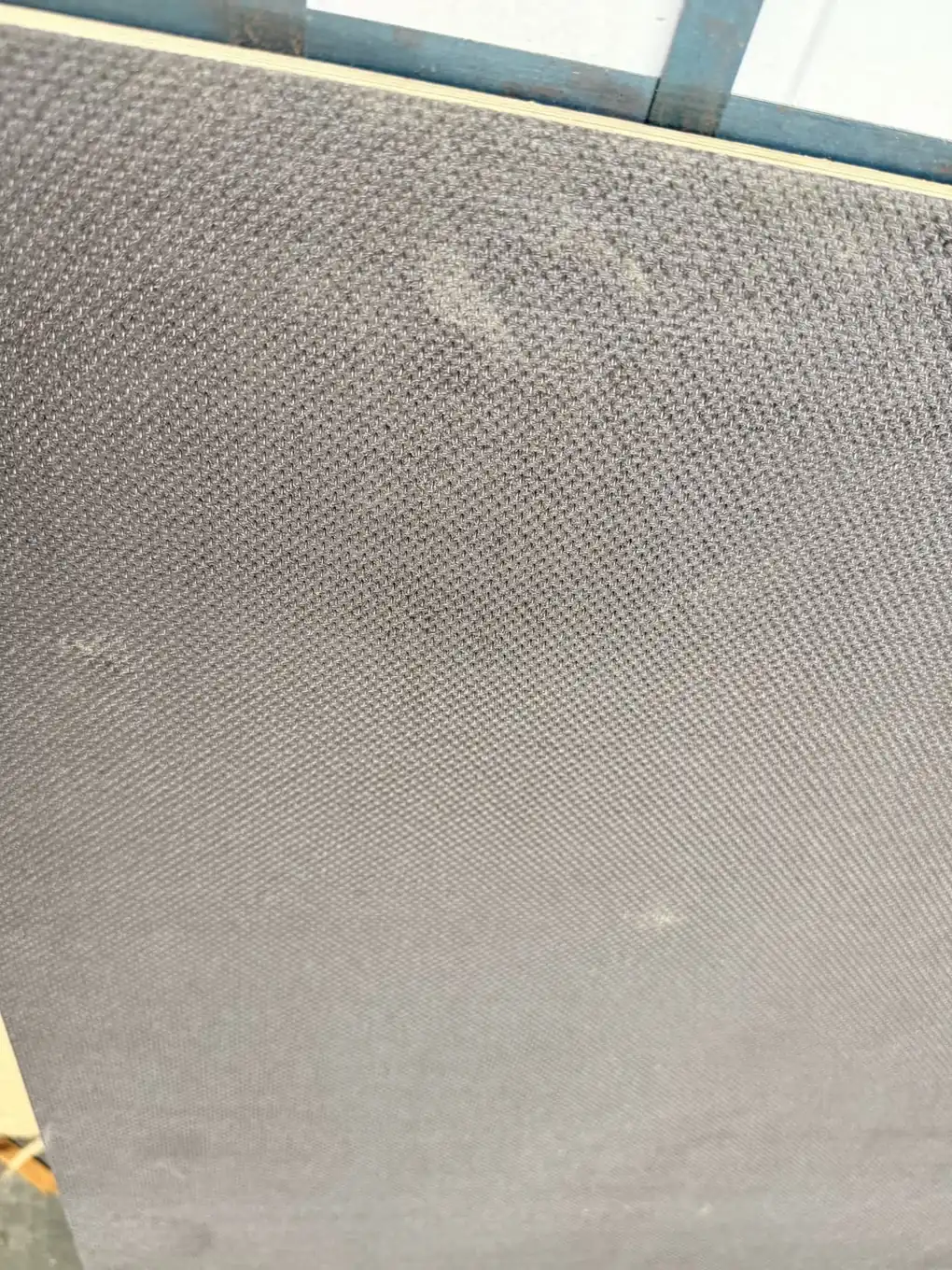
| Anti-slip plywood | 9–21 mm | Acacia or Eucalyptus; MUF or phenolic | Yes |
| Any panel | 25, 30, 35 or 40 mm | Acacia or Eucalyptus; MUF or phenolic | No: above 21 mm |
If your specification needs a panel thicker than 21 mm, the quotation says plainly that it is outside this scope rather than labelling it.
Veneer core
The 0.05 ppm limit is written for hardwood plywood made with a veneer core or a composite core. Our panels are built from Acacia or Eucalyptus hardwood veneers laid crosswise, glued with melamine (MUF) or phenolic resin and covered with a phenolic film on both faces, so the core is veneer.
The glue system matters for emission. We press with MUF or phenolic glue; the SGS specimen above was phenolic. Film, glue and core are order fields, and the technical sheet states them.
Documents
The US importer owns the compliance filing, so we send the papers that let it do so before the deposit.
With the quotation
The CARB and TSCA certificate copy and the technical sheet with thickness, core and glue.
Before the order is confirmed
A written statement of which panels and thicknesses of your order the certificate scope covers.
Before production
The panel and pack marking layout, including the TSCA Title VI compliance statement.
With the shipment
Packing list and invoice that name the panels, the SGS report on request and the FSC claim or EUDR dossier when ordered.
Kept by you
The certificate copy and our statement for your import file.
Test reports
The SGS 21 mm report on our specimen, or a new SGS test to your method.
Check it yourself
Every point can be checked against the public rule and the documents we send.
40 CFR 770.10 sets 0.05 ppm for hardwood plywood with veneer or composite core.
The certificate names a third-party certifier; confirm that EPA recognises it for TSCA Title VI.
Check that your thickness is within 2–21 mm and the product is veneer-core hardwood plywood.
The holder on the certificate must be the manufacturer on the invoice and packing list.
Packs carry the TSCA Title VI compliance statement; a CARB-only label is out of date.
A test report sold as certification, a certificate in another company's name or a scope that stops below your thickness does not document your panel.
Red flags
Most problems come from papers that look right but do not match the panel.
An SGS chamber report is evidence; TSCA needs third-party certification of the mill.
A certificate covers one manufacturer's production, not the panels a trader buys elsewhere.
A 25 mm panel under a certificate that ends at 21 mm is not covered.
A US ppm figure and an EU mg/m³ figure come from different tests and are never converted.
E1 is a European chamber class; CARB and TSCA are separate US programmes.
Checklist
Send these points with your enquiry and we quote a panel that matches the certificate scope from the start.
United States or California, and if you are the importer of record.
Within 2–21 mm for a CARB and TSCA panel.
Acacia or Eucalyptus; MUF or phenolic.
Film-faced or anti-slip.
The compliance statement wording you need on packs.
Containers per order and port of discharge; the minimum is one 40HC, production takes 15–45 days after the 30% deposit, and prices are FOB Hai Phong, CFR or CIF.
The file
One chart sums up the scope: every thickness from 9 mm to 21 mm is inside the scope on the certificate copy and every thickness above it is outside. The other papers a US or EU file carries sit beside it, on the pages linked here.
Buyer questions
Yes. We hold CARB Phase 2 and EPA TSCA Title VI documentation for applicable products and orders; the certificate copy lists hardwood plywood with veneer core, 2–21 mm.
0.05 ppm formaldehyde for hardwood plywood made with a veneer or composite core, on the ASTM E1333 basis (40 CFR 770.10).
Our Acacia and Eucalyptus veneer-core film-faced and anti-slip panels from 9 mm to 21 mm, in MUF or phenolic glue. Panels of 25 mm and above are outside the printed scope.
The identifiers sit on the certificate, which we send with the quotation. The page describes scope and limits, and the sales documents for your order state which panels the certificate covers.
They set the same emission levels. California's CARB ATCM Phase 2 came first and EPA's TSCA Title VI rule was written to match it; since 22 March 2019 the US label must state TSCA Title VI compliance.
Formaldehyde not detected at the 0.04 mg/m³ reporting limit and a pass against the E1 limit of 0.124 mg/m³, EN 717-1 chamber, on one phenolic-glue Acacia-core specimen.
No. Not detected means below the reporting limit of the test. We state the E1 pass and make no E0 claim.
No. The US figure and the EU figure come from different test methods and conditions, so we never convert between them; we test to the method you name.
No. Those thicknesses are above the 21 mm top of the printed scope, so we do not label them with the programme.
The certificate copy and technical sheet with the quotation, our scope statement before confirmation, the compliance marking on the packs and the SGS report on request.
Yes. A third-party test to your method, including the EU reference conditions, is arranged through SGS on request.
Request CARB documents
Send the thickness, core, glue, size and quantity. We reply within hours with the certificate copy, the technical sheet and an FOB Hai Phong, CFR or CIF price.
Lisa, export sales, sends the certificate copy and a scope statement for your panel: [email protected]